Housemates focused on sportswear care
If you regularly dry labelled tumble-safe activewear, check for a suitable low-temperature programme and sensor drying rather than relying on a timed cycle or a Sportswear programme name alone.


For labelled tumble-safe sportswear in a shared house, start with a heat-pump dryer that offers sensor drying and a programme suitable for the garments. Choose capacity around the housemates’ usual loads, then check the space and noise level; a larger drum may help with busy laundry schedules, but lower-temperature cycles can take longer, and no programme overrides a garment’s care label.
If you regularly dry labelled tumble-safe activewear, check for a suitable low-temperature programme and sensor drying rather than relying on a timed cycle or a Sportswear programme name alone.
When several residents use one dryer, capacity, sorting loads and agreeing when to run cycles matter alongside garment care. A larger drum is useful only if it suits the loads you actually accumulate.
Check the available space and wall-socket location before choosing a dryer, then agree who cleans the filter after each load and when the appliance can be run.
For shared-house sportswear, establish which garments can go in a dryer before comparing programmes; then match capacity and installation requirements to the household’s routine.
| Concern | What to check | Who this matters to |
|---|---|---|
| Sportswear care | Check garment labels, then the exact model’s suitable low-temperature programmes and sensor-drying options. | If I regularly dry permitted activewear, I want a setting that suits its care instructions without relying on an arbitrary timer. Around 31% of consumers put garment care first. |
| Shared-house capacity | Compare rated dry-load capacity with normal loads; check the manual’s limits for the selected programme. | With several housemates waiting to use the machine, I need enough capacity for our usual sorted loads, not simply the largest drum available. For around 31% of consumers, keeping laundry moving is the primary concern. |
| Installation and safety | Measure space and door clearance, check access to a suitable wall socket, and plan filter cleaning after every load. | If the dryer sits near living or sleeping areas, I need to assess its declared noise level as well as whether everyone can use and maintain it safely. Installation and shared routines come first for around 23% of consumers. |
| Electricity use | Compare the exact models’ energy information and consider whether longer heat-pump cycles fit your schedule. | When our household dries laundry frequently, I want to limit electricity use, provided we can accommodate the drying time. Around 15% of consumers make this their main priority. |
A programme name does not change the treatment permitted by an individual garment’s care symbol, as explained by GINETEX.
Check each label before loading, then use a programme whose instructions suit the items that are permitted in the dryer.
Rated capacity refers to dry laundry; a full drum of items with different fabrics and thicknesses may not dry evenly.
Choose capacity around normal household loads, sort compatible items and follow the manual’s load limit for the programme you use.
Lower-temperature heat-pump drying can take longer than conventional condenser drying, and interrupting a cycle may extend it further.
Agree when housemates can use the machine and allow enough time for compatible sensor-drying programmes to finish.
Longer cycles can complicate a shared drying schedule when several residents need the machine.
In a shared house, an unclear cleaning routine makes it easier to miss the after-load filter cleaning advised by London Fire Brigade.
Agree a visible cleaning routine, use a suitable wall socket rather than an extension lead, and check safety notices against the appliance’s exact model and serial number. Do not leave it running overnight unattended.
The TR849P4B is a model to examine when a shared house wants a 9 kg heat-pump dryer with a named sportswear programme.
The 9 kg TWL780WP is relevant when named garment programmes are a priority.
The 8 kg RHX1008NWK offers a smaller-capacity heat-pump option to consider for moderate shared-house loads.
Bosch’s UK heat-pump range includes 8 kg and 9 kg options for comparing capacity against available space.
These heat-pump models offer different stated capacities for shared-house loads. Before choosing one for sportswear, check its exact programme instructions against the labels on the garments you intend to dry.
 No image available
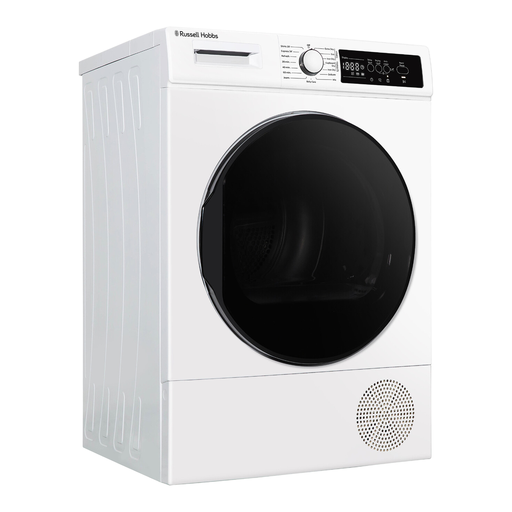
Consider the 9 kg capacity if several housemates regularly have suitable loads to dry. Check the exact programmes, noise figure and installation instructions before deciding whether it fits your sportswear and its intended location.
 No image available
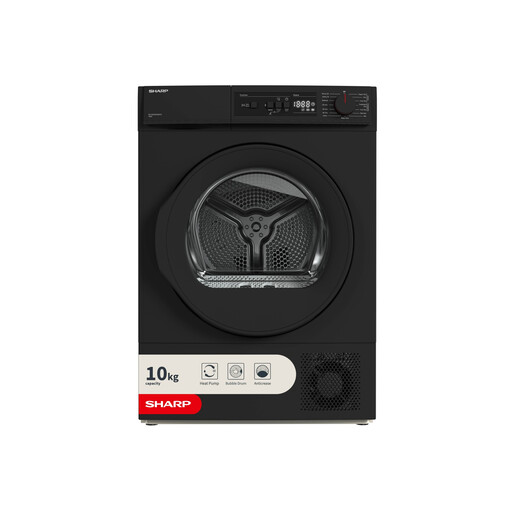
The 10 kg capacity is worth considering if the household routinely accumulates larger loads. Confirm that the available space, programme instructions and garment labels suit how you plan to use it.
 No image available
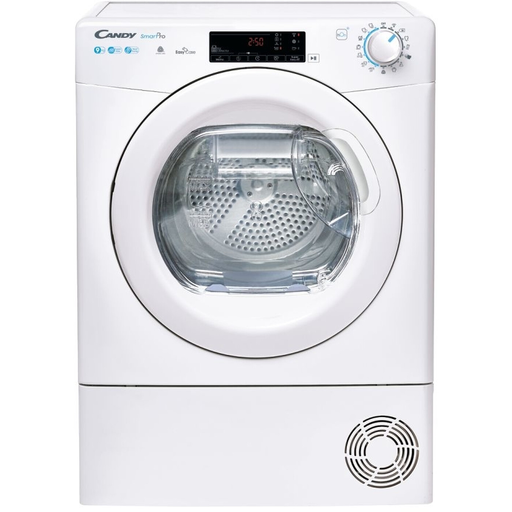
A 9 kg option for housemates comparing capacity with their usual laundry volume. Check its programme instructions for your labelled tumble-safe sportswear and its declared noise level if it will sit near living or sleeping areas.
 No image available
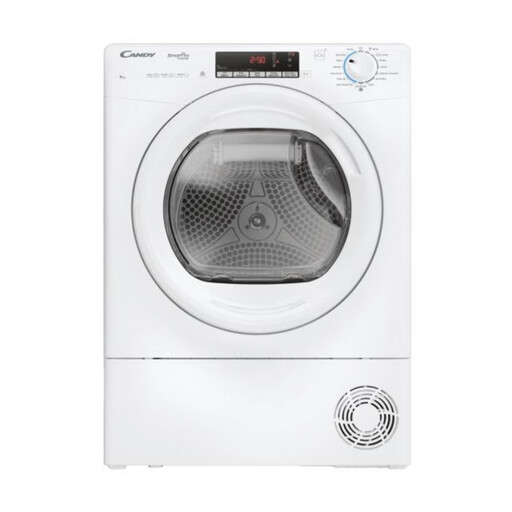
Consider this 9 kg model if sensor drying is useful for the household’s compatible loads. Confirm the sportswear programme options, installation clearance and filter-care instructions for the exact machine.
 No image available
This 9 kg sensor-drying model may suit a household that plans loads around several users. Check which programme is appropriate for each tumble-safe garment, along with the machine’s space and maintenance requirements.
No. Check each garment’s care label first: as GINETEX explains, its symbols specify the permitted treatment. A named programme does not make an item marked against tumble drying suitable for the machine.
It is a sensible starting point if lower electricity use and installation without a wall vent matter more than the shortest cycle. Electrical Safety First describes heat-pump dryers as more energy-efficient than condenser and vented dryers; allow for potentially longer lower-temperature cycles and check the exact model’s programmes.
Plan for a suitable wall socket instead. Electrical Safety First advises positioning a tumble dryer close enough to a wall socket to avoid an extension lead, which could be overloaded.
Agree who cleans the lint filter after every load, as London Fire Brigade advises. Follow the selected machine’s manual for its other filter, water-container or condenser tasks.
Yes. Register the appliance and check notices against its exact model and serial number before following any model-specific instructions. The Office for Product Safety and Standards has issued a notice requiring affected integrated heat-pump dryers to remain unused until repaired; it does not apply to every dryer from the brands involved.