Small-flat cotton-laundry households
You need to dry clothes and household cotton laundry through winter, but the dryer must fit a restricted kitchen, cupboard or utility area.


For regular winter cotton laundry, start by looking at heat-pump tumble dryers, then choose a capacity that fits both your loads and the space available. A shallow 7 kg model is worth considering for modest loads in a tight recess; if you regularly dry towels or bedding, a larger model may be more convenient, provided its full installation requirements fit.
You need to dry clothes and household cotton laundry through winter, but the dryer must fit a restricted kitchen, cupboard or utility area.
You expect to use the dryer regularly in colder months and want to compare electricity use without overlooking the capacity needed for your usual loads.
You want a suitable cotton programme and moisture sensing to help avoid continued drying after the selected dryness level is reached, while allowing for routine cleaning.
Measure the intended position before comparing capacity or features: a dryer that fits on paper still needs room to be installed, opened and maintained.
| Concern | What to check | Who this matters to |
|---|---|---|
| Space and access | Measure the recess, access route and door swing; compare the exact model’s dimensions with its installation instructions. | I have a tight kitchen run or cupboard, so the dryer must fit and its door must open in the available space. Around 31% of consumers put physical fit first. |
| Electricity use | Compare the current energy label and energy-use information for models of similar capacity. | When I dry cotton laundry repeatedly through winter, electricity use matters alongside load size. Roughly 31% of consumers make running energy use their main concern. |
| Cotton loads and dryness | Check capacity, a suitable cotton programme and whether the exact model offers sensor drying; follow garment care labels. | I regularly dry towels or bedding and want enough usable capacity without leaving clothes drying longer than needed. Around 23% of consumers prioritise cotton-load capacity and dryness control. |
| Installation and upkeep | Check the socket and condensate arrangement in the manual, and allow access to clean the filter after every load. | I need a setup I can use and maintain safely in limited space. About 15% of consumers put installation and routine upkeep first. |
Beko UK lists one 7 kg heat-pump model at 54.5 cm deep and another at 58.9 cm. Capacity alone therefore cannot tell you whether a model fits.
Measure the full location and check the exact dryer’s dimensions and installation instructions before ordering.
If you expect frequent winter drying, the energy information matters as well as the drum size. Energy Saving Trust explains that appliance labels provide energy-use, noise and performance information.
Compare current labels for similarly sized dryers rather than relying on capacity or an older rating shown in a product title.
A sensor programme aims to stop at a selected dryness level, but the right programme, load size and garment care instructions still matter.
Check the exact model’s cotton and sensor settings, avoid overloading it and choose a dryness setting suited to the textiles.
A new dryer still needs safe electrical use and regular maintenance. London Fire Brigade advises cleaning the filter after every load and avoiding overloaded sockets.
Check the installation manual, plan for filter access and register the appliance for safety notifications.
Beko UK offers 7 kg heat-pump models worth checking when installation depth is a constraint.
Bosch UK lists 8 kg and 9 kg heat-pump dryers for households considering larger cotton loads.
Miele UK lists 8 kg and 9 kg heat-pump dryers for buyers with room for a larger appliance.
These heat-pump dryers cover modest loads in an integrated space as well as larger cotton loads where more appliance depth is available. Check each model against your measured space before choosing.
 No image available
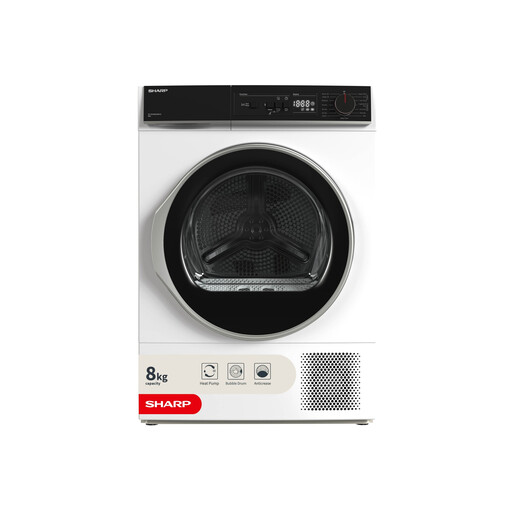
Consider this 8 kg heat-pump model if your winter cotton loads are larger and the installation space allows. Check the full fitting requirements and current energy label before buying.
 No image available
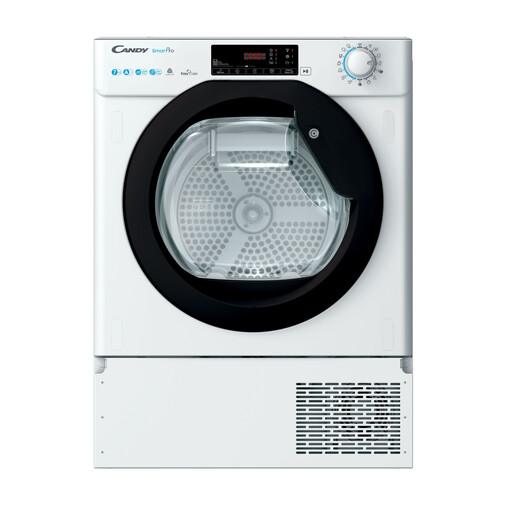
Consider this integrated 7 kg heat-pump model for modest cotton loads where a fitted installation is planned. Check the full cabinet, door and installation requirements, as well as the current energy label.
 No image available
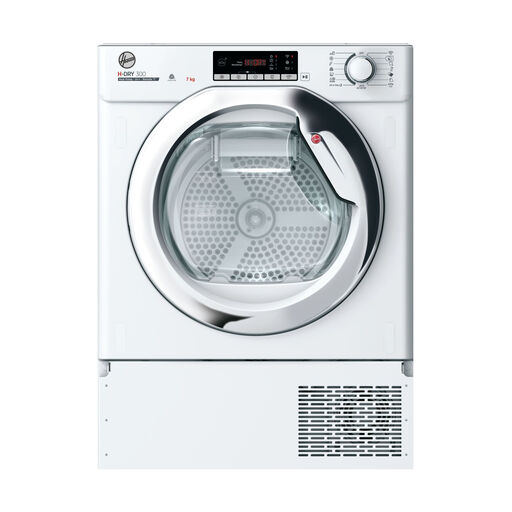
This integrated 7 kg heat-pump model is a choice to assess for modest cotton loads and a fitted kitchen space. Confirm the complete installed dimensions, access for maintenance and current energy label.
 No image available
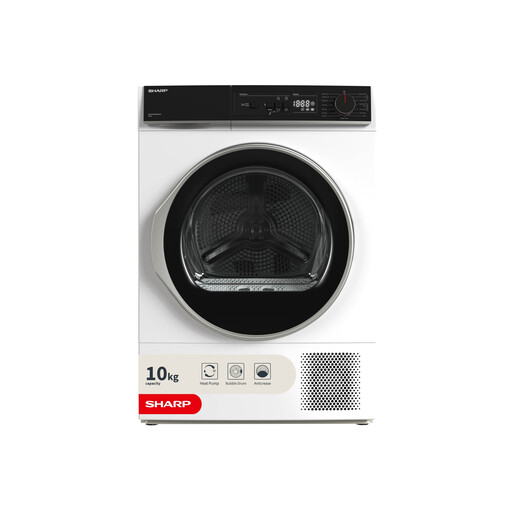
Consider this 10 kg heat-pump model only if larger cotton loads justify the capacity and your flat has room for the appliance and its required clearances. Measure the access route and check the current energy label.
Yes, if the exact dryer can be installed in the available space and its capacity suits your cotton loads. Compare its current energy label, complete dimensions and maintenance requirements rather than choosing by drying technology alone.
A 7 kg model may suit modest routine loads where space is tight; consider a larger drum if towels, bedding or several people’s laundry regularly need drying and you have room for it. Check the appliance dimensions and compare energy information for the specific models.
Compare the current energy-efficiency class and product-specific energy-use information for dryers of similar capacity. Energy Saving Trust also identifies noise and performance information as useful parts of appliance-label comparisons.
Clean the filter after every load, as London Fire Brigade advises, and follow the exact model’s maintenance instructions. Avoid overloaded sockets and register the appliance so safety notifications can reach you.