
24/7 Customer Support

Free returns

Same-day & Next-day Delivery

Quality Guaranteed

Unlock Your Welcome Offers: FREE Delivery | Up to 80% OFF | Free 30-day JoyPlus trial
Download the APP
Wet laundry, limited outdoor drying space and rising household costs make tumble dryers a practical investment for many UK homes. However, choosing by drum size or headline energy rating alone can lead to disappointment.
As the Joybuy Product Recommendation Officer, my role is to filter out marketing noise and focus on the specifications that affect everyday use. This guide explains the main buying traps, compares heat pump and condenser technology, and matches suitable models to different household needs.
A 10kg drum can reduce the number of cycles needed for bedding and family laundry, but it may be unnecessary for a couple or individual. A larger machine can also encourage inefficient half-loads if your weekly washing volume is modest.
Choose capacity according to your washing machine and typical load size:
Energy ratings are useful for comparing models, but actual electricity use depends on programme choice, load size, moisture remaining after washing and how often the dryer runs. Product listings may also show different rating systems, so compare models using the same label and check the manufacturer’s specification.
Heat pump tumble dryers generally operate at lower temperatures and reuse warm air. They can take longer than some conventional models, but may use less electricity over repeated cycles. Condenser tumble dryers collect moisture in a tank and usually do not require external venting, offering flexible installation but often with higher energy consumption than heat pump alternatives.
Smart or Wi-Fi tumble dryers can provide cycle notifications, remote monitoring, additional programmes and maintenance reminders. These features are useful if you schedule laundry around work, tariffs or family routines. They are less valuable if you prefer straightforward controls or do not want to connect an appliance to your home network.
Also check compatibility. NFC features may require a compatible Android phone, while Wi-Fi functions depend on a suitable home network and the manufacturer’s app.
For frequent use, heat pump technology is worth considering because it recirculates warm air rather than continually heating new air. Lower-temperature drying may also be preferable for some fabrics, although care labels should always take priority.
When comparing energy-efficient tumble dryers or A+++ tumble dryers, check:
Condenser models remain practical where purchase price and installation flexibility are priorities. They need no external hose, but the water tank must be emptied regularly unless a suitable drainage arrangement is available.
A sensor dry tumble dryer detects moisture and adjusts or ends the cycle when the selected dryness level is reached. This can help avoid unnecessarily long cycles compared with relying only on a fixed timer.
Useful dryness settings include:
An anti-crease tumble dryer may continue gently rotating the drum during or after the cooling phase. This is helpful when you cannot unload immediately, but it does not remove the need to unload and fold clothes promptly.
Most freestanding models are approximately 85cm high and 60cm wide, but depth varies considerably. Measure the intended space, including door clearance, ventilation space and access through hallways or staircases. A reversible door can be useful in a tight utility room.
Check the noise specification if the appliance will sit near a bedroom or open-plan living area. The supplied models range from approximately 60 to 68dB(A), but perceived noise also depends on flooring and installation.
For safe, consistent operation:
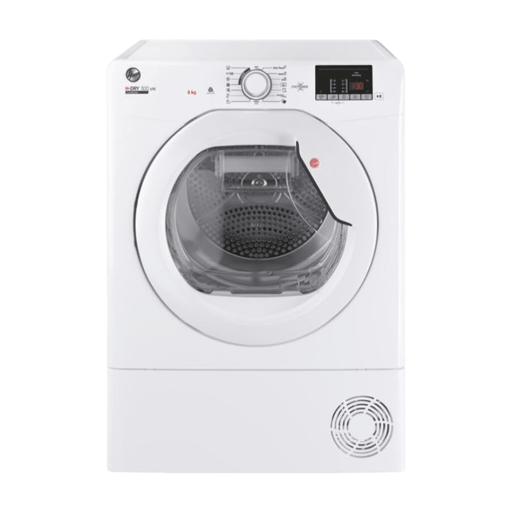
Why This Fits Their Persona: Its 8kg capacity and condenser design suit couples, smaller households and first-time buyers who need flexible placement without external venting.
It uses four sensor dryness levels rather than relying only on a fixed timer, while the front-accessible tank makes routine emptying straightforward.
8kg load, heat pump technology, four dryness levels and NFC app access for compatible Android devices.
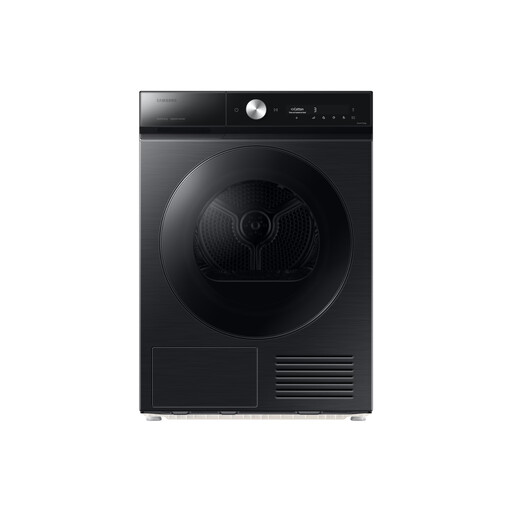
Why This Fits Their Persona: A 9kg black appliance with Wi-Fi control and a stated 60dB noise level suits households wanting connected controls and a more considered finish.
The specification lists sensor drying, programme information and measured noise data, making it easier to assess beyond the smart feature headline.
A+++ listed efficiency class, SmartThings Wi-Fi, 23 programmes and a reversible door.
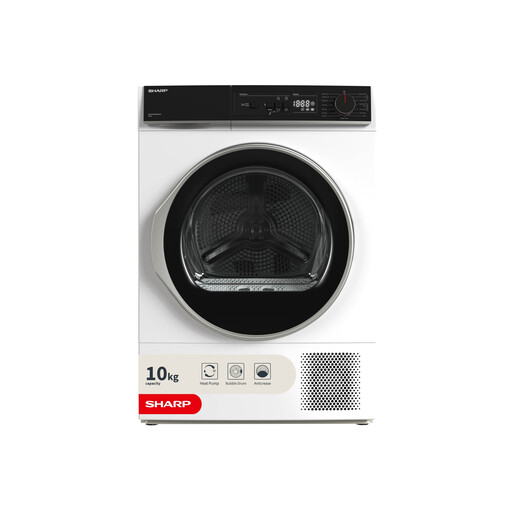
Why This Fits Their Persona: Its 10kg drum is intended for large laundry loads, including bedding and bulky items, making it suitable for families with frequent washing.
Its capacity is paired with sensor drying and five dryness levels, so the larger drum does not have to depend on a single timed programme.
10kg capacity, A++ listed efficiency, 15 programmes, anti-crease function and reversible door.
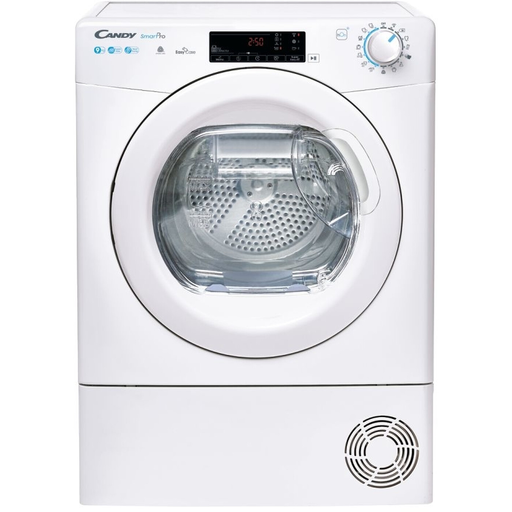
Why This Fits Their Persona: A 9kg white dryer with app connectivity and rapid cycles works well for busy families coordinating several loads around work and school routines.
The listing combines Wi-Fi features with sensor drying, a delay timer and an in-door water tank, so convenience is not limited to app control.
A++ listed efficiency, Wi-Fi and Bluetooth, sensor dry, seven rapid cycles and a Woolmark-approved programme.
Condenser models can be a practical choice for UK homes where external ducting is not possible. Compare drum capacity, tank position, noise, programme options and energy rating before selecting a model.
We have compiled a complete, real-time list of products that fully satisfy these strict selection criteria and UK safety regulations.
They can use less electricity than conventional condenser models because they recycle warm air and dry at lower temperatures. Your actual cost depends on the appliance’s stated consumption, cycle selection, load size and household electricity tariff.
Condenser tumble dryers and heat pump models usually collect moisture in an internal tank, so they do not normally require an external vent hose. They still need suitable clearance and ventilation. Always follow the installation instructions for the specific model.
Lifespan depends on usage, maintenance, installation and build quality. Cleaning the lint filter after each cycle, emptying the tank and keeping the heat exchanger or condenser clear can support efficient operation. Check the warranty terms, registration requirements and availability of replacement parts before buying.