
24/7 全天候客户支持

免费退货

当日/次日达

品质保障

开启新人专享福利: 全场免邮 | 低至 2 折 | 免费试用 30 天 JoyPlus 会员
下载 Joybuy
For many UK households, tumble dryers are a practical answer to wet weather, limited outdoor space and busy laundry routines. However, choosing a suitable model is not simply a matter of selecting the largest drum or the lowest price.
Marketing descriptions can hide important differences in drying technology, energy use, installation requirements and everyday maintenance. A dryer that looks convenient in an online listing may become frustrating if it is too deep for your space, expensive to run or difficult to empty after every cycle.
A 10kg tumble dryer can handle bedding, towels and large family loads, but running an oversized appliance for a small load may use more energy than necessary. A couple or individual may find an 8kg tumble dryer more practical, while a busy family may benefit from a 9kg tumble dryer or larger model.
Look for load-sensing functions such as Kilo Detector or sensor drying. These can adjust the cycle according to the laundry load, although actual energy savings depend on the programme, fabric type and how the appliance is used.
Both condenser tumble dryers and heat pump models collect moisture internally, so neither normally requires an external vent. However, their drying systems are different.
A smart tumble dryer or Wi-Fi tumble dryer may offer remote monitoring, downloadable programmes and maintenance alerts. These features can be useful if you regularly schedule laundry around work, children or off-peak tariffs.
However, app connectivity should not distract from the essentials: capacity, energy efficiency, noise level, dimensions and reliable moisture detection. NFC connectivity may also require a compatible Android phone, so check the product specification before purchase.
Capacity refers to the maximum weight of dry laundry suitable for the drum. As a practical guide:
Do not pack the drum tightly. Laundry needs room to circulate for more even drying. Always follow garment care labels and the appliance manual, particularly for wool, foam-backed items and fabrics that are not suitable for tumble drying.
An energy-efficient tumble dryer can reduce electricity use, but the rating must be considered alongside capacity and annual consumption. Product listings may use different energy-label formats depending on the model and market documentation. Confirm the current rating, stated annual kWh figure and energy label supplied with the appliance before ordering.
Heat pump models generally use less energy than traditional condenser systems because they recycle heat. For example, the Hoover H-Dry 500 9kg model is listed with heat pump technology and an A+++ rating, while the Sharp 10kg heat pump model is listed as A++ with an annual consumption figure of 258 kWh. These figures should be checked against the latest product documentation.
Most freestanding dryers are approximately 85cm high and 60cm wide, but depth varies considerably. Measure the available space, door clearance and route into the room before buying. Allow ventilation around the appliance and avoid blocking air vents.
Noise levels in the selection below range from 64dB to 68dB. A difference of a few decibels can be noticeable in an open-plan kitchen, flat or utility area near bedrooms.
Useful convenience features include:
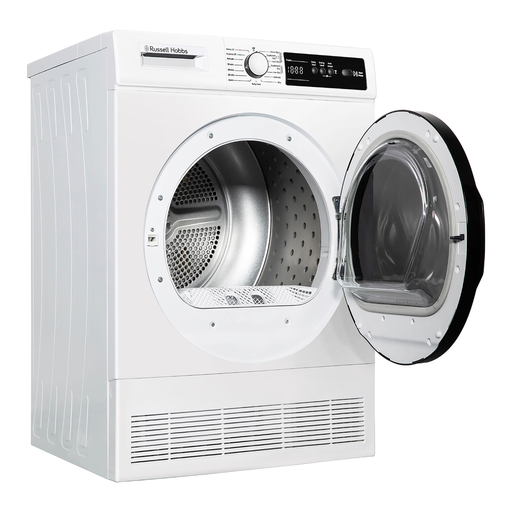
Why This Fits Their Persona: A straightforward white tumble dryer for couples, individuals and medium-sized households that want familiar controls without app connectivity.
Its 8kg capacity avoids paying for unnecessary drum space, while condenser operation removes the need for an external vent.
15 programmes, delay start, child lock, sensor drying and a stated B energy rating.
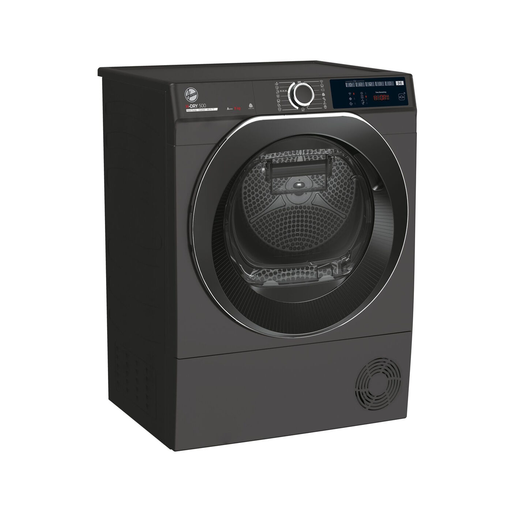
Why This Fits Their Persona: A graphite 9kg heat pump model for households prioritising lower-temperature drying, smart control and reduced energy use.
Heat pump technology and sensor drying address concerns about unnecessary heat and over-drying; check the current energy label before purchase.
9kg drum, Aquavision in-door tank, Wi-Fi and Bluetooth connectivity, sensor drying and delay start up to 24 hours.
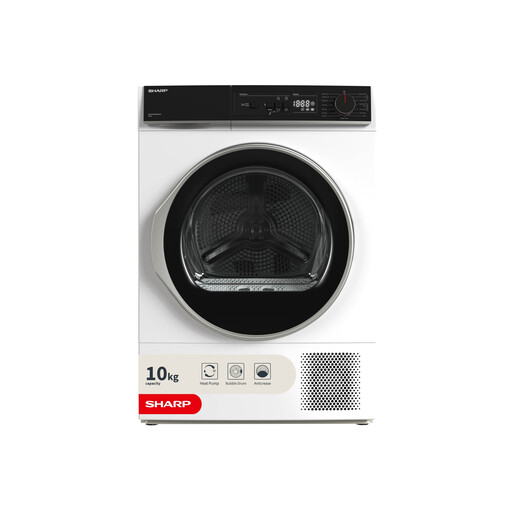
Why This Fits Their Persona: A family-sized tumble dryer for regular bedding, towels and substantial weekly laundry loads.
The 10kg drum supports bulky loads, while sensor drying helps prevent cycles continuing after laundry reaches the selected dryness.
15 programmes, two-way tumbling, Bubble Drum design, 64dB stated noise level and delay timer up to 23 hours.
We have compiled a complete, real-time list of products that fully satisfy these strict selection criteria and UK safety regulations.
No. A condenser dryer collects moisture in a water container, so it does not normally require a hole through an external wall. It still needs suitable ventilation around the appliance, and the tank or optional drain hose must be maintained according to the manual.
Heat pump tumble dryers generally use less electricity than conventional condenser models, although purchase prices and drying times vary. Compare the energy rating, annual kWh figure and your expected number of cycles rather than relying on a label alone.
Lifespan depends on usage, loading, cleaning and maintenance. Clean the lint filter after every cycle, empty the water container when required and keep vents unobstructed. Never dry items contaminated with oils, solvents or other flammable substances, and use a properly earthed UK power socket without an extension lead.