
24/7 全天候客户支持

免费退货

当日/次日达

品质保障

开启新人专享福利: 全场免邮 | 低至 2 折 | 免费试用 30 天 JoyPlus 会员
下载 Joybuy
Choosing among modern tumble dryers can be difficult when product pages focus on app functions, programme counts and energy labels. The right appliance depends more on your household’s laundry habits, available space and installation requirements.
As the Joybuy Product Recommendation Officer, I focus on practical details that help UK households avoid paying for features they will not use.
An 8kg tumble dryer may suit a couple or medium-sized household, while a 9kg tumble dryer or 10kg tumble dryer can be more useful for families, bedding and towels. However, a larger drum also needs more floor space and may be inefficient if you usually dry small loads.
Check the external dimensions, door clearance and route into your home before ordering. A machine measuring around 60cm wide may still be difficult to fit in a narrow utility area because of its depth or door swing.
An A++ tumble dryer or A+++ tumble dryer generally indicates a higher efficiency class than many B-rated condenser models, but the label alone does not tell you the exact cost of each cycle. Compare the stated annual energy consumption, programme duration and your local electricity tariff.
Heat pump models typically dry at lower temperatures and reuse warm air. They can use less electricity than conventional designs, but cycles may take longer. A condenser dryer may offer a lower purchase price and familiar operation, yet cost more to run over frequent use.
Wi-Fi and app controls can be convenient, but they may require a compatible smartphone, a stable home network and account registration. Check whether the app supports your phone and whether the functions you want—such as remote monitoring, diagnostics or downloaded cycles—are actually available in the UK.
A smart tumble dryer is not automatically more efficient than a non-connected model. Sensor drying and a suitable energy class have a more direct effect on everyday operation.
There are three main types:
For any condenser or heat pump model, confirm where the water tank is located and how easily it can be emptied. A visible or front-mounted tank can be more convenient than a difficult-to-reach compartment.
Use the drum size as a guide rather than a target to fill every time:
Never overload the drum. Clothes need room to move so that warm air can circulate properly. Always follow the care label, particularly for wool, synthetics and garments containing rubber or foam.
Sensor drying detects moisture and stops the programme when the selected dryness level is reached. This can help avoid unnecessary over-drying compared with relying only on a fixed timer. Useful settings may include Iron Dry, Hanger Dry, Cupboard Dry and Extra Dry.
An anti-crease tumble dryer can periodically rotate laundry after the main cycle, reducing creases if you cannot unload immediately. Check the stated noise level if the machine will be near a bedroom or open-plan living area; the listed figures in the recommendations below range from 60dB to 68dB.
Clean the lint filter after every cycle and empty the water tank regularly. Do not dry garments contaminated with cooking oil, solvents, petrol or other flammable substances. Installation should follow the supplied manual, including stable positioning, ventilation clearance and a suitable earthed socket.
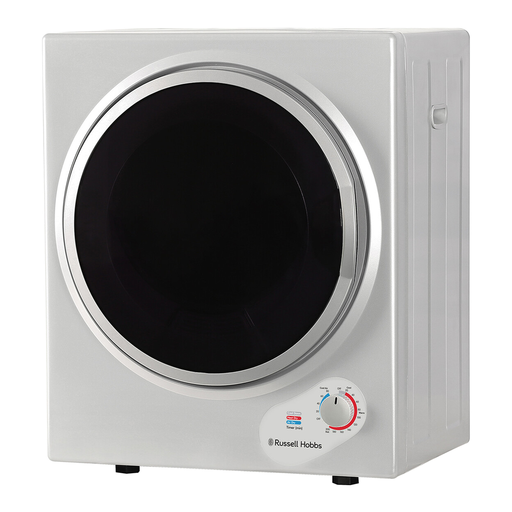
Why This Fits Their Persona: Its compact footprint suits students, renters, small kitchens and mobile homes where a full-size appliance is impractical.
The 2.5kg capacity makes its limitations clear, while the vent hose requirement avoids the assumption that it can be installed anywhere without external airflow.
Wall-mountable design, three heat settings, 62dB listed noise level and a 200-minute timer.
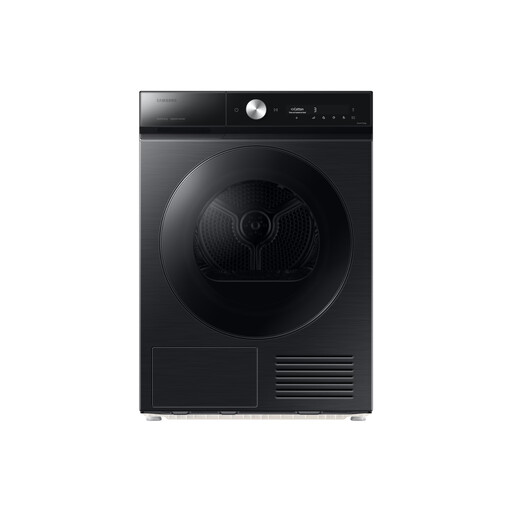
Why This Fits Their Persona: A 9kg drum, Wi-Fi control and a 60dB listed noise level suit households wanting connected convenience without a compact capacity.
Its heat pump design and stated A+++ class provide clearer efficiency information than choosing a smart appliance solely for app features.
Heat pump drying, four dryness levels, SmartThings Wi-Fi, reversible door and a listed 23-programme selection.
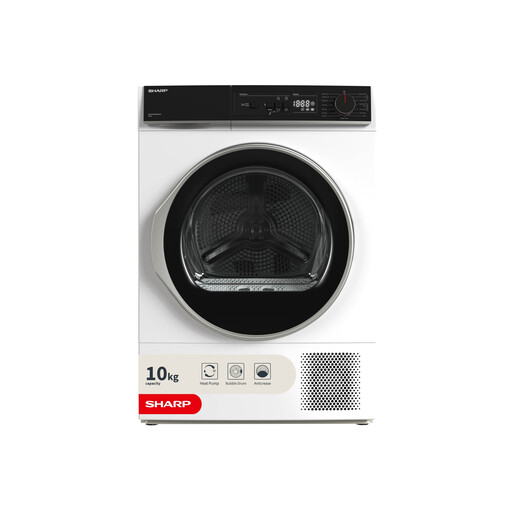
Why This Fits Their Persona: The 10kg capacity is designed for households regularly drying bedding, towels and larger weekly loads.
The stated drum size and dimensions make it easier to assess whether the extra capacity is worthwhile before buying.
A++ class, sensor drying, 15 programmes, anti-crease protection and a listed 64dB noise level.
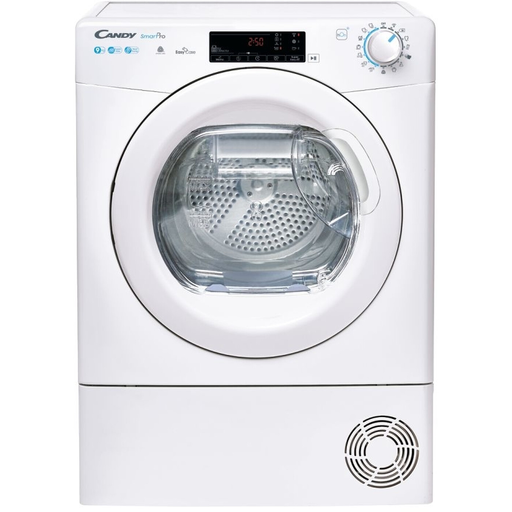
Why This Fits Their Persona: Families wanting remote control, additional app cycles and a 9kg drum can match these features to frequent laundry routines.
It combines Wi-Fi and Bluetooth with heat pump technology and sensor drying, rather than relying on connectivity as its sole selling point.
A++ class, EasyCase water tank, seven rapid cycles listed under 90 minutes and up to 24-hour delay start.
We have compiled a complete, real-time list of products that fully satisfy these strict selection criteria and UK safety regulations.
A portable hair dryer is a separate purchase from a laundry appliance, but it may be useful for renters, travel or households with limited bathroom storage. The BABONIR FZ201 is a foldable ionic hair dryer with an 1800W rating, 330g listed weight, diffuser, concentrator and six heat-and-speed combinations. Its ionic function is described as helping reduce static and frizz; it should still be kept away from water and stored only after hot attachments have cooled.
They can use less electricity than conventional designs because they recycle warm air and dry at lower temperatures. Compare the product’s stated annual consumption, programme length and purchase price rather than relying on the energy class alone.
Not anywhere. Condenser models do not normally need an external vent, but they still require a stable, dry, ventilated location with suitable electrical supply and clearance. Check the installation manual before placing one in a cupboard or enclosed room.
Lifespan depends on usage, maintenance, loading and installation. Cleaning the lint filter after every cycle, emptying the tank and following the manufacturer’s care instructions can support safe, consistent operation. Check the warranty terms and availability of parts before purchase.