For a shared house drying frequent loads of tumble-safe towels, a freestanding heat-pump dryer is a sensible starting point: compare drum capacity with the size of your actual loads, then check cycle duration, space and noise for the particular model. A condenser dryer is another option without an external vent, while a vented dryer needs a suitable, permitted route outside. Whichever type you choose, confirm the electrical setup and installation clearances, follow the towels’ care labels and arrange filter cleaning after every load.
Who needs which checks?
Housemates with frequent towel loads
If several residents need the dryer in quick succession, compare rated capacity with typical load size and check the relevant programme duration. A larger drum alone does not establish how quickly towels will dry.
Housemates focused on electricity use
Frequent drying makes model-specific energy consumption worth checking. Electrical Safety First describes heat-pump dryers as more energy-efficient than condenser and vented types, but the energy information for the exact model still matters.
Renters with limited installation space
Measure the appliance space and check the socket location before choosing a model. If a vented dryer would require an alteration to the property, confirm permission and a suitable external route first.
What matters when choosing?
Start with the installation route: heat-pump and condenser dryers avoid the external wall vent required by a vented machine. Then compare the actual towel loads and model-specific operating details rather than choosing by drum capacity alone.
| Concern | What to check | Who this matters to |
|---|
| Towel-load turnover |
Compare rated capacity with your usual loads, then check the towel or cotton programme duration and appliance dimensions. |
When towels pile up between residents, I want to fit a typical load without repeatedly splitting it. Around 36% of consumers put handling frequent, bulky loads first. |
| Electricity use |
Compare the exact models’ energy information and the programmes you expect to use. |
If our household dries towels often, I want to understand how much electricity those cycles use. For around 29% of consumers, electricity use is the primary concern. |
| Installation and electrical safety |
Measure the space and clearances; confirm a suitable wall socket and, for a vented dryer, permission for an external vent. |
I need a machine that can be placed and powered safely without assuming we can alter the property. That is the main priority for around 21% of consumers. |
| Noise and everyday care |
Check the stated noise figure, relevant programmes and how residents will access and clean the filter. |
With the dryer near shared rooms, I want its operation and upkeep to fit daily life while still following each towel’s care label. Around 14% of consumers put these considerations first. |
Mistakes to avoid
-
Ordering a vented dryer before checking the vent route
A vented machine needs a suitable route for its extractor tube to discharge outside; a blocked or crushed pipe can cause problems.
Confirm the location, property permission and installation requirements before ordering. If an external route is impractical, compare heat-pump and condenser dryers instead.
A vented installation may also require installation work and venting materials.
-
Planning to reach the socket with an extension lead
Electrical Safety First warns that a tumble dryer can overload an extension lead when other appliances share it.
Choose a location close to a suitable wall socket, and check the condition of the plug, cable and socket before use.
-
Assuming a 9 kg drum means faster-drying towels
The rated load does not establish cycle length or how evenly a particular machine dries. Which? assesses drying time and thoroughness as separate aspects of its tumble-dryer testing.
Compare the programme information for the exact model and relevant independent test results where available.
-
Leaving filter cleaning to someone else
Humberside Fire & Rescue Service advises cleaning the lint filter after every load to prevent dangerous build-up.
Agree who cleans the filter after each use, follow the model’s other maintenance instructions and report damaged wiring or a burning smell promptly.
Brands to consider
Bosch
Bosch has a 9 kg heat-pump model, the WRB247C9GB, relevant to households comparing capacity for frequent loads.
- Bosch lists a 57 dB noise figure, AutoDry and a self-cleaning condenser for this model.
- Check its programme duration and dimensions; the 9 kg rating does not establish towel-drying speed.
AEG
AEG’s TR818P4B is an 8 kg heat-pump option for households considering mixed laundry as well as towels.
- AEG lists MixDry, Bed Linen XL and sensor-based drying controls for the TR818P4B.
- Its 8 kg capacity may mean splitting a load that fits a larger drum; programme names do not override fabric care labels.
Miele
Miele’s TEA525WP is an 8 kg heat-pump model with fabric-care features described by the manufacturer.
- Miele lists DryProtect for this model.
- Miele’s stated durability testing is a manufacturer claim, not a measure of how long an individual dryer will last. Check the warranty terms and capacity against household needs.
Hisense
The Hisense DH1Q902BW2 is a 9 kg heat-pump model for comparison with other large-drum options.
- The Joybuy listing describes an A++ rating and anti-crease function for this model.
- Confirm the current energy information, installation requirements and warranty terms for the exact product.
Hoover
The Hoover HRE H9N2TE-80 is a 9 kg heat-pump model with sensor drying and Wi-Fi connectivity stated in its product listing.
- Its listed capacity is relevant when comparing space for recurring towel loads.
- Check the applicable warranty and service terms, as well as the programme duration needed for your towels.
Joybuy heat-pump dryer options
These heat-pump dryers have listed capacities of 9 kg or 10 kg, making them options to compare for recurring shared-house towel loads where an external vent is impractical. Check the space, socket and towel programme for each model before choosing.
 No image available
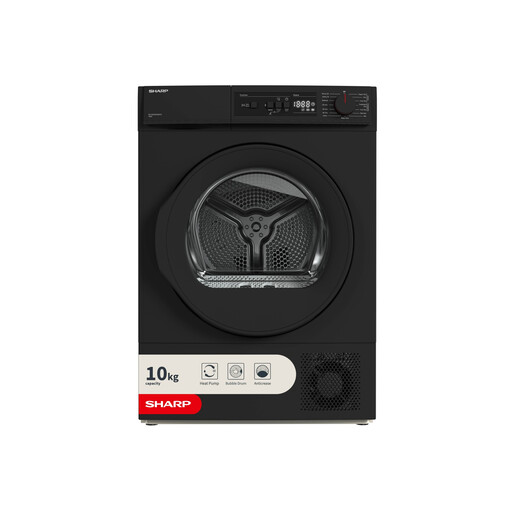
Sharp KD-NHA0S6GM1D-EN 10 kg heat-pump dryer, Matte Black
Consider the 10 kg rated capacity if your household regularly collects bulky towel loads; check the towel programme duration separately.
The product name states an A++ rating. Confirm the installation space and electrical requirements before ordering.
Joybuy
 No image available
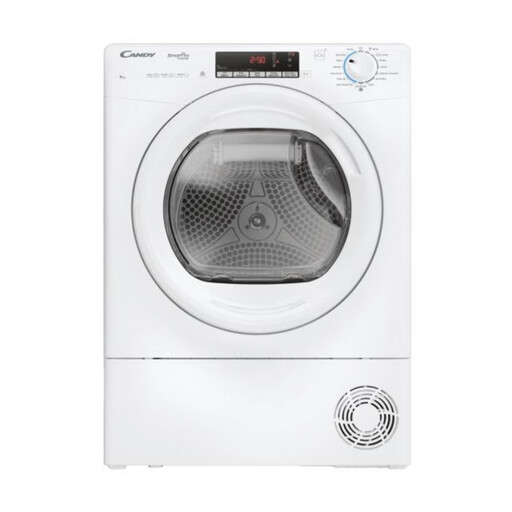
Candy CROE H9A3TE-80/N 9 kg heat-pump dryer, White
The 9 kg rated capacity is worth comparing with your usual shared-house towel load; check the relevant cycle duration rather than assuming how quickly it dries.
The product name lists sensor drying, Wi-Fi connectivity and an A+++ energy rating. Check current energy information for the exact model.
Joybuy
 No image available
Hoover HRE H9N2TE-80 9 kg heat-pump dryer, White
Its 9 kg rated capacity is relevant to recurring towel loads, but the towel programme duration needs a separate check.
The product name lists sensor drying, Wi-Fi connectivity and an A++ rating. Confirm installation clearances and the applicable warranty terms.
Joybuy
 No image available
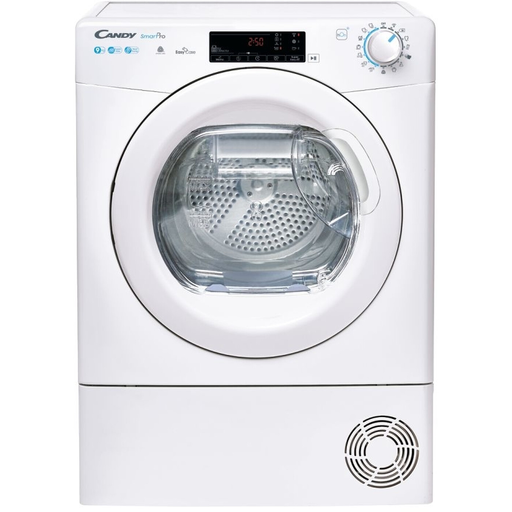
Candy CSOE H9A2TE-80 9 kg Smart Pro heat-pump dryer, White
Compare its 9 kg rated capacity with the towel loads your household actually produces, and check the towel cycle rather than relying on other short-cycle timings.
The product name states an A++ rating. Confirm the installation clearances and any warranty registration conditions that apply.
Joybuy
 No image available
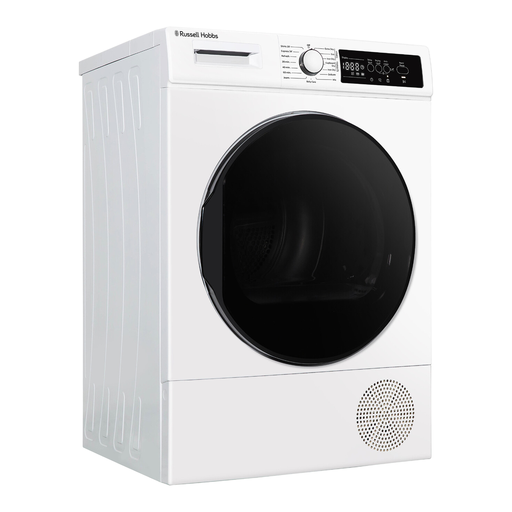
Russell Hobbs RH9HPTD1E12W 9 kg heat-pump dryer, White
The 9 kg rated capacity makes this another model to assess against regular shared-house towel loads; check the exact towel programme duration.
Compare current energy information and confirm that its position allows a suitable wall-socket connection and the required clearances.
Joybuy
Common questions
Can every towel go in a tumble dryer?
No. Dry only towels whose own care labels permit tumble drying, following their temperature and programme instructions. Keep items contaminated with solvents, grease, oil or fats out of the dryer.
Does a shared house need an external dryer vent?
Only a vented dryer needs an extractor tube leading outside. Heat-pump and condenser dryers do not need that wall vent, but still require the ventilation clearance, cleaning access and electrical connection specified for the model.
Can we use an extension lead for the dryer?
Do not plan the installation around an extension lead. Electrical Safety First warns that a tumble dryer can overload one when it is shared with other appliances; check that a suitable wall socket is within reach.
What should renters check before installing a dryer in England?
Confirm the proposed location and any property alterations with the landlord or managing agent before installation, particularly if a vented machine needs an external opening. Ministry of Housing, Communities and Local Government guidance for England says landlords must arrange checks of property electrics by a properly qualified person at least every five years; also establish who is responsible for supplying and installing the appliance under the tenancy arrangements.
How should housemates maintain a shared tumble dryer?
Agree who will remove lint from the filter after every load, as Humberside Fire & Rescue Service advises, and follow the model manual for other cleaning. Do not leave the dryer running unattended or overnight.


