
24/7 全天候客户支持

免费退货

当日/次日达

品质保障

开启新人专享福利: 全场免邮 | 低至 2 折 | 免费试用 30 天 JoyPlus 会员
下载 Joybuy
Buying a tumble dryer involves more than choosing the largest drum or the lowest ticket price. The right model depends on your household size, available ventilation, laundry habits and tolerance for ongoing electricity costs.
Marketing descriptions can also make similar appliances seem very different. Before choosing, look beyond programme counts and app features. The following guide explains the practical specifications that matter and highlights suitable options for different UK households.
An 8kg, 9kg or 10kg drum refers to the maximum dry laundry load, not the amount of clothing you should squeeze into every cycle. Overloading restricts airflow and may leave thicker items damp.
Couples and smaller households may find an 8kg tumble dryer sufficient, particularly when washing several times a week. Families, shared homes and households regularly drying bedding may benefit from a 9kg tumble dryer or 10kg tumble dryer.
A large drum is not automatically more economical if most loads are small. Match the capacity to your typical washing-machine loads and storage space.
A condenser tumble dryer does not require an external vent hose, but it still needs suitable airflow and clearance around the appliance. Moisture is collected in a tank, which must be emptied unless the model is connected to a drain.
A vented tumble dryer directs warm, moist air outdoors through a hose. It can suit a utility room with an appropriate wall or window outlet, but installing one in an enclosed room without external venting can create condensation and safety problems. Compact vented models also require careful hose positioning.
A heat pump tumble dryer recirculates warm air and generally operates at lower drying temperatures. This can reduce energy use compared with conventional designs, although cycle times may be longer and purchase prices can vary.
An A++ tumble dryer or A+++ tumble dryer can be an attractive choice for frequent use, but the rating should be considered alongside the stated annual kWh figure, capacity and programme performance. A larger appliance may consume more electricity per year simply because it handles more laundry.
Compare models on a like-for-like basis and consider how often you dry clothes. Sensor drying is also useful because the machine can stop when the selected dryness level is reached, rather than running for longer than necessary.
For regular family laundry, heat pump technology is worth considering. Lower-temperature drying may be gentler on fabrics and can support more efficient operation. Check whether the appliance has accessible filters and a heat exchanger that can be cleaned according to the instructions.
Condenser models offer flexible placement without an external hose, but you will need to empty the water tank. Vented dryers can be straightforward where an outside outlet already exists, while compact vented machines are intended for smaller loads rather than weekly family washing.
Measure the installation area, including door clearance, hose routes and the manufacturer’s recommended gap from walls. Standard freestanding dryers are commonly around 60cm wide, but depth varies.
For guidance:
A reversible door, where available, can make loading easier in a narrow utility room.
Look for features that solve a genuine household problem rather than simply increasing the programme count. Anti-crease tumble dryer functions periodically turn the drum after a cycle, helping reduce creasing if you cannot unload immediately.
Useful features may include:
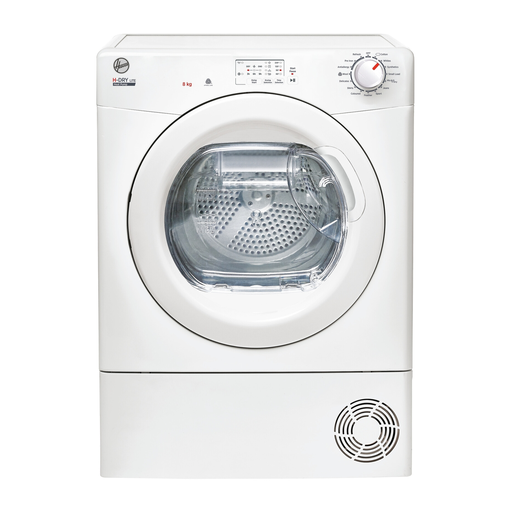
Why This Fits Their Persona: An 8kg capacity and heat pump design suit couples and smaller households wanting practical everyday drying without external venting.
Its sensor drying has four dryness levels, helping avoid unnecessary running time. The front-mounted Aquavision tank also makes water levels easier to monitor.
A+ heat pump rating, 8kg capacity, four sensor dryness levels and NFC app access.
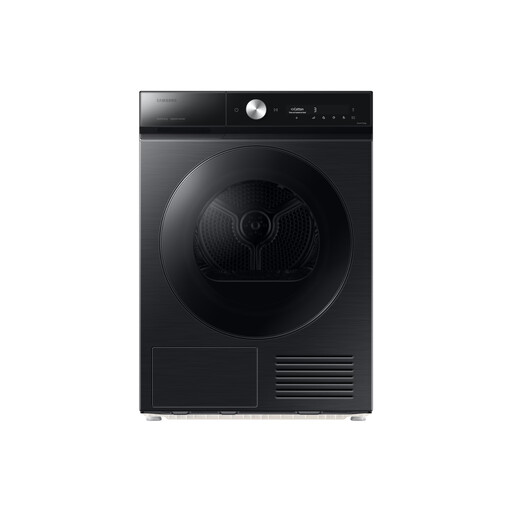
Why This Fits Their Persona: A 9kg drum, Wi-Fi control and a 60dB noise rating suit connected households that value convenience and quieter operation.
The A+++ rating is supported by listed heat pump technology, while AI Dry multi-sensing is designed to adjust drying to moisture levels rather than relying only on a fixed timer.
SmartThings Wi-Fi, 23 programmes, reversible door and a stated 5-year manufacturer warranty.
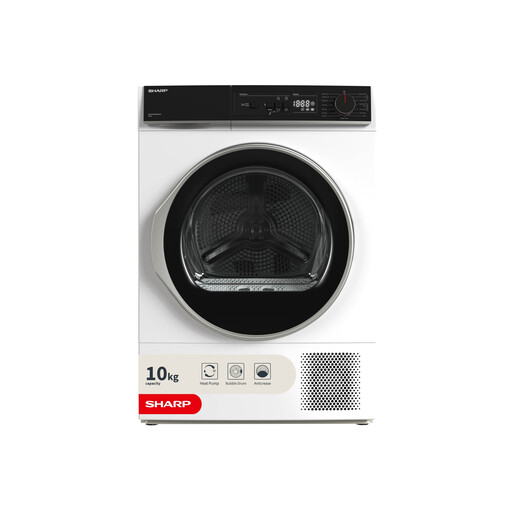
Why This Fits Their Persona: A 10kg drum is suitable for families of around four to five people, shared homes and households regularly drying bedding or towels.
The 10kg capacity addresses bulky-load needs, while sensor drying and two-way tumbling help manage drying duration and tangling.
A++ rating, 15 programmes, 258kWh stated annual consumption and anti-crease protection.
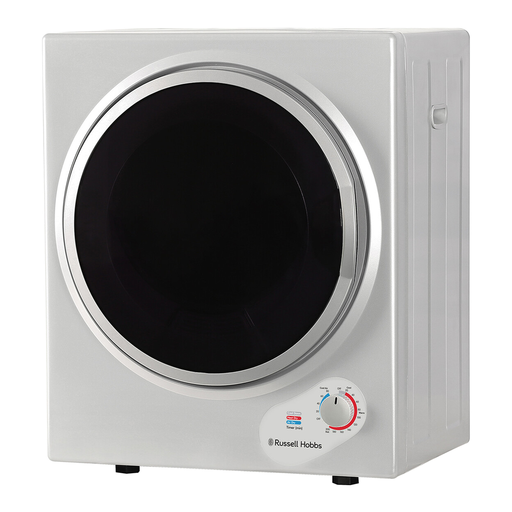
Why This Fits Their Persona: Its compact dimensions and wall-mountable design suit flats, student accommodation, mobile homes and small kitchens.
The 2.5kg capacity sets realistic expectations, while the supplied vent hose makes external venting requirements clear.
Compact 58.5 × 49.5 × 41.5cm dimensions, three heat settings and a 62dB stated noise level.
We have compiled a complete, real-time list of products that fully satisfy these strict selection criteria and UK safety regulations.
They are designed to use less energy than conventional dryer technologies by recirculating warm air and drying at lower temperatures. Actual costs depend on the appliance’s kWh rating, load size, cycle selection, electricity tariff and frequency of use.
Check the manufacturer’s installation instructions first. The appliance needs a stable, level surface, adequate clearance and a suitable electrical connection. Vented models must discharge moist air outdoors. Do not use extension leads or operate a vented model with the hose discharging indoors.
Lifespan depends on construction, usage, maintenance and installation. Cleaning the lint filter after every cycle, emptying the water tank when required and maintaining the condenser or heat exchanger can help preserve airflow and drying performance. Always follow the supplied care instructions and arrange repairs through an appropriately qualified service provider.