
24/7 全天候客户支持

免费退货

当日/次日达

品质保障

开启新人专享福利: 全场免邮 | 低至 2 折 | 免费试用 30 天 JoyPlus 会员
下载 Joybuy
A tumble dryer can make damp-weather laundry far easier, but choosing one purely by price, capacity or a large energy-rating label can lead to costly compromises. The right appliance depends on your available space, typical load size, installation options and how much you value lower running costs or smart controls.
Before comparing models, watch out for three common buying traps:
There are three main types of tumble dryers available to UK households:
For households running frequent cycles, compare the stated energy consumption rather than relying only on terms such as energy-efficient tumble dryers or A+++ tumble dryers. Product listings may use different rating information, so check the full specification before ordering.
Capacity refers to the maximum weight of dry laundry. As a practical guide:
Avoid regularly overfilling the drum. Clothes need space to move freely, otherwise drying may become uneven and creasing can increase.
Many full-size tumble dryers measure approximately 85cm high and 60cm wide, but depth varies. The LG RHA1008NWK, for example, is listed at 66cm deep, while some Candy heat pump models are shallower. Measure:
A reversible door can help in a tight utility area. Condenser and heat pump models still require routine maintenance: clean the lint filter after each cycle, empty the water tank when required and follow the manual for condenser or heat-exchanger cleaning. For vented appliances, inspect the hose for kinks and ensure moist air is directed outdoors.
Noise also matters in open-plan homes. The listed models range from approximately 60dB to 68dB, so compare the stated figure if you plan to run laundry near a bedroom or living area.
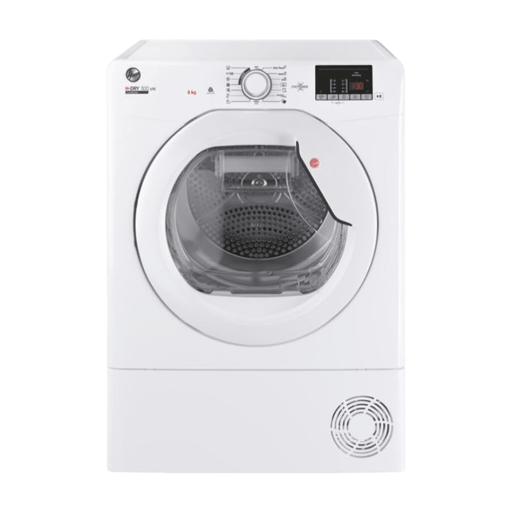
Why This Fits Their Persona: An 8kg capacity and vent-free condenser design suit couples, small families and renters who need straightforward drying without installing an external hose.
Its specification clearly states the B energy class, 8kg capacity and front-accessible tank, making the running-cost and maintenance trade-offs easier to assess.
12 programmes, four dryness levels, a 24-hour delay timer and listed dimensions of 85 x 60 x 53cm.
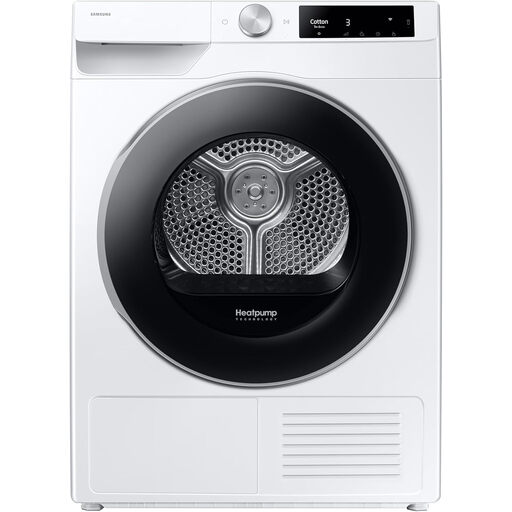
Why This Fits Their Persona: A 9kg drum, heat pump technology and connected controls suit households wanting lower-temperature drying with added scheduling convenience.
OptimalDry sensors are specified to adjust cycle timing, helping reduce reliance on fixed timed programmes that may over-dry smaller loads.
A+++ listed rating, SmartThings Wi-Fi, reversible door, 63dB noise level and a Quick Dry 35' programme for a 1kg load.
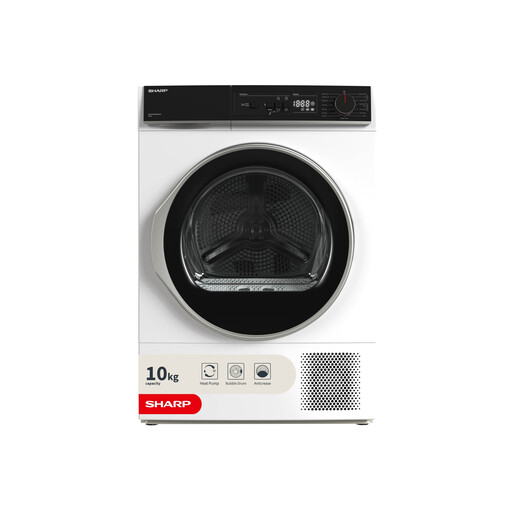
Why This Fits Their Persona: The 10kg capacity is aimed at larger households handling bedding, towels and substantial weekly laundry loads.
Its heat pump format and sensor drying address the false economy of repeatedly running smaller, fixed-time cycles for large loads.
10kg capacity, A++ listed rating, 15 programmes, five dryness levels, reversible door and a 64dB noise rating.
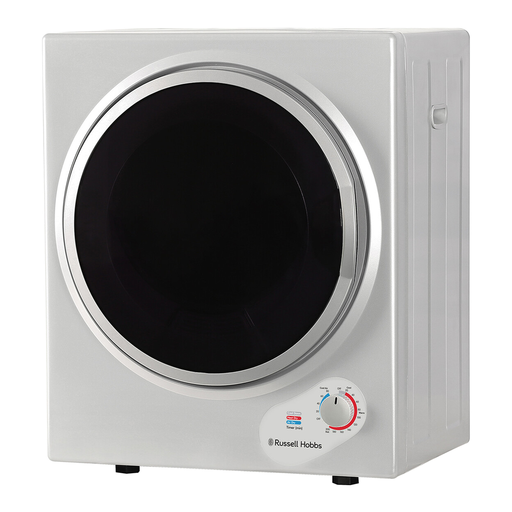
Why This Fits Their Persona: Its compact footprint suits student rooms, small kitchens, mobile homes and flats where a full-size appliance will not fit.
The 2.5kg capacity and vented installation are explicit, helping prevent buyers from expecting full-size family performance from a compact unit.
Wall-mountable design, three heat settings, 62dB noise level and a supplied vent hose.
Read the fabric-care labels and avoid drying items contaminated with cooking oil, solvents, petrol or other flammable substances. Do not dry foam, rubber or waterproof items unless the appliance manual specifically permits it. Keep the lint filter clear after every use, do not use an extension lead, and allow the cool-down phase to finish before unloading where possible.
Sensor dry programmes can help prevent unnecessary heating, but correct loading and maintenance remain essential. A blocked filter, restricted vent hose or dirty heat exchanger can increase cycle times and energy use.
They are designed to operate at lower temperatures and recycle warm air, and their stated energy consumption is often lower than that of condenser or vented alternatives. Actual costs depend on the appliance, programme, load size, electricity tariff and frequency of use. Compare annual kWh figures rather than relying on the rating label alone.
It does not need an external vent hose, so placement is more flexible than with a vented model. However, it still needs a stable, level position with suitable clearance and ventilation. You must also empty the water tank and clean the filters as directed.
Lifespan varies with build quality, usage, loading habits and maintenance. Cleaning the lint filter after every cycle, keeping airflow clear and following the manufacturer’s care instructions can help support reliable operation. Check the warranty terms, registration requirements and availability of servicing before purchasing.