What matters when choosing?
Choose the dryer type around the available vent route and expected frequency of use, then compare exact models for cotton-load capacity, programme conditions and safe placement.
Heat-pump dryer
Consider it when: Cotton loads will be frequent and there is no suitable external wall vent.
Trade-off: Programme duration depends on the model and load, so check the cotton programme rather than assuming every cycle will suit a busy household.
Condenser dryer
Consider it when: An external vent is unavailable and the household can manage the model’s water-collection or approved drainage arrangement.
Trade-off: Electrical Safety First describes heat-pump dryers as more energy-efficient than condenser dryers; compare the current labels for the exact models under consideration.
Vented dryer
Consider it when: The property has, or can safely accommodate, the required external extractor route and any necessary permission is in place.
Trade-off: The extractor tube and wall opening make installation less straightforward in a shared rented home without an existing suitable route.
| Concern | What to check | Who this matters to |
|---|
| Energy use over winter |
Compare the current energy labels and product information sheets for the exact models, including the relevant programme information. |
If our house will run cotton loads regularly, electricity use across those loads matters more to me than a feature I might rarely use. Around 40% of consumers put running energy use first. |
| Shared-load throughput |
Check rated capacity, the cotton programme’s load limit and any separate limits on short cycles. |
With several people waiting to dry laundry, I need to know whether a programme handles our usual cotton load or only a smaller one. For around 30% of consumers, clearing the laundry queue is the primary concern. |
| Cotton dryness control |
Look for a suitable cotton dryness setting and sensor control; follow each garment’s care label. |
I want everyday cotton items dry enough to put away without choosing an unnecessarily long cycle. Avoiding under- or over-drying comes first for around 20% of consumers. |
| Placement and upkeep |
Measure the space and required clearances; check socket access, stated noise, filter access and water handling. |
In a cramped shared utility area, I need the dryer to fit safely and a cleaning routine everyone can follow. Around 10% of consumers place installation and upkeep first. |
Joybuy tumble dryers for this scenario
These models cover heat-pump and condenser options for a shared house comparing winter cotton drying. Capacities range from 8 kg to 10 kg; check each model’s cotton-programme conditions, current energy label and installation requirements before deciding.
 No image available
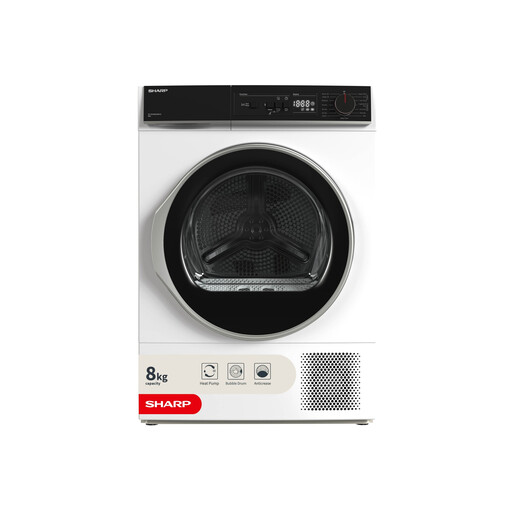
Sharp KD-NHA8S6GW1D-EN 8 kg heat-pump dryer, white
Consider this 8 kg heat-pump model if regular loads and a vent-free installation suit your shared house. Its title states an A++ rating; compare the current product label and check the cotton programme’s load and duration before planning a laundry rota.
View on Joybuy
 No image available
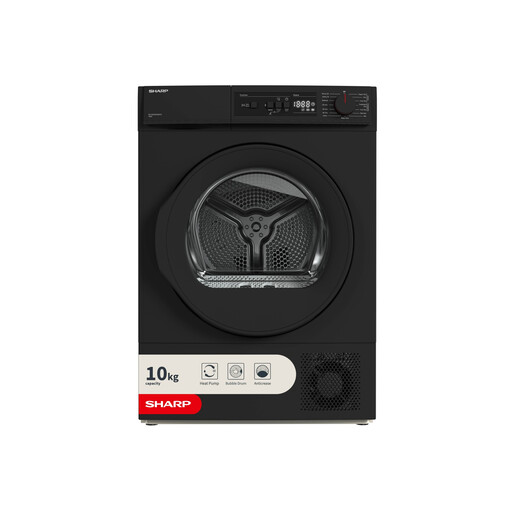
Sharp KD-NHA0S6GM1D-EN 10 kg heat-pump dryer, matte black
The stated 10 kg capacity makes this a model to examine if the household regularly has larger loads, provided it fits the available space. Check the exact cotton programme’s load limit, the current product label and the manual’s installation clearances rather than treating drum capacity as a cycle-time measure.
View on Joybuy
 No image available
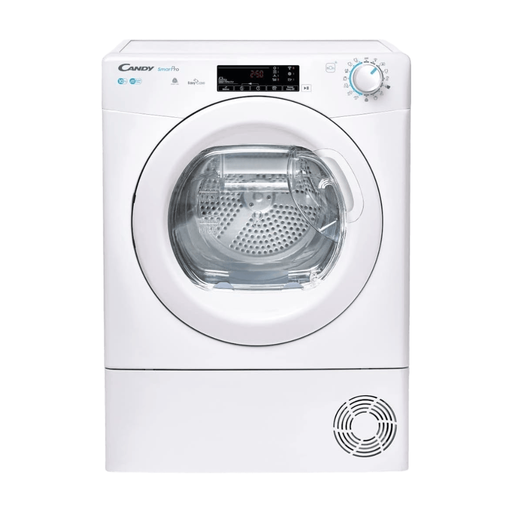
Candy Smart Pro CSOEC10TE-80 10 kg condenser dryer, white
This 10 kg condenser model is an option to compare when there is no external wall vent and the household can manage collected water. The title identifies sensor drying, EasyCase and Wi-Fi connectivity; compare its current energy label with heat-pump alternatives and check the cotton programme’s rated load.
View on Joybuy
 No image available
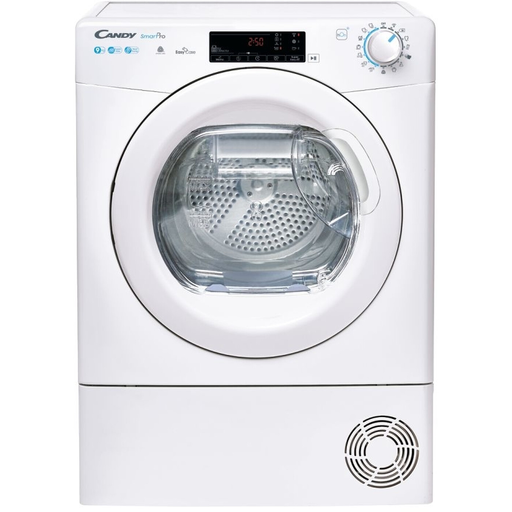
Candy CSOE H9A2TE-80 Smart Pro 9 kg heat-pump dryer, white
This 9 kg heat-pump model fits a household comparing vent-free dryers for repeated winter loads. Its title states an A++ rating; use the current product label for energy comparisons and check the cotton settings and any short-cycle load limits before relying on them for shared use.
View on Joybuy
 No image available
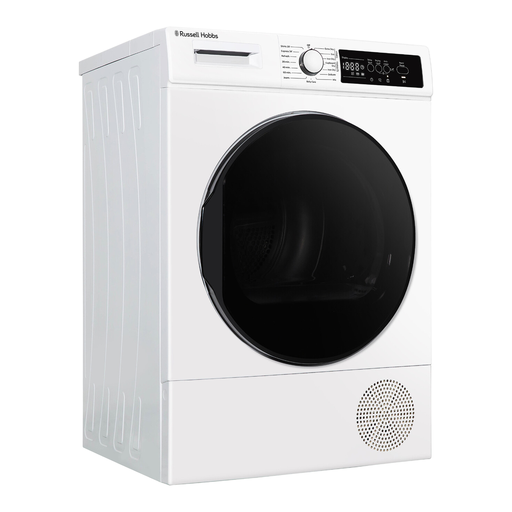
Russell Hobbs RH9HPTD1E12W 9 kg heat-pump dryer, white
Consider this 9 kg heat-pump model for a shared house without a suitable wall vent. Before placing it near bedrooms or relying on a short programme, check the exact model’s stated noise level, cotton settings and programme load limits; plan for accessible filter and tank maintenance.
View on Joybuy
Common questions
Does a shared-house tumble dryer need an external wall vent?
Only a vented dryer needs an extractor route to the outside. Electrical Safety First says condenser and heat-pump dryers do not need a hole in the wall, but every model still needs the installation clearances and water-handling arrangements specified in its instructions.
Is an 8 kg or 9 kg dryer enough for several housemates?
Either capacity may suit, depending on the size and frequency of the household’s cotton loads. Compare the cotton programme’s permitted load, the dryer’s dimensions and any smaller-load settings; the drum’s headline capacity does not establish the capacity or duration of every programme.
Can we use an extension lead for the dryer?
Plan for a suitable wall socket rather than relying on an extension lead. Electrical Safety First warns that a tumble dryer can overload an extension lead when used with other appliances and advises placing the dryer close enough to plug into a wall socket.
What cleaning should housemates agree to do?
Agree who will clean the lint filter and door area after every use, then follow the exact model’s instructions for the tank, condenser or drain. Electrical Safety First gives the after-every-use lint-cleaning advice; a shared rota helps make that routine clear to everyone using the appliance.
Should we check for a recall before using a tumble dryer?
Yes—check current manufacturer and Office for Product Safety and Standards notices against the exact model and serial number. The Office for Product Safety and Standards has warned that certain affected integrated heat-pump dryers made by Haier must not be used until repaired; that instruction concerns the identified appliances, not every dryer from the brands involved.


