What to check before buying
Start with the loads and space in your home, then compare energy information and day-to-day upkeep. A heat-pump or condenser dryer avoids a wall vent; a vented dryer needs a suitable external vent route.
| Concern |
What to check |
Who this matters to |
| Repeated family loads |
Compare rated drum capacity in kg with your usual washed load; check programmes for the garments you intend to dry. |
When uniforms and household washing build up together, I need enough capacity to plan the loads without overfilling the drum. Around 27% of consumers put repeated-load capacity first. |
| Electricity use and fabric care |
Compare current energy information for the exact models, then check moisture-sensing controls and garment-care instructions. |
With school clothes going through frequent cycles, I want to weigh electricity use alongside how the available programmes handle my fabrics. For around 33% of consumers, that is the primary concern. |
| Fit and installation |
Measure maximum depth, access and door clearance; confirm socket position, required ventilation space and any external vent route. |
If the laundry area is tight, I need a dryer that can be brought in and installed as instructed. Physical fit is the leading concern for around 20% of consumers. |
| Safe, manageable upkeep |
Read the model’s filter and water-container instructions; check its recall status and plan appliance registration. |
When several people use the dryer, I need a cleaning routine everyone can follow and a way to receive safety notices. Around 20% of consumers prioritise straightforward, safe upkeep. |
Brands to consider
These model-line examples can help frame the checks; features and dimensions must be confirmed for the particular dryer you choose.
Bosch
Bosch’s UK heat-pump range includes freestanding 8 kg and 9 kg models for comparing drum sizes.
- Bosch says its heat-pump dryers reuse heated air through a heat exchanger to dry at lower temperatures.
- Check the chosen model’s dimensions, programmes and current energy information rather than applying a range-wide description to every variant.
AEG
The AEG TR718AE4B is an 8 kg heat-pump example with published installation dimensions.
- AEG lists a 64 dB noise level and describes sensor-based and mixed-load programmes for this model.
- Its stated maximum depth is 663 mm; allow for the full installation space, not capacity alone.
Beko
The Beko BM3T3822 provides an 8 kg heat-pump example for households checking a constrained space.
- Beko lists dimensions of 84.6 × 59.8 × 54.5 cm and says its sensor programmes stop at the selected dryness level.
- Confirm the installation instructions and current energy information for the exact model before choosing it for a particular space.
Heat-pump dryers for family laundry on Joybuy
These 8 kg and 9 kg heat-pump models are relevant when school clothes are dried alongside recurring household laundry. Compare their stated capacity with your loads, then check the energy information, installation instructions and exact-model safety notices.
 No image available
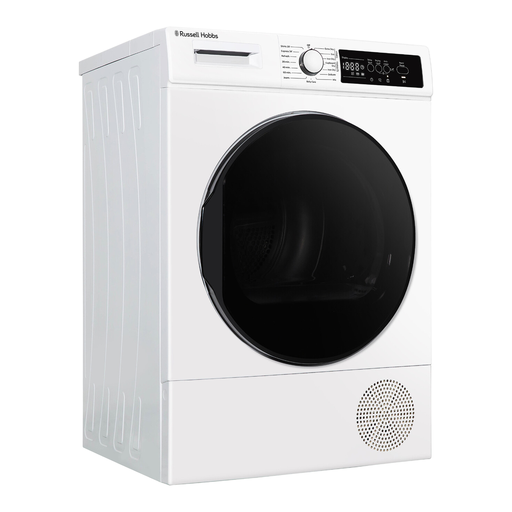
Russell Hobbs RH9HPTD1E12W 9 kg heat-pump dryer, white
The stated 9 kg capacity is worth considering if school clothes regularly share the wash with larger household loads.
Check the programmes against garment labels and confirm the dryer’s full installation space, current energy information and exact-model safety status.
View on Joybuy
 No image available
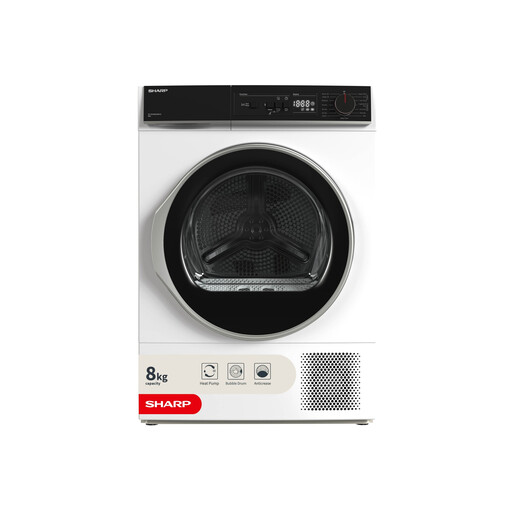
Sharp KD-NHA8S6GW1D-EN 8 kg heat-pump dryer, white
The stated 8 kg capacity gives families a different load-size reference from the 9 kg models shown here.
Confirm that the full dimensions and programmes suit your home and laundry; use the model’s current energy information when comparing electricity use.
View on Joybuy
 No image available
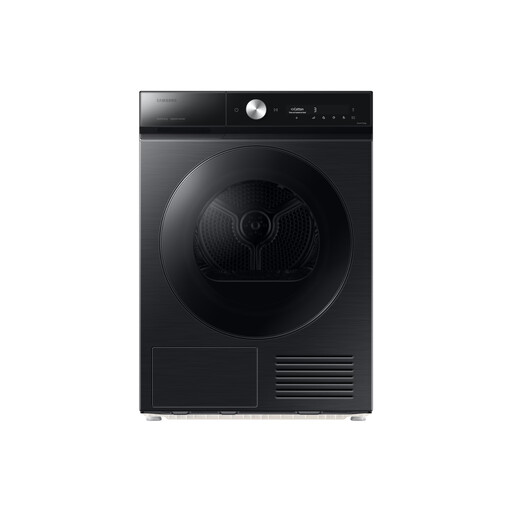
Samsung Series 8 AI Energy DV90BB9545GBS1 9 kg smart heat-pump dryer, black
Consider its stated 9 kg capacity if recurring family loads make drum size a priority.
Check which programmes suit the garments you dry, along with installation clearances, current energy information and exact-model safety notices.
View on Joybuy
 No image available
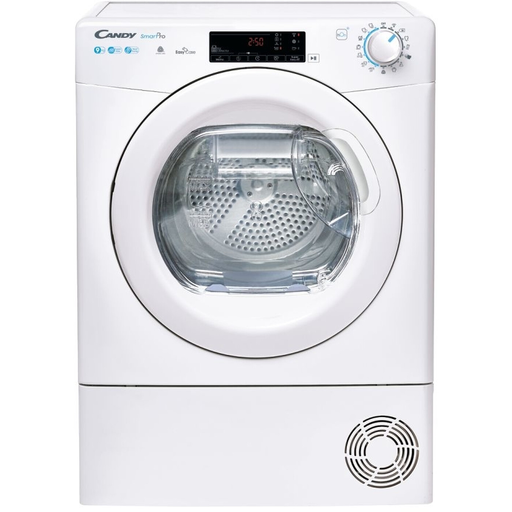
Candy Smart Pro CSOE H9A2TE-80 9 kg heat-pump dryer, white
Its stated 9 kg capacity is relevant when uniforms form part of larger family loads.
Check the exact programmes before relying on a shorter cycle for particular garments, and confirm installation space and current energy information.
View on Joybuy
 No image available
Hoover HRE H9N2TE-80 9 kg heat-pump dryer with Sensor Dry and Wi-Fi, white
The stated 9 kg capacity and Sensor Dry control may be relevant if you regularly dry mixed family laundry.
Check the programmes and garment instructions, and confirm fit, current energy information and the exact model’s safety status.
View on Joybuy
Frequently asked questions
Does a heat-pump tumble dryer need a wall vent?
No wall opening is needed for a heat-pump dryer, according to Electrical Safety First. A vented dryer does need an extractor tube connected through a wall opening; whichever type you choose, follow its installation instructions for ventilation space.
Can I use an extension lead for a tumble dryer?
Plan to use a suitable wall socket instead. Electrical Safety First warns that a tumble dryer can overload an extension lead, particularly when other appliances are connected to it.
How often should I clean the lint filter?
Clean the tumble-dryer filter after every load, as London Fire Brigade advises. Follow the exact model’s instructions for cleaning around the door and maintaining other accessible parts.
How should I compare tumble-dryer energy labels?
Compare the current energy label and product information for the exact models you are considering, using a like-for-like basis. Energy Saving Trust explains that the A-to-G scale runs from A as most efficient to G as least efficient; check which label is supplied with each appliance rather than treating different label scales as interchangeable.
How can I check a heat-pump dryer for safety notices?
Search for the exact model number in current manufacturer and UK recall information before buying, then register the appliance after delivery. London Fire Brigade’s 2025 warning concerned a modification programme for specified heat-pump dryer models, not every dryer from an affected brand.


