Family pasta-bake planners
If you make repeat family bakes, compare the recipe’s drained tuna quantity with the size of each tin. A larger pack is useful only if you can use its contents across the meals you have planned.


For a family tuna bake, start by matching the recipe to the tuna’s drained weight; a four-tin spring-water pack is a practical starting point if you can use that quantity. Choose brine or oil when it suits the recipe, or a smaller no-drain pack when reducing handling matters more than having four tins. Check the fish allergen declaration, inspect the tuna for bones and plan how you will store any leftovers before children help assemble the bake.
If you make repeat family bakes, compare the recipe’s drained tuna quantity with the size of each tin. A larger pack is useful only if you can use its contents across the meals you have planned.
If children will help mix or assemble the bake, the amount of draining and the size of each portion affect the preparation. An adult should handle the tins and inspect the tuna before children eat it.
If the recipe’s seasoning matters, compare spring water, brine and oil on the exact label. Check the fish allergen declaration and any instructions for opened tuna as well.
Decide how much drained tuna the bake needs, then weigh that against preparation and the packing liquid.
| Concern | What to check | Who this matters to |
|---|---|---|
| Usable quantity | Compare tin count, tin size and stated drained weight with the recipe quantity. | When I plan several family bakes, I want enough tuna without opening tins the recipe cannot use. About 40% of consumers put matching the usable quantity first. |
| Less handling | Check whether the exact pack needs draining and how its tin sizes fit the recipe. | If children are helping to assemble the bake, I want to keep draining and leftover handling manageable. Reducing that work is the primary need for about 30% of consumers. |
| Ingredients and food checks | Read the packing liquid, salt and fish allergen declarations; inspect the tuna for bones. | When seasoning a bake for the family, I need to know what the tuna adds to the recipe and check it before serving. About 30% of consumers prioritise those ingredient and food checks. |
Four tins do not necessarily provide the same usable quantity. Tesco Groceries lists a drained weight of 4 x 139g for its 4 x 160g spring-water pack, while its John West 4 x 125g listing states 102g drained per tin.
Add up the drained tuna your recipe needs and compare it with the figure on the exact pack.
Spring water, brine and oil bring different ingredients to a bake. A brine-packed tin should not be treated as having the same salt declaration as a spring-water variant.
Choose a packing liquid that fits the recipe, then read the exact tin’s ingredients and salt declaration before seasoning.
Leftover tuna needs prompt attention once a tin is opened. The John West listing at Sainsbury’s instructs shoppers to refrigerate it and consume it within two days.
Follow the storage instructions on your pack and decide how you will use any remainder before opening another tin.
Tuna is a fish allergen. John West’s brine product information also warns that some bones may remain.
Have an adult open the tins, check allergen suitability and inspect the flaked tuna before children help with mixing or assembly.
Princes lists spring-water tuna chunks in 4 x 145g, 6 x 145g and 8 x 145g formats, giving households several pack counts to compare with their planned bakes.
A 4 x 125g spring-water pack offers smaller tins than the 4 x 145g formats in this comparison.
Tesco lists own-label spring-water chunk multipacks, including a 4 x 145g option.
Sainsbury's lists own-label tuna chunks in brine at 4 x 145g and suggests them for pasta bakes.
These multipacks cover brine, spring water, sunflower oil and a smaller no-drain format for family bakes. Match the tin sizes and packing liquid to your recipe before choosing.
 No image available
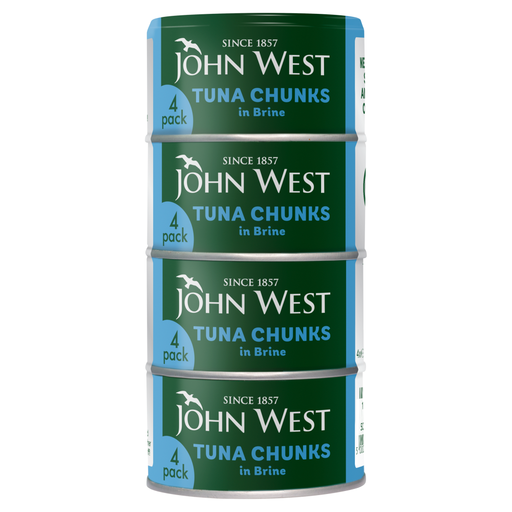
Consider this four-tin brine pack when its seasoning suits your bake. Compare the drained quantity with your recipe, and check the fish allergen declaration and tuna for bones before serving it to children.
 No image available
These four 125g tins are a brine option when smaller tins suit the quantities you use. Check the drained weight against the recipe; the product information declares fish as an allergen and warns that some bones may remain.
 No image available
Choose this spring-water format if four 125g tins fit your baking plans. Check the drained quantity before deciding how many tins to open, and follow the pack’s fish allergen and storage information.
 No image available
Consider this four-tin pack if sunflower oil fits the bake you are making. Each tin is 145g; check the drained quantity and account for the oil when following the recipe.
 No image available
This three-can pack is an option when avoiding a draining step matters during child-assisted assembly. Its tins are 100g each, so check whether three tins provide the quantity your recipe calls for; an adult should still check the tuna before serving.
Match the recipe’s required drained tuna to the exact pack, rather than choosing by tin count alone. Princes and Tesco have 4 x 145g spring-water formats listed, while a John West 4 x 125g spring-water listing at Sainsbury’s specifies 102g drained per tin; Princes also lists 6 x 145g and 8 x 145g formats if you have plans for more tins.
Tinned tuna can be used in a pasta bake; Sainsbury's suggests that use for its brine-packed chunks. Follow the recipe’s draining instructions for the packing liquid you choose rather than assuming every tin is a no-drain product.
Follow the storage directions on the exact pack and refrigerate unused tuna promptly. The John West listing at Sainsbury’s says to refrigerate it after opening and consume it within two days.
Check that fish is suitable for everyone eating it, then have an adult inspect the flaked tuna for bones. Tuna labels declare fish as an allergen, and John West product information warns that some bones may remain.