
24/7 Customer Support

Free returns

Same-day & Next-day Delivery

Quality Guaranteed

Unlock Your Welcome Offers: FREE Delivery | Up to 80% OFF | Free 30-day JoyPlus trial
Download the APP
As a cat owner, you know that few things get a more enthusiastic response than the sound of a pouch or tin being opened. Tuna, in particular, is a flavour many felines find irresistible. However, the aisle for tuna cat food is crowded with options, and not all are created equal. Navigating the marketing claims to find a healthy, good-value option can be tricky.
This guide, from your Joybuy Product Recommendation Officer, cuts through the clutter. We will highlight a few common purchasing pitfalls and clarify the key factors to check, helping you choose a food that keeps your cat both happy and healthy.
Before you add that multipack to your basket, be aware of these frequent traps that can lead to wasted money and a poorly nourished pet.
To make an informed choice, focus on these three non-negotiable parameters. They will tell you more about the food's quality than any marketing slogan.
The first decision is between wet cat food tuna and dry cat food tuna. Neither is inherently better; they simply serve different needs.
Always turn the pack over and read the "Composition" or "Ingredients" list. This is where the truth lies. Look for:
Double-check whether the food is "complete" or "complementary." This is a legal requirement and must be stated on the packaging. A complete food can be fed every day as your cat's sole diet, whereas a complementary food should only be given occasionally alongside a balanced diet.
We have filtered through the options to match different needs and preferences. Here are some recommendations that align with our selection criteria.
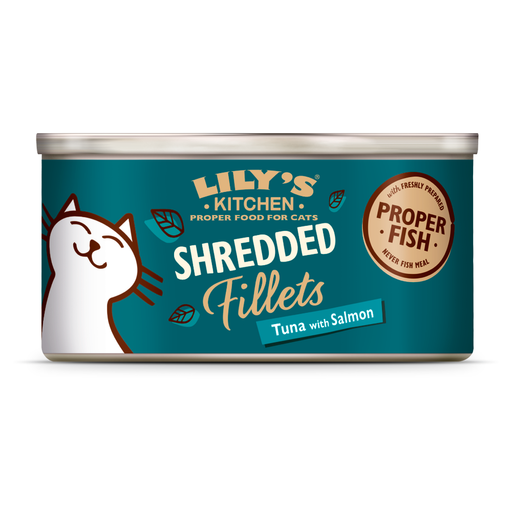
Why This Fits Their Persona: This owner prioritises natural ingredients and high meat content. This recipe is ideal for those seeking a premium, grain-free option for their cat, reflecting a focus on clean and simple nutrition.
It sidesteps the "tuna flavour" illusion by clearly stating its high fish content (47% tuna). While it is a complete food, its high-quality composition makes it a standout choice.
Features a very high percentage of real, shredded tuna and salmon. The recipe is grain-free, making it suitable for cats with certain dietary sensitivities.

Why This Fits Their Persona: For households with multiple cats or those looking for maximum value, a large multipack is the most practical choice. This pack provides a reliable, complete meal at a low cost per serving.
It avoids the "complementary" food mistake by being a 100% complete and balanced food. The variety of fish flavours (including tuna) reduces the risk of the bulk-buy gamble, as there are other options if one is rejected.
Excellent value for money in a large 40-pouch pack. Provides complete daily nutrition from a widely recognised brand.
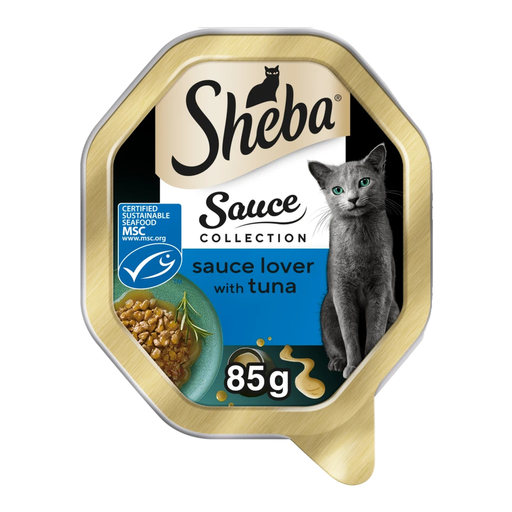
Why This Fits Their Persona: This owner is dealing with a picky eater where texture and palatability are everything. The "Sauce Lover" range focuses on a rich gravy, which is often the part cats enjoy most, making it highly effective at tempting fussy felines.
This is a complete meal, not just a tasty sauce. The single-serve tray format avoids the waste of opening a larger pouch or tin that a fussy cat might not finish, ensuring freshness and portion control.
Features a highly palatable, sauce-rich texture. The convenient 85g tray provides a fresh, perfectly portioned meal every time.
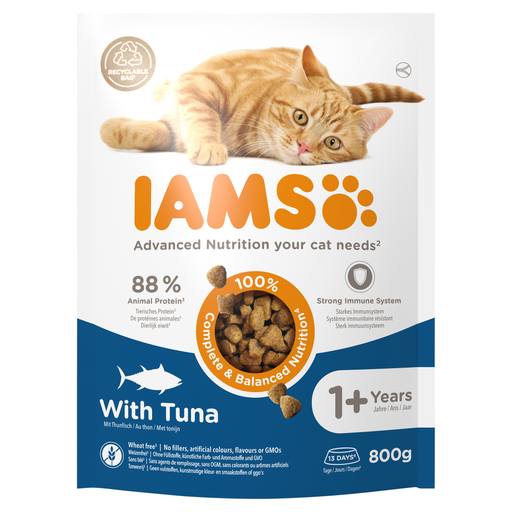
Why This Fits Their Persona: This owner prefers the ease of storage, serving and dental benefits associated with dry kibble. This Iams formula offers a high-protein, complete dry food option with a tuna flavour their cat enjoys.
As a complete dry food, it avoids the complementary food trap entirely. It also has a high level of animal protein (88% of total protein), steering clear of the low-quality filler issue seen in some dry foods.
High animal protein content supports muscle health. The crunchy kibble helps reduce tartar build-up for healthier teeth.
We have compiled a complete, real-time list of products that fully satisfy these strict selection criteria and UK safety regulations.
Here are answers to a few common questions UK cat owners have about tuna cat food.
Yes, provided the food is labelled "complete and balanced." This ensures it contains all the nutrients your cat requires daily. However, feeding only one type of protein can sometimes lead to fussy eating or potential dietary imbalances. Many owners find that rotating between different protein sources (like chicken, salmon and tuna) keeps their cat interested and provides a wider range of nutrients.
The main difference is texture and moisture content. Cat food in jelly suspends the meat or fish pieces in a firm, gelatinous block. Cat food in gravy contains more liquid, creating a saucier meal. The choice often comes down to your cat's personal preference. Some cats love to lick up all the gravy, while others prefer the texture of jelly. Gravy-based foods can be a good way to increase your cat's water intake.
To avoid an upset stomach, it is always wise to introduce any new food gradually. Start by mixing a small amount of the new food (about 25%) with their old food (75%). Over the next 7-10 days, slowly increase the proportion of the new food while decreasing the old, until you have fully transitioned them over.