What matters when buying?
Decide whether the fish should stand apart or be mixed in, then check how its packing liquid and seasoning will work with the recipe.
| Concern |
What to check |
Who this matters to |
| Texture and presentation |
Check whether the exact tin contains chunks, steaks or fillets, particularly if you need recognisable pieces. |
If the tuna is meant to stand apart in a plated pasta or rice bowl, I want pieces I can recognise; about 36% of consumers would put texture and presentation first. |
| Preparation |
Check whether draining is needed and whether the packing liquid works in the dish. |
When dinner needs minimal handling, I want to avoid an extra draining step; about 29% of consumers would make quick preparation their primary concern. |
| Flavour and ingredients |
Read the exact ingredients and nutrition panel; check whether oil or added seasoning fits your sauce. |
For a sauce I season myself, I want the tuna's liquid and flavouring to fit what is already in the pan; about 21% of consumers would prioritise that control. |
| Sourcing |
Look for the relevant certification or traceability claim on the exact pack. |
If a sourcing claim will influence my choice, I want it attached to the tin I buy; about 14% of consumers would put sourcing verification first. |
Brands to consider
These ranges provide examples of the formats and packing liquids worth comparing; check the details of the particular tin.
John West
A reference point for no-drain tuna chunks when preparation time matters.
- John West lists tuna, spring water and salt for its no-drain spring-water chunks, with 27g protein and 0.9g fat per 100g.
- The no-drain format addresses preparation; it does not establish how every John West variant will fit your sauce or presentation.
Princes
Its tuna range includes chunks, drained tuna, sandwich tuna, steaks and Ocean Select formats.
- The range gives cooks different fish formats to compare for mixed-in and more tuna-forward dishes.
- Check the exact variant's format, packing liquid and seasoning rather than applying one range description to every tin.
Tesco
Tesco Groceries is a useful comparison point for tinned tuna in oil, spring water and brine, as well as steaks and drained formats.
- Its tuna category separates formats and packing liquids, making recipe-fit differences easier to identify.
- A category filter does not establish the ingredients or fish format of a particular tin; check its listing.
M&S
M&S lists tinned-fish options including tuna steaks and chunks, with olive-oil and spring-water choices.
- The stated formats offer options for both tuna-forward plates and dishes where the fish is mixed through.
- Check each product's own ingredients, sourcing wording and storage instructions; details for one M&S tin do not cover the whole range.
Joybuy tuna selections
These tins cover chunks for sauce-led dishes and an olive-oil option to consider when the fish will be more prominent. Check the piece format of the Fish4ever tin before relying on it for intact steaks.
 Image unavailable
John West No Drain Tuna Chunks in Springwater, 3 x 100g
Consider these chunks for tuna folded through pasta, rice or a filling when you want to add your own sauce. The three-pack contains 100g portions; check a different format if intact pieces are central to the dish.
View on Joybuy
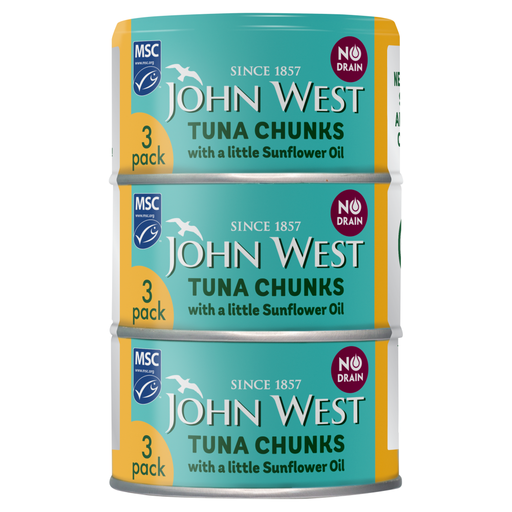 Image unavailable
John West No Drain Tuna Chunks in Sunflower Oil, 3 x 100g
Consider this no-drain three-pack for a quick mixed-in dish if sunflower oil suits the recipe. It contains chunks rather than a stated steak or fillet format; check any sourcing claim on the exact pack if that affects your choice.
View on Joybuy
 Image unavailable
Princes Tuna Chunks in Sunflower Oil, 4 x 145g
This four-pack is an option for dishes where tuna chunks will be mixed into the other ingredients and sunflower oil fits the sauce. Each tin is labelled 145g; the title does not establish a no-drain format.
View on Joybuy
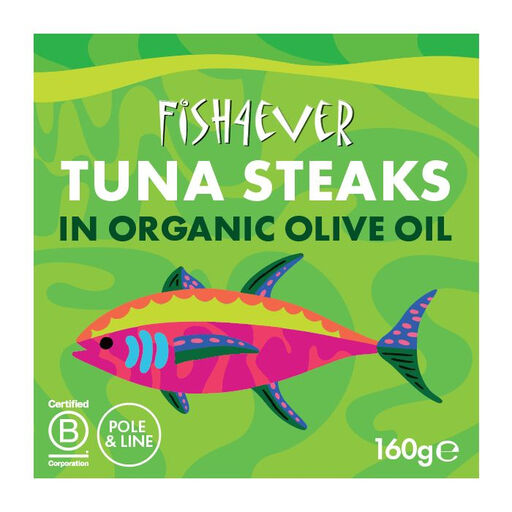 Image unavailable
Fish4ever Tuna Steaks in Organic Olive Oil, 160g
Consider this 160g olive-oil tuna if that packing oil fits a tuna-forward dish. Its product title says steaks, but another description calls the fish chunks, so confirm the piece format before choosing it for a plate that needs intact steaks.
View on Joybuy
Questions about tinned tuna
Should I use tuna steaks, fillets or chunks for a fakeaway?
Look at steaks or fillets when the dish needs recognisable pieces of tuna; use chunks when the fish will be stirred through a sauce, rice or filling. Tesco Groceries and M&S list these formats, but the name of the exact tin still needs checking.
Should I choose spring water, brine or oil?
Spring water is a straightforward choice when you plan to add your own oil and seasoning; choose oil when it fits the dish. If considering brine or a flavoured tin, read that product's ingredients and salt information rather than assuming it will work with your sauce.
How should I store tuna left in an opened tin?
Follow the instructions on the exact product. For its spring-water tuna chunks, M&S says to move unused contents to a non-metallic container, refrigerate them and eat them within 2 days.
What should I check if fish is an allergen for me?
Check the ingredients and allergen declaration on the exact pack rather than relying on a short product description. The Food Standards Agency identifies fish as an allergen.
How can I assess a tuna tin's sourcing claim?
Look for the stated certification or traceability wording on the exact tin or multipack. A claim made for a Princes or M&S range should not be assumed to apply to every variant, and an ecolabel needs to be checked on the product you choose.


