What should you check?
Start with the claim you care about—an organic ingredient, fishery sourcing or a convenient pack—then compare tins on the same stated weight and nutrition basis.
| Priority | What to check | Your needs |
|---|
| Organic wording |
Read which ingredient is described as organic and check the certification information. Distinguish an organic oil claim from a claim about the fish. |
I want the organic claim to apply to an ingredient I actually intend to buy, rather than assuming wild tuna is organic. |
| Usable portions |
Compare tin and multipack sizes. Check whether stated weights and nutrition figures refer to drained tuna or the product as sold. |
Several separate tins would help me plan pasta, rice or jacket-potato dinners without opening them all at once. |
| Fishery sourcing |
Look for a specific wild-seafood label, such as MSC, and read the species, origin and catch information where given. An organic ingredient claim answers a different question. |
How the fish was sourced matters to me more than whether its packing oil is organic. |
| Packing medium |
Check whether the tuna is packed in brine, spring water or oil. Compare salt and other nutrition figures per 100g on the same stated basis. |
For a quick dinner, I want a packing medium that works with the dish and nutrition information I can compare clearly. |
Brand and retailer references
These examples illustrate different product and sourcing claims; a brand name alone does not establish what is on an individual tin.
Fish4Ever
Its 160g tuna-steak example pairs wild skipjack tuna with organic olive oil.
- Joybuy’s ingredient listing identifies skipjack tuna and organic olive oil.
- The organic wording concerns the oil; Fish4Ever says wild-caught fish cannot itself be labelled organic.
Sainsbury's
Its own-label tuna chunks in brine come in a 4 × 145g multipack.
- The cited product listing says the tuna comes from fisheries independently certified to the MSC standard.
- An MSC fishery claim is not an organic ingredient claim; check the exact tin for the attributes you want.
Tesco
Its tinned-tuna range provides formats and packing media to compare.
- The cited range includes tuna packed in brine, spring water and oil.
- Check individual product labels rather than applying a range-wide claim to a particular tin.
John West
Chunks, multipacks and no-drain formats offer different ways to portion a quick meal.
- The named formats let you choose between conventional tins and a no-drain option.
- Check the packing medium and any sourcing claim on the exact product; they differ across formats.
Princes
The cited supermarket listings include 4 × 145g tuna chunks in several packing media.
- Brine, spring-water and sunflower-oil versions give shoppers a choice of packing medium.
- A packing-medium choice does not establish an organic ingredient or fishery certification; read the specific label.
Asda
Asda publishes a sourcing policy for its own-brand tinned tuna.
- Asda describes pole-and-line, fish-aggregating-device-free and specified fishery-improvement sources in that policy.
- A retailer policy does not tell you that every tin has an organic or MSC label; check the product.
M&S
M&S publishes traceability and seafood-sourcing information covering canned fish.
- M&S says its seafood sourcing standard covers fish in canned products as well as other formats.
- Retailer-level sourcing information is not an organic claim for a particular tuna tin.
Tuna options on Joybuy
These Morrisons and John West tins are standard tuna options for quick dinners. Choose between their stated pack sizes and packing media, and check each product’s label if an organic ingredient or particular fishery claim is essential to you.
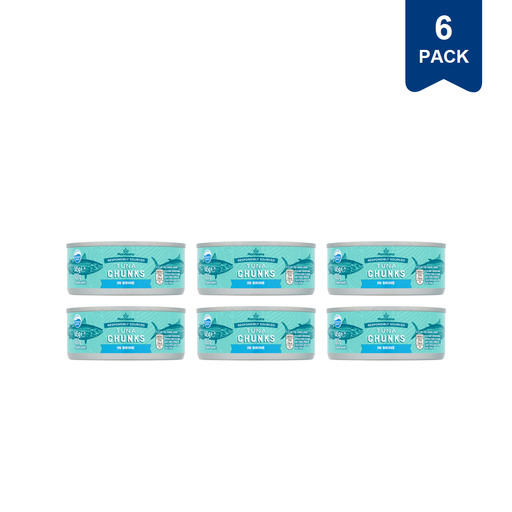 Image unavailable
Morrisons FAD Free Tuna Chunks in Brine, 6 × 145g
Six separate tins provide portions for meals such as pasta or sandwiches.
Packed in brine. Check the pack for the sourcing details behind the FAD-free wording and for its drained nutrition figures.
View on Joybuy
 Image unavailable
Morrisons FAD Free Tuna Chunks in Spring Water, 6 × 145g
This six-tin format suits someone planning several separate tuna dinners.
Packed in spring water rather than brine. Read the exact pack for sourcing details and comparable drained nutrition information.
View on Joybuy
 Image unavailable
John West Tuna Chunks in Sunflower Oil, 4 × 125g
Consider this four-pack if you want oil-packed tuna for separate pasta or salad meals.
The named packing oil is sunflower oil, not organic olive oil. Compare its nutrition panel with other tins on the same stated basis.
View on Joybuy
 Image unavailable
John West Tuna Chunks in Springwater, 4 × 125g
Four individual tins offer portions for quick meals without choosing an oil-packed variety.
Each tin is labelled 125g. Check the drained weight and nutrition basis when comparing it with other pack formats.
View on Joybuy
 Image unavailable
John West No Drain Tuna Chunks in Springwater, 3 × 100g
The no-drain format may appeal when you want to add tuna to a quick sandwich or salad; follow the pack’s serving instructions.
Three 100g tins give a different portion format from the four- and six-packs above. Check the pack label for its ingredients and nutrition basis.
View on Joybuy
Questions about tinned tuna
Does tuna in organic olive oil contain organic fish?
No such claim follows from the oil wording. Fish4Ever says wild-caught produce cannot itself be labelled organic; the ingredient listing for its 160g tuna steaks identifies organic olive oil and wild skipjack tuna separately.
What should I check on an organic label in the UK?
Check exactly what the word “organic” describes and read the ingredients and certification information. The Department for Environment, Food & Rural Affairs says products labelled organic must meet the applicable organic rules, including the requirement concerning organic agricultural ingredients; an ingredient-specific claim should not be read as a claim that wild tuna is organic.
Is an MSC claim the same as an organic claim?
No. The Marine Conservation Society points to MSC as a credible label for wild-caught seafood. It concerns the fishery, while an organic-olive-oil claim concerns a farmed ingredient in the tin; assess each claim separately.
How should I keep tuna after opening a tin?
Follow that product’s storage instructions rather than assuming all tins have the same deadline. The cited Sainsbury's brine tuna instructions say to move leftovers to a non-metallic container, refrigerate them and use them within one day; the cited Fish4Ever instructions give two days after opening.
Does organic packing oil change tuna advice during pregnancy?
No. NHS guidance advises people who are pregnant or trying for a baby to have no more than four cans of tuna a week. An organic ingredient claim does not change that tuna-specific advice.


