Families making a quick cold lunch
Tinned tuna can go into a sandwich, wrap, pasta pot or salad without cooking the fish that morning. Keep the prepared lunch cool until it is eaten.


Choose tinned tuna when you need a ready-to-eat ingredient for a school packed lunch. Frozen tuna steaks make sense if you can cook them in advance, cool the fish and keep the finished lunch cool until it is eaten. With either format, check the product’s allergen label and your school’s lunch procedures.
Tinned tuna can go into a sandwich, wrap, pasta pot or salad without cooking the fish that morning. Keep the prepared lunch cool until it is eaten.
Frozen tuna steaks suit a planned lunch when there is time to follow the pack’s cooking instructions, cool the fish and pack it in a cool bag with an ice pack. They are not a ready-to-eat frozen filling.
Tuna is fish. The Food Standards Agency lists fish, crustaceans and molluscs separately, so check each product’s current label for its ingredients and allergen or advisory statements rather than assuming tuna contains shellfish.
Start with the preparation time available, then check how the finished lunch will be kept cool and whether the particular product fits the meal.
Choose when: you need tuna that can be used in a cold lunch without cooking it first.
Allow for: checking whether it needs draining and keeping the prepared filling cool.
Choose when: you want a cooked tuna portion and can prepare it before packing the lunch.
Allow for: freezer storage, cooking and cooling time, followed by a cool bag and ice pack for the lunch.
| Priority | What to check | Your needs |
|---|---|---|
| Preparation | Check whether a tin needs draining. For frozen steaks, follow that pack’s cooking or refrigerator-defrosting instructions before preparing the lunch. | I need a cold filling I can assemble on a school morning, or I have time to cook fish ahead. |
| Keeping it cool | Plan how to keep an opened-tuna filling or cooked-fish lunch cool. Norfolk and Norwich University Hospitals NHS Foundation Trust advises a cool bag with an ice pack or frozen drink carton for lunchboxes. | The lunch will be carried to school and may not be eaten for several hours. |
| Ingredients | Read the current fish-allergen declaration and any advisory statements. Check additional ingredients in flavoured products; fish, crustaceans and molluscs are separate categories in Food Standards Agency materials. | I need to check the exact product against a child’s allergy requirements and the school’s procedures. |
| Pack format | Compare can size, packing medium and any no-drain instruction. Spring-water, brine and sunflower-oil products appear in Tesco and Sainsbury’s listings; check the individual label for nutrition values. | A smaller can may suit one lunch, while a multipack may suit lunches prepared across several days. |
| Fish choices | The NHS states that fresh and canned tuna do not count as oily fish. Check other fish choices separately if oily fish is part of your meal planning. | I want to understand where tuna fits among the fish meals I prepare during the week. |
A frozen tuna steak is not a ready-to-eat sandwich filling. Tesco’s frozen tuna product instructions describe cooking from frozen or defrosting in the fridge, depending on the product.
For an unplanned school-morning lunch, use a ready-to-eat tinned product. Use frozen tuna when you can follow its own pack instructions, cook it and cool it before packing.
The frozen route also needs freezer space and time for preparation.
An unopened tin can be stored in the cupboard, but tuna mixed into a sandwich or pasta pot is a prepared lunch. Cooked tuna also needs cool handling before it is eaten.
Refrigerate the prepared food before leaving home and pack it in a cool bag with an ice pack or frozen drink carton, as advised in Norfolk and Norwich University Hospitals NHS Foundation Trust lunchbox guidance.
Tuna is fish; the Food Standards Agency lists fish, crustaceans and molluscs as separate allergen categories. Other ingredients or advisory statements depend on the particular product.
Read the current label of the tuna you intend to pack, especially if it is flavoured or prepared with other ingredients.
The NHS states that fresh and canned tuna do not count as oily fish.
If you are planning meals that include oily fish, consider other suitable fish choices rather than counting a tuna lunch towards that aim.
These examples show formats listed by UK retailers; compare the particular product and its current label rather than assuming every item from a brand is alike.
Tesco and Sainsbury’s list John West tinned tuna in several packing media, including no-drain products.
Tesco and Sainsbury’s listings include Princes tinned tuna in spring water, brine and sunflower oil.
Tesco lists both own-label tinned tuna and frozen tuna steaks, representing the ready-to-eat and cook-before-packing routes.
Sainsbury’s lists own-label tuna chunks in spring water and brine, including 4 × 145g multipacks.
Asda Groceries has an online tuna category for checking current products.
These tinned tuna products suit the ready-to-eat route for a cold packed lunch. Choose between pack sizes and packing media, then keep the prepared lunch cool.
 Image unavailable
The no-drain format removes a preparation step when making a cold lunch. Check the fish-allergen declaration and keep the prepared filling cool.
 Image unavailable
The six-can spring-water pack is an option for lunches made across several days. Check the current allergen label, and keep each prepared lunch cool.
 Image unavailable
These tinned chunks can be used for a cold sandwich or salad filling. Check this pack’s draining instructions rather than assuming it is a no-drain product; also check its allergen label and keep the finished lunch cool.
 Image unavailable
This four-can brine pack suits a cold filling when its flavour works for the recipe. Allow time to drain it, compare salt on the current label and keep the prepared lunch cool.
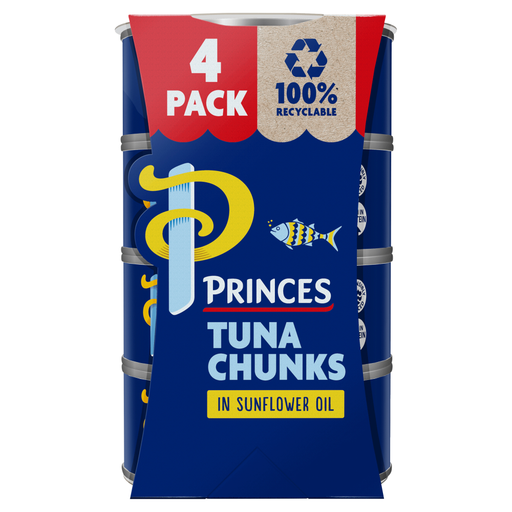 Image unavailable
Sunflower oil is the packing medium in this four-can option for cold lunches. Check the current nutrition and allergen label when comparing it with water- or brine-packed tuna, and keep the finished lunch cool.
Tinned tuna is the more direct choice when the lunch needs a ready-to-eat cold filling. Frozen steaks require preparation according to their pack instructions; cook and cool the fish before packing it, then keep the lunch cool.
Refrigerate the prepared lunch before leaving home and use a cool bag with an ice pack or frozen drink carton. Norfolk and Norwich University Hospitals NHS Foundation Trust gives this advice for packed lunches; it matters for both opened-tuna fillings and cooked fish.
Tuna is fish. The Food Standards Agency lists fish separately from crustaceans and molluscs, so read the specific product label for its fish declaration and any separate ingredients or advisory statements.
No. NHS guidance says fresh and canned tuna do not count as oily fish. If oily fish is part of your meal planning, consider other suitable fish choices separately.
Choose the packing medium that suits the meal, then compare the individual labels rather than assuming the products have the same nutrition values. Tesco and Sainsbury’s list all three formats; check whether the particular can needs draining, especially when preparation time matters.