Busy weekday breakfast planners
Separate tins can be opened as needed for toast, wraps or bowls. If draining tuna slows down your morning routine, consider a pack explicitly labelled no-drain.


Choose a standard spring-water multipack if separate tins suit your breakfast routine and you do not want added oil. A no-drain pack cuts out a preparation step, while oil-packed chunks suit recipes where you want the oil; a larger steak-format tin makes more sense when you have a plan for the opened contents. Check the number of tins, drained weight, liquid, allergen statement and storage instructions on the exact pack.
Separate tins can be opened as needed for toast, wraps or bowls. If draining tuna slows down your morning routine, consider a pack explicitly labelled no-drain.
Check how many tins are included, their individual sizes and the drained weight. A larger total pack weight does not tell you how much tuna each breakfast portion will contain.
Compare the liquid, nutrition panel, fish-allergen statement and after-opening instructions on the exact pack. If sourcing matters to you, check that product for the particular label or traceability statement you want.
Start with the portion format you will actually use, then compare the liquid and the instructions for anything left after opening.
| Priority | What to check | Your needs |
|---|---|---|
| Portion format | Check the tin count, weight per tin and drained weight. Distinguish several small tins from one larger tin. | I want enough separate portions for the breakfasts I expect to make, without opening more tuna than I can use. |
| Packing liquid | Read whether the tuna is in spring water, brine or sunflower oil. Princes lists 99 kcal and 0.5 g fat per 100 g drained for its spring-water chunks, against 180 kcal and 9.5 g fat for its sunflower-oil chunks; both list 23.5 g protein. | For a recipe without added oil, I would choose spring water. If I want oil in the dish, I would consider the sunflower-oil version rather than treating the two as nutritionally identical. |
| Morning preparation | Look for an explicit no-drain designation; do not assume that every spring-water tin opens ready to use without draining. | Skipping the draining step matters when I have little time to assemble breakfast. |
| Opened-tin storage | Read the exact pack instructions before choosing a large tin. The cited M&S spring-water chunks and John West no-drain spring-water product instruct shoppers to refrigerate leftovers and eat them within 2 days. | If I am making breakfast for one, smaller tins may fit my routine better than an opened large tin. |
| Allergens and sourcing | Check the current fish-allergen information and any warning about bones. For a sourcing preference, look for the relevant label or claim on the exact product. | I want to check the tin I am buying, rather than assume that another product from the same brand has identical labelling. |
The stated weight can include packing liquid, and the number of tins affects how easily the pack divides between breakfasts.
Compare drained weight, tin count and weight per tin before choosing a format.
Princes lists different nutrition values for its spring-water, brine and sunflower-oil chunks. For example, its brine chunks list 0.9 g salt per 100 g drained, compared with 0.85 g for its spring-water chunks.
Read the ingredients and nutrition panel for the liquid in the exact pack, then choose one that suits your recipe and preferences.
After-opening instructions can limit how long the contents fit your meal plan. The cited M&S spring-water chunks instruct shoppers to transfer unused tuna to a non-metallic container, refrigerate it and eat it within 2 days.
Choose a tin size you can use in line with its label, or plan another meal for the remainder.
A label or traceability statement attached to one tuna product does not establish the claims made for another pack.
Check the exact multipack for the certification or sourcing statement that matters to you.
Tesco Groceries lists own-label tuna chunks in spring water, oil and brine, including a 4 x 145 g spring-water multipack.
Princes lists 4 x 145 g chunks in spring water, brine and sunflower oil among its pack formats.
John West offers a cited 3 x 100 g no-drain spring-water pack for shoppers who want to avoid draining tuna at breakfast.
M&S lists spring-water tuna chunks and an 800 g spring-water tuna-steak format.
These options cover separate tins of spring-water, brine and sunflower-oil tuna, including packs labelled no-drain. Choose by liquid, portion size and preparation format rather than assuming every pack suits the same breakfast routine.
 No image available
For mornings when you want to skip draining, this pack has three individual 100 g tins. Check the fish-allergen information and after-opening instructions on the current pack.
 No image available
Four separate 145 g tins suit repeated breakfasts when sunflower oil fits the recipe. Princes lists 180 kcal, 9.5 g fat and 23.5 g protein per 100 g drained for this product format; check the current pack label.
 No image available
Four individual 125 g tins provide spring-water portions for separate breakfasts. If avoiding draining matters, check this exact pack’s instructions rather than assuming it is a no-drain product.
 No image available
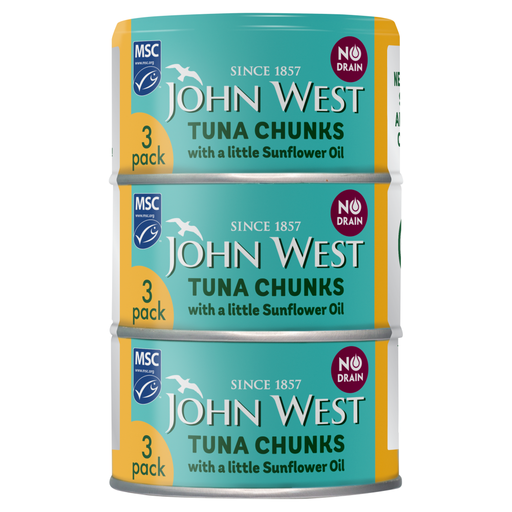
This no-drain sunflower-oil option contains three individual 100 g tins. Check the current pack for its nutrition measurement basis if comparing it with drained-weight figures; the product information also warns that some bones may remain.
 No image available
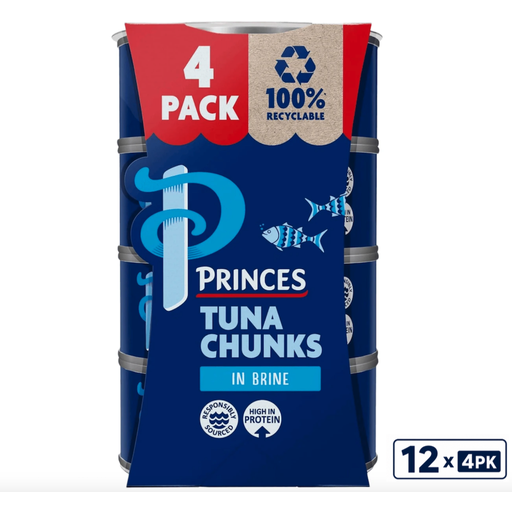
The title describes twelve four-tin packs for a household planning repeated meals; confirm the bundle quantity before ordering. Check the current nutrition and fish-allergen label, particularly if comparing protein figures, and note the product information’s warning that small bones may remain.
Choose spring water if you do not want added oil in the tuna; choose sunflower oil if it suits the dish you are making. For its cited chunks, Princes lists 99 kcal and 0.5 g fat per 100 g drained in spring water, versus 180 kcal and 9.5 g fat in sunflower oil; both list 23.5 g protein.
Follow the exact pack’s storage instructions. The cited M&S spring-water chunks say to transfer unused contents to a non-metallic container, refrigerate them and eat them within 2 days; the cited John West no-drain spring-water product also calls for refrigeration and consumption within 2 days.
Yes: check the current ingredients and allergen statement because tuna is fish. The cited M&S spring-water chunks list Skipjack Tuna (Fish) and warn that the product may contain bones.
Look for the specific claim or ecolabel, such as the blue Marine Stewardship Council label, on the exact multipack. Do not assume a statement about one product applies to every tuna pack from the same brand.