Soft-meal batch cooks
If you make several portions of tuna mayonnaise, pasta bake, jacket-potato filling or a mash-based meal, look at the drained yield per can and how you will make the finished dish moist.


For ordinary easy-chew meals, choose a tuna-chunk multipack you can mix thoroughly into a moist dish; the finished texture matters more than the can format alone. Compare drained yield and can size for the portions you plan to make, then choose spring water, brine or oil to suit the recipe, checking the exact salt label where relevant. If you have swallowing difficulties or a prescribed texture plan, confirm the required preparation with your clinician or speech and language therapist before buying in bulk.
If you make several portions of tuna mayonnaise, pasta bake, jacket-potato filling or a mash-based meal, look at the drained yield per can and how you will make the finished dish moist.
A tender, moist meal may be easier to manage when chewing is uncomfortable. The International Dysphagia Diet Standardisation Initiative says Level 7 Regular Easy to Chew is intended for people who can break down soft, tender foods and do not have swallowing problems; follow individual clinical advice where applicable.
No-drain chunks or drained-and-ready packs can remove a draining step when assembling a meal. Check the individual can size as well as the pack format.
For an ordinary easy-chew meal, plan the finished dish first, then check how much tuna each can yields and how much preparation it needs.
| Concern | What to check | Who this matters to |
|---|---|---|
| Finished texture and moisture | Check whether the chunks can be broken up and mixed evenly with a suitable moist binder or sauce. For a prescribed texture, check the required preparation with your clinician. | If chewing is uncomfortable, I need the completed meal to be soft and moist, not just tuna labelled as chunks. About 42% of consumers put finished texture and moisture first. |
| Portions and drained yield | Compare labelled drained weight per can and choose a can size you can use within its storage instructions. Sainsbury's lists its Princes spring-water 4 × 145g pack as 4 × 10²g drained. | When making several portions, I want enough usable tuna without opening more than I can use promptly. Drained yield is the primary concern for about 33% of consumers. |
| Preparation effort | Look for explicit no-drain or drained-and-ready wording, then check the can size and packing liquid. | If draining a can makes meal assembly difficult, I would rather start with a ready-to-use format. About 25% of consumers prioritise fewer preparation steps. |
The International Dysphagia Diet Standardisation Initiative distinguishes Level 7 Regular Easy to Chew from the needs of people with swallowing problems. A moist tuna recipe is not, by itself, confirmation that it meets an individual's prescribed texture.
If you have dysphagia, a choking risk or a texture plan, ask your clinician or speech and language therapist about the required level and preparation before buying multipacks.
Can weight includes packing liquid. Sainsbury's lists a Princes spring-water pack as 4 × 145g cans but 4 × 10²g drained tuna; Tesco lists a John West brine pack as 4 × 160g cans but 4 × 112g drained tuna.
Use the drained weight on the exact pack to plan portions rather than assuming four-can packs yield the same amount.
A larger can may leave tuna after the meal is prepared. Storage instructions apply once it has been opened.
Plan portions around the individual can size and follow its label. Tesco's listing for the checked John West brine pack instructs refrigeration of unused tuna and consumption within two days.
The salt declaration varies by product and matters when the recipe also contains seasoned ingredients. Tesco's checked John West brine label lists 1.0g salt per 100g drained tuna.
Read the nutrition panel of the pack you intend to buy and choose the packing liquid alongside the other ingredients in your meal.
Tesco lists conventional John West tuna-chunk multipacks alongside smaller no-drain packs.
Princes has four-can chunk multipacks in different packing liquids, as well as a smaller drained-and-ready tuna steak format listed by retailers.
Tesco's tinned-tuna range includes own-label packs and branded conventional and no-drain formats.
Sainsbury's lists own-label 4 × 145g tuna chunks in spring water and other packing liquids.
The M&S spring-water tuna chunks considered here come in a single 160g can, rather than a multipack.
These tuna-chunk multipacks offer no-drain, brine, sunflower-oil and spring-water options for preparing moist meals. Choose by the packing liquid, individual can size and preparation you need; none of the cans alone establishes suitability for a prescribed texture.
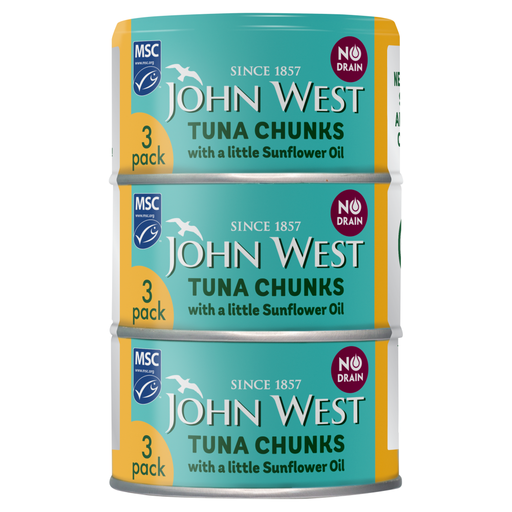 Image unavailable
For meals where avoiding a draining step matters, this pack contains three 100g cans of tuna chunks in sunflower oil. Mix the tuna into a suitable moist base for the finished meal; check the individual can size against the portions you plan to make.
 Image unavailable
For preparing several portions with a sauce or other moist binder, this pack contains four 145g cans of tuna chunks in brine. Check this variant's drained weight and salt declaration when planning the recipe; figures for other Princes variants do not establish either value for this pack.
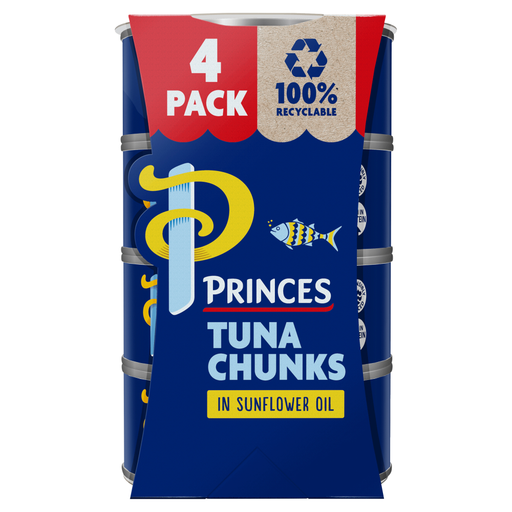 Image unavailable
For recipes where sunflower oil suits the other ingredients, this pack contains four 145g cans of tuna chunks. Break up and mix the chunks into a moist finished dish if easy chewing is the aim; check the pack's drained weight when planning portions.
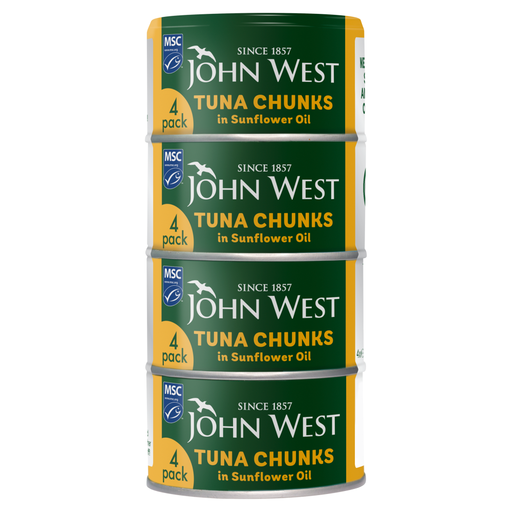 Image unavailable
For making several portions from smaller individual cans, this pack contains four 125g cans of tuna chunks in sunflower oil. Its usage instructions say to drain before use; check the drained yield and add an appropriate moist ingredient when assembling the meal.
 Image unavailable
For a recipe in which you plan to add your own moist sauce or binder, this pack contains four 125g cans of tuna chunks in spring water. Its usage instructions say to drain before use; check the exact salt label and drained yield when choosing ingredients and portions.
Yes, if the finished dish is soft, moist and manageable for the person eating it. Oxford University Hospitals NHS Foundation Trust gives tuna with mayonnaise and tinned fish in tomato sauce as Level 7 easy-to-chew examples; the International Dysphagia Diet Standardisation Initiative says that level is for people able to chew soft, tender foods without help and without swallowing problems.
Do not assume that it is. Ask your clinician or speech and language therapist which texture and preparation your individual plan requires, including how to handle any mixture of liquid and solid food.
Choose by how you intend to finish the dish: spring-water tuna lets you add your chosen sauce, seasoning or binder, while oil-packed tuna brings oil into the recipe. If considering brine, check the salt declaration on the exact pack rather than assuming every variant has the same value. Whichever liquid you choose, make the completed meal suitable for your chewing needs.
Follow the instructions on that can and plan how you will use the remainder. Tesco's checked John West brine listing says to refrigerate unused tuna and consume it within two days; check the instructions for any other product separately.
No. NHS guidance says people who are pregnant or trying for a baby should have no more than four cans of tuna a week or two tuna steaks a week because tuna can contain higher levels of mercury than other fish. Count the cans you eat, not the number of multipacks you buy.