Move-in cupboard planners
Students buying several tins for future meals who want to know how much tuna remains after draining, not just how much the sealed pack weighs.


If you expect to use several tins during the term and have cupboard space, a multipack can be a practical starting point, but compare its drained contents rather than relying on the weight printed on the front. Smaller tins or no-drain packs make more sense when finishing an opened tin or finding fridge space is the bigger concern. Check the packing liquid, fish allergen information and each product’s instructions for leftovers before stocking up.
Students buying several tins for future meals who want to know how much tuna remains after draining, not just how much the sealed pack weighs.
Students who usually prepare one meal at a time and need to consider opened-tin leftovers, draining and the space available in a shared fridge.
Students choosing between water, brine and oil, or checking nutrition, fish allergen and product-specific sourcing information before buying several tins.
Start with the tin size you can use after opening, then compare drained contents and the labels of the particular products you are considering.
| Concern | What to check | Who this matters to |
|---|---|---|
| Usable tuna in a multipack | Check the number of tins and the stated drained contents; packing liquid contributes to net weight. | When stocking a cupboard for the term, I want to know how much tuna the tins provide for meals. About 36% of consumers put usable tuna quantity first. |
| Portions and leftovers | Compare tin sizes, serving information and each product’s once-opened storage instructions. | With little room in a shared fridge, finishing one smaller tin can matter more to me than keeping leftovers. Avoiding opened-tin waste is the main concern for about 29% of consumers. |
| Packing liquid and meal choice | Check whether the tuna is in water, brine or oil, and compare nutrition values on the same per-100g basis. | If I am making a particular recipe, I want the packing liquid and label values to suit that meal. Roughly 21% of consumers primarily choose by recipe and nutrition-label fit. |
| Sourcing and individual restrictions | Read the exact pack’s fish allergen declaration and sourcing claims. NHS guidance on tuna intake is relevant if you are pregnant or trying for a baby. | When sourcing information or a restriction affects what I can buy, the exact product label matters more than the pack format. For about 14% of consumers, these checks take priority. |
Tesco Groceries identifies drained weight as the basis for its own-label spring-water multipack, while Sainsbury’s lists separate drained contents for some multipacks. Sainsbury’s product labels also illustrate why the packing medium deserves a check: its spring-water and sunflower-oil four-packs show different salt values per 100g drained. Those values describe the named products, not every tin packed in water or oil.
A tin’s stated net weight includes its packing liquid. Sainsbury’s listing for Princes Tuna Chunks in Spring Water identifies its 4 × 145g format separately from its 4 × 10²g drained contents.
Look for the drained weight of each tin or the whole pack when planning how many meals it will cover.
Once-opened instructions differ between products: the Sainsbury’s own-label four-pack specifies use within one day, while Tesco and M&S examples specify two days.
Follow the exact pack’s instructions. Where its label directs you to transfer leftovers, put them in a covered non-metallic container and refrigerate them.
NHS guidance limits tuna consumption for people who are pregnant or trying for a baby because tuna contains more mercury than other fish.
If that guidance applies to you, check the NHS advice when planning how many cans you will eat in a week; its stated limit is no more than four cans.
Tesco’s own-label spring-water four-pack is a reference point for checking drained weight in a conventional multipack.
Sainsbury’s own-label listings include tuna packed in spring water and sunflower oil, allowing a product-by-product check of packing liquid and nutrition values.
John West offers a no-drain format for students who want less preparation at lunchtime.
Princes is relevant when comparing a familiar four-tin format with the tuna quantity stated after draining.
M&S lists a 640g four-pack of spring-water tuna for cupboard stocking.
These tins offer different cupboard-stocking formats: brine or spring-water multipacks for several meals, and a smaller no-drain sunflower-oil pack where draining is the main inconvenience. Check each listing’s delivered quantity and product label before choosing.
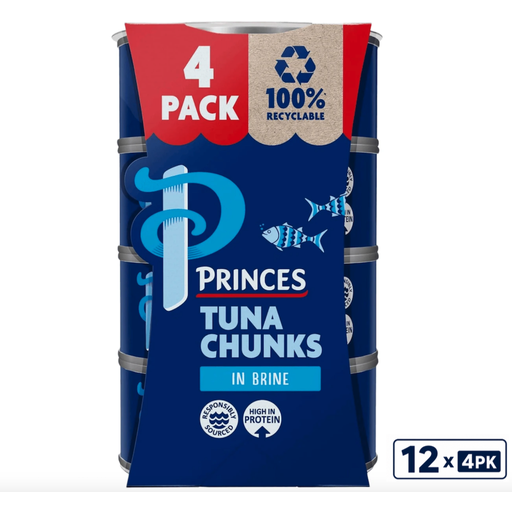 Image unavailable
For a larger cupboard order, the title identifies 4 × 145g brine packs in a 12-pack bundle. Confirm the exact delivered bundle quantity before ordering, and check the label for drained contents and once-opened storage instructions. Contains fish.
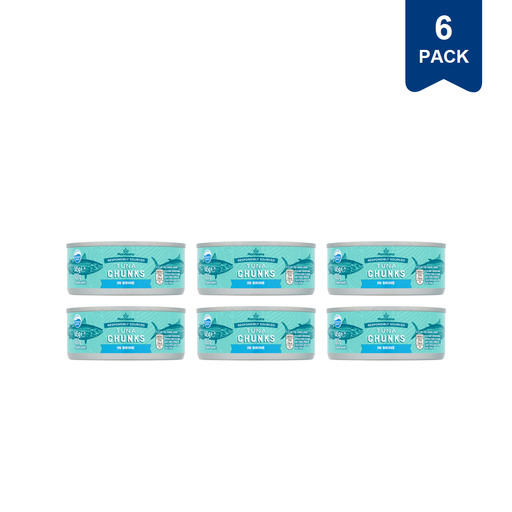 Image unavailable
The six-tin brine pack provides separate tins for cupboard meal planning. Check the drained contents per tin and the product’s instructions for any tuna left after opening. Contains fish.
 Image unavailable
This six-tin format suits cupboard planning if spring water is the packing liquid you want for your meals. Check drained contents and the per-100g nutrition panel for this variant, as well as its once-opened instructions. Contains fish.
 Image unavailable
The four 125g tins offer a smaller pack format than the six-tin options shown here. Compare the drained contents and follow this product’s storage directions if a tin is not finished. Contains fish.
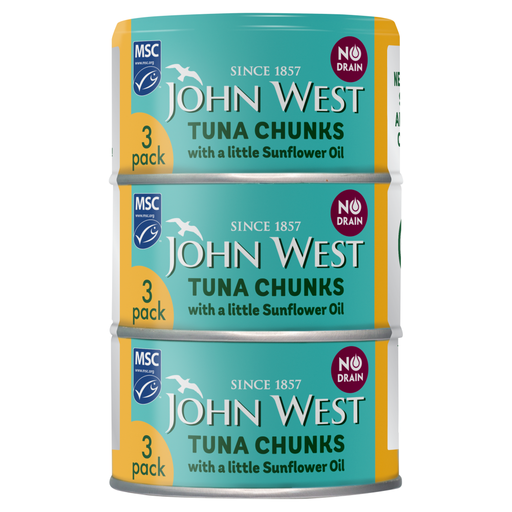 Image unavailable
For a meal where draining is inconvenient, this no-drain pack contains three 100g tins in sunflower oil. Check its own nutrition panel and opened-tin instructions; do not treat it as the same variant as John West’s no-drain spring-water product. Contains fish.
Check both the tin count and the drained contents, because the stated net weight includes packing liquid. Sainsbury’s Princes listing, for example, distinguishes its 4 × 145g spring-water format from its 4 × 10²g drained contents.
Follow that product’s label for transferring, covering and refrigerating leftovers. The Sainsbury’s own-label four-pack specifies use within one day of opening, while the Tesco and M&S examples specify two days; do not apply one pack’s deadline to another.
Tuna is fish, so tinned tuna is not suitable for someone allergic to fish. Check the exact pack’s ingredients and allergen information before buying or preparing it for someone else.
Yes. NHS guidance says people who are pregnant or trying for a baby should have no more than four cans of tuna a week because tuna contains higher levels of mercury than other fish. Bear that weekly limit in mind when planning meals from a multipack.