For a post-ride meal, choose a single tin of tuna by its usable portion, label and preparation needs, then serve it with a carbohydrate food rather than treating tuna alone as ride fuel. A standard spring-water tin suits a meal you can assemble and drain; an already-drained format reduces that step, while salt values and portion sizes still need checking on the exact pack.
Who is a single tin for?
Post-ride meal builders
If you are adding tuna to a sandwich, jacket potato or rice dish after cycling, a single tin can provide the protein ingredient. Plan the rest of the meal separately; tuna is not a stand-alone source of ride-fuelling carbohydrate.
Commuters who want less preparation
If you are eating after a commute with limited space to prepare food, an already-drained or no-drain portion may save a step. Check the exact format and portion before buying.
Shoppers comparing pack labels
If salt, drained weight, ingredients or sourcing statements guide your choice, compare the actual tins. The reviewed spring-water products do not all list the same salt value or portion size.
What matters when choosing?
Start with how the tin will fit into your meal, then compare preparation, the label and the amount you will use.
| Concern |
What to check |
Who this matters to |
| Building a post-ride meal |
Check the protein information for the usable portion, and choose a carbohydrate food for the meal. |
If tuna is going into a post-ride sandwich or jacket potato, I need it as one ingredient, not as my only cycling fuel. About 31% of consumers put building that meal first. |
| Preparation after cycling |
Check whether the exact tin needs draining or cooking, and compare its net and drained weights. |
After commuting or training, I may need a portion I can use without draining it. For about 31% of consumers, reducing preparation is the primary concern. |
| Salt and ingredients |
Compare salt on the same per-100g basis and read the ingredient and allergen information on the pack. |
When salt or ingredients matter to me, I want the figures for the tin I will eat rather than an assumption about spring-water tuna. About 23% of consumers make label comparison their first priority. |
| Portion and sourcing |
Check the drained amount, storage instructions and any certification or catch-method statement for the exact product. |
If I want one meal without leftovers, I need to know how much tuna the tin contains; a stated sourcing method may also shape my choice. For about 15% of consumers, portion and sourcing are the main consideration. |
What should you avoid overlooking?
-
Treating tuna as complete ride fuel
The reviewed spring-water tins list little or no carbohydrate. British Cycling emphasises matching fuelling to the ride, while tuna can be one ingredient in a meal afterwards.
Serve it with a carbohydrate food after riding, and plan food and fluids for the ride separately.
-
Assuming spring-water tins have similar salt values
The reviewed labels differ: Sainsbury’s lists 0.12g salt per 100g drained, while the reviewed Tesco tin lists 0.90g on that basis.
Read the salt value on the exact pack and compare products using the same nutrition basis.
-
Choosing a convenient format without checking the portion
An already-drained tin removes a preparation step, but net weight and usable amount are not interchangeable. The reviewed M&S product is an already-drained 120g portion.
Decide whether the preparation difference matters in your routine, and check how much tuna you will use in the meal.
-
Overlooking fish allergy information or pregnancy guidance
GOV.UK identifies fish as an allergen that must be declared when it is an ingredient. NHS guidance also sets limits on tuna during pregnancy or when trying for a baby because of mercury.
Read the exact pack’s allergen information and, if pregnancy guidance applies to you, check the current NHS advice before deciding how often to eat tuna.
Brands to consider
Tesco
Tesco’s reviewed own-label option is a 145g single tin of tuna chunks in spring water.
- Tesco Groceries lists 24.9g protein per 100g drained and states that the fish comes from an MSC-certified fishery.
- It lists 0.90g salt per 100g drained; compare the current label if salt matters to you.
Sainsbury’s
Sainsbury’s reviewed own-label spring-water chunks come in a 145g single tin.
- Sainsbury’s lists 26.1g protein and 0.12g salt per 100g drained, and states pole-and-line and MSC sourcing for this product.
- Check current availability and the exact pack label before relying on this option.
Princes
The reviewed Princes product is a 145g single tin of spring-water tuna chunks, with 102g drained content.
- Tesco Groceries lists 23.5g protein per 100g drained for the reviewed tin.
- Its listed salt is 0.85g per 100g drained, so check it against other tins if salt is a deciding factor.
John West
John West has standard spring-water tins and separately identified no-drain formats.
- Waitrose & Partners lists the reviewed 125g standard tin as 102g drained, with 25g protein and 0.80g salt per 100g drained.
- Check the variant: a 3 × 80g multipack is not the reviewed 125g single tin.
M&S
The reviewed M&S tuna steak in spring water is labelled as an already-drained 120g portion.
- Ocado lists 25.3g protein and 0.83g salt per 100g for this product.
- Check that an already-drained portion, rather than a standard tin you drain yourself, fits how you prepare the meal.
Single tins on Joybuy
These single-tin options cover spring-water, brine and sunflower-oil tuna for meals around cycling. Check each pack’s usable portion and preparation instructions; the Tropical Sun tin requires cooking.
 Image unavailable
Morrisons Fad Free Tuna Chunks in Spring Water 145g
For a post-ride sandwich or salad, this is a single 145g tin packed in spring water. Add a carbohydrate food to make the meal, and check the drained amount and salt on the pack when comparing portions.
View on Joybuy
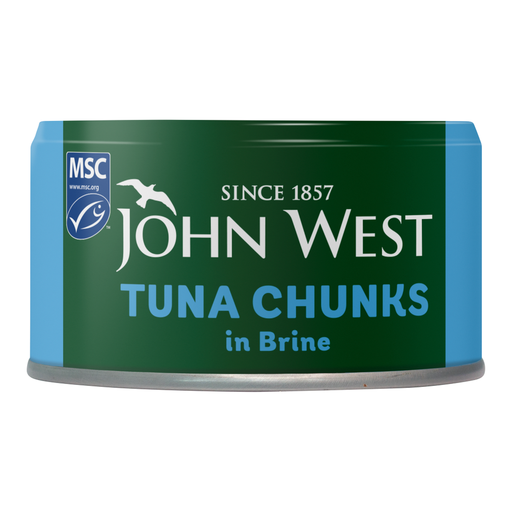 Image unavailable
John West Tuna Chunks in Brine 125g
This single 125g brine-packed tin can be used in a sandwich or salad after a ride. If you are comparing its usable portion or nutrition with drained spring-water tuna, check the drained weight and the basis of the figures on the exact pack.
View on Joybuy
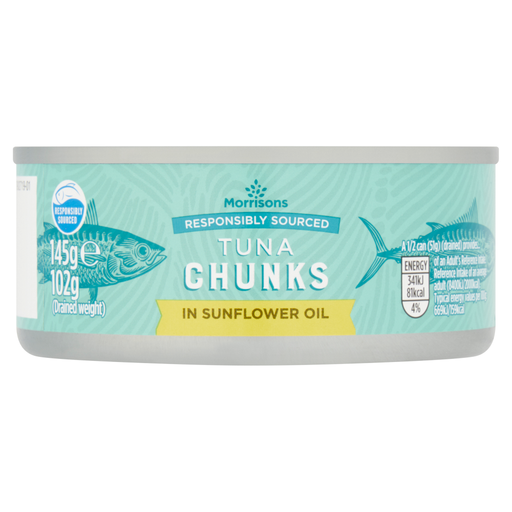 Image unavailable
Morrisons Fad Free Tuna Chunks in Sunflower Oil 145g
For a sandwich or pasta meal where oil-packed tuna suits the recipe, this is a single 145g tin in sunflower oil, not spring water. Compare the drained portion and the pack’s nutrition information with other formats on the same basis.
View on Joybuy
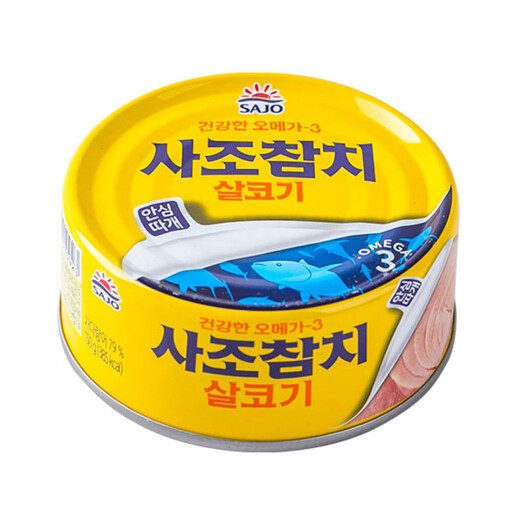 Image unavailable
SAJO Light Standard Canned Tuna 100g
The 100g tin is an option when you are planning a smaller tuna ingredient for a meal after cycling. Check the exact packing liquid and drained amount on the pack before comparing it with other tins.
View on Joybuy
 Image unavailable
Tropical Sun Tuna Steaks in Brine 160g
This single 160g brine-packed tin is for a cooked meal when you have time and facilities to prepare it. It is not a ready-to-eat, low-preparation choice: follow the pack instructions to cook it thoroughly until piping hot.
View on Joybuy
Frequently asked questions
Can a single tin of tuna be my fuel during a ride?
Tuna alone does not provide the carbohydrate needed for a ride that calls for carbohydrate intake: the reviewed spring-water tins list 0g or less than 0.5g carbohydrate per 100g drained. Use it as an ingredient in a meal, and plan ride food and fluids separately.
How much protein is in a single tin?
It varies with the product and drained amount. The reviewed 145g spring-water tins contain 102g drained tuna and list 23.5g to 26.1g protein per 100g drained on the Tesco Groceries and Sainsbury’s product labels; check the figures on the tin you choose.
What should I do with tuna left after opening a tin?
Follow the storage instructions on the exact pack. The reviewed Tesco and Princes instructions say to transfer leftovers to a non-metallic container and refrigerate them; follow that product’s stated time limit for using the remainder.
What if I am pregnant or trying for a baby?
NHS guidance limits tuna because of mercury: for people who are pregnant or trying for a baby, it advises no more than four cans of tuna a week or two tuna steaks a week. Check the current NHS guidance when deciding how tuna fits into your meals.
What should I check if fish allergy information matters to me?
Read the ingredient and allergen information on the exact pack. GOV.UK identifies fish as one of the allergens food businesses must declare when it is an ingredient; do not rely solely on the product’s front-of-pack name.


