One-meal roast cooks
If tuna is just one part of the dinner, the useful figure is how much fish the tin provides after draining. A single tin also makes it easier to plan what to do with any unused contents.


For a roast-dinner topping or filling, a single tin of spring-water tuna chunks suits a recipe in which the fish will be mixed in; compare the drained amount and the exact tin’s salt information before choosing. If the tuna needs to remain in visible pieces, or comes in a seasoned sauce, check that its form and flavour fit the dish and plan for any leftovers using the pack’s instructions.
If tuna is just one part of the dinner, the useful figure is how much fish the tin provides after draining. A single tin also makes it easier to plan what to do with any unused contents.
Spring-water tins do not all list the same salt value. Compare the nutrition information for the exact product, paying attention to whether values are stated for drained tuna.
If fishing method or certification affects your choice, look for a statement about the particular tin rather than assuming a claim applies across a brand’s range.
For a roast dinner, work out the amount of tuna the recipe needs, then choose the packing liquid and fish form that suit how you will serve it.
| Concern | What to check | Who this matters to |
|---|---|---|
| Portion and leftovers | Compare net and drained weights, then read the after-opening instructions. | If I only need tuna for one topping or filling, I want enough fish without leaving much to store. About 36% of consumers put the usable portion and leftover planning first. |
| Salt and packing liquid | Read the ingredients and compare salt per 100g on the same stated basis. | When the rest of the roast is already seasoned, I want to know what the tuna and its packing liquid will add. Salt and packing liquid are the primary concern for about 29% of consumers. |
| Texture and use | Check whether the tin contains chunks, flakes or another labelled form. | For a mixed filling I can use smaller pieces, but a topping with visible tuna calls for a different presentation. About 21% of consumers put the fish’s form and role in the recipe first. |
| Fishing-method claims | Look for sourcing or certification wording for the exact tin. | If a stated fishing method guides my choice, I need that claim to apply to the product I am considering. It is the leading concern for about 14% of consumers. |
Liquid contributes to the weight printed on a tin. Tesco Groceries lists 102g drained weight for both its Tesco and Princes 145g spring-water tins, so 145g is not the amount of fish available after draining.
Use the drained weight when the quantity of tuna matters to the topping or filling, and check the label of the tin you buy.
The named spring-water products have different listed salt values. Sainsbury’s states 0.12g per 100g drained for its 145g tin; Tesco Groceries lists 0.85g for Princes and 0.90g for Tesco on that basis. M&S states 0.75g per 100g for its 160g tin, without a drained basis in the product information used here.
Compare the exact nutrition labels on a like-for-like basis, particularly if gravy, stuffing or seasoning is already part of the meal.
The named product instructions call for leftovers to be transferred to a non-metallic container and refrigerated, but their use windows differ: Sainsbury’s states one day, while Tesco, Princes and M&S state two days.
Use the whole tin where practical. Otherwise, cover and refrigerate the unused tuna and follow the time limit on its own pack.
An oil-packed tin brings oil into a recipe written for tuna in spring water. The Joybuy listing for Ortiz tuna in olive oil states 22.2g fat per 100g; packing liquids should not be treated as interchangeable.
Choose the oil-packed form when its oil and flavour suit the intended accompaniment, and check the recipe before substituting it for spring-water tuna.
Tesco Groceries lists a 145g tin of skipjack chunks in spring water with 102g drained weight.
Sainsbury’s lists a 145g tin of skipjack chunks in spring water and describes that product as pole-and-line caught and MSC-certified.
Tesco Groceries lists the Princes 145g spring-water chunk tin with 102g drained weight.
M&S Food lists a 160g tin of skipjack chunks in spring water and describes this product as pole-and-line caught.
Joybuy lists John West Tuna Chunks in Brine 125g as a single-tin option.
These single tins include spring-water chunks for mixing into a topping or filling, and seasoned flakes for a recipe where adobo-style sauce fits the dish.
 Image unavailable
The spring-water chunks suit a roast-dinner topping or filling in which the tuna will be mixed with other ingredients. This is a 145g tin; check its drained weight on the label if the recipe depends on a particular amount of fish. For unused contents, follow the listing’s instruction to transfer them to a non-metallic container, refrigerate and use within two days.
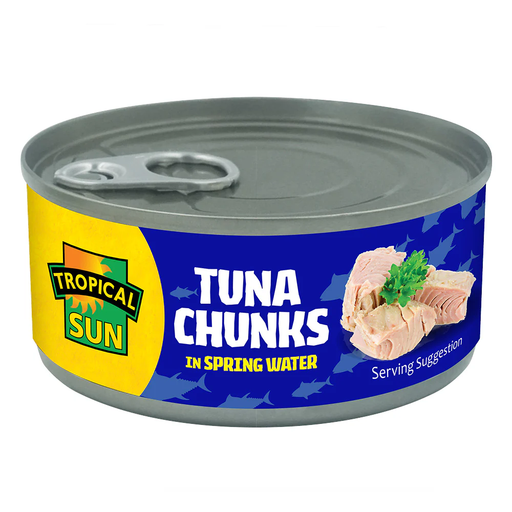 Image unavailable
These spring-water chunks are another option for a mixed topping or filling when a 160g net tin suits the meal. Check the label for drained weight, and confirm the basis of its nutrition values before comparing them with drained-tuna figures. The listing advises keeping unused tuna refrigerated in an airtight container and consuming it within two days.
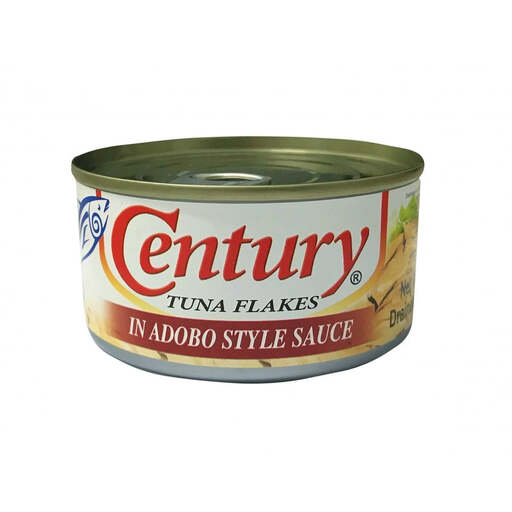 Image unavailable
The flakes may suit a mixed filling if adobo-style sauce fits the roast-dinner recipe. This is a 180g can, so consider whether the meal will use it all; check the drained quantity if fish yield is important. Review the ingredient and allergen information, including soy and wheat, before choosing it for the dish. The listing instructs buyers to refrigerate unused contents and consume them within two days.
It varies by product, so use its stated drained weight rather than assuming 145g is all fish. Tesco Groceries lists 102g drained weight for both its Tesco and Princes 145g spring-water tins; check the exact tin before scaling a roast-dinner recipe.
No. For the named tins, Sainsbury’s states 0.12g salt per 100g drained, while Tesco Groceries lists 0.85g for Princes and 0.90g for Tesco on that basis. Compare the exact labels and their stated nutrition bases rather than choosing by packing liquid alone.
Transfer it to a non-metallic container, cover and refrigerate it, then follow the time limit on its own pack. The named Sainsbury’s tin says to use leftovers within one day; the Tesco, Princes and M&S products state two days.