Who is choosing between these options?

Breakfast cooks who want a raw fish fillet

If you want to season and cook the tuna yourself, look for a chilled or frozen product explicitly labelled as raw. Marks & Spencer describes its yellowfin tuna steaks as raw fish that must be cooked; tinned tuna is a different starting point.

Cooks adding fish with little preparation

A ready-to-eat tinned steak can be added to the plate without cooking fish from raw. Check the particular pack before serving, because preparation instructions differ between the products shown below.

Buyers comparing packing liquids and labels

Spring water, brine and sunflower oil are offered across the cited tuna-steak ranges. Compare the exact pack’s ingredients and per-100g nutrition panel, particularly if fat, salt or a fish allergy matters to your household.

What should you check before buying?

Raw tuna steak

Choose it when: You want to cook a tuna fillet as part of the breakfast.

Allow for: Chilled or frozen handling and the cooking required by the product instructions; the Marks & Spencer yellowfin example must be cooked.

Tinned tuna steak

Choose it when: You want a tuna-steak format without preparing a raw fillet; check whether your chosen pack is ready to eat.

Bear in mind: A tinned steak cannot be seared like a raw fillet, and packing liquids and preparation instructions vary.

PriorityWhat to checkYour needs
Cooking method Check whether the fish is labelled raw or tinned, and read its cooking instructions. The Marks & Spencer yellowfin steaks are raw and must be cooked; ready-to-eat tinned examples need no cooking. I want to cook a fillet in the pan, rather than add tuna that is already cooked.
Piece format Look for a tuna-steak description if you want distinct pieces on the plate. Check the pack image and drained or prepared weight rather than assuming every product called a steak has the same presentation. I would rather serve tuna as a separate part of breakfast than mix smaller pieces into another dish.
Packing liquid Compare spring water, brine and oil on the exact label. Sainsbury’s listings put John West’s spring-water pot at 0.9g fat per 100g and its sunflower-oil pot at 6.4g fat per 100g. For an oil-packed addition, I want to see how its per-100g figures compare with a water-packed option.
Salt and ingredients Read salt per 100g and the ingredients list for the particular variant. The cited Sainsbury’s John West pots list 0.8g salt per 100g in spring water and 0.9g in sunflower oil. Salt elsewhere on my breakfast plate makes the tuna’s own label worth checking.
Storage and allergens Check the fish-allergen declaration, any bone warning and the after-opening deadline. Follow a shorter product-label deadline where one applies. If I will use only part of a pack, I need a portion and storage instructions that work for the leftovers.
Sourcing information Check any stated catch method, traceability information or certification mark on the exact pack; claims differ by product. I want to know what sourcing information accompanies the tuna I am buying.

What can catch you out?

  • Assuming every ‘tuna steak’ is a raw fillet

    Chelmsford City Council distinguishes tuna purchased cooked in a tin from chilled or frozen fresh fish. A ready-to-eat tinned product will not give you the same cooking control as a raw portion.

    If cooking the fish from raw is central to the meal, choose a product explicitly labelled raw and follow its cooking instructions.

  • Choosing the steak format without checking the liquid

    In Sainsbury’s listings for two John West pots, the sunflower-oil variant has 6.4g fat per 100g, compared with 0.9g for the spring-water variant. These figures describe those products, not every oil- or water-packed tuna.

    Compare the ingredients and per-100g nutrition panel on the variant you intend to serve.

  • Leaving opened tuna in the tin

    Opened tuna needs attention even when only a small amount was used. Chelmsford City Council advises consuming tuna within two days after opening and removing it from the tin; an individual pack may specify a shorter period.

    Transfer leftovers to a suitable container, refrigerate them promptly and follow the deadline on the product label.

    A larger opened pack may leave tuna you cannot use within its stated storage period.

  • Overlooking fish and possible bones

    The cited tuna products contain fish, and John West product information warns that some bones may remain.

    Check the allergen declaration before serving and take care when eating or serving pieces of tuna.

Relevant brand and retailer ranges

These examples show how particular tuna ranges differ; a brand name alone does not establish a product’s preparation instructions or nutrition.

John West

Its cited no-drain tuna-steak pots offer spring-water and sunflower-oil variants for a ready-to-eat addition.

  • Sainsbury’s lists 0.9g fat and 0.8g salt per 100g for the spring-water pot, versus 6.4g fat and 0.9g salt for the sunflower-oil pot.
  • The product information warns that some bones may remain; neither tinned variant is a raw fillet.

Princes

Princes lists tuna-steak ranges in brine, spring water and sunflower oil.

  • The Tesco listing for its drained 110g spring-water product identifies tuna and spring water in the ingredients.
  • Check the precise variant’s nutrition, sourcing statements and preparation details on its pack.

Tesco

Tesco’s cited own-label multipack is a drained skipjack tuna-steak product in spring water.

  • Its product listing describes the tuna as hand-filleted and gives a per-100g nutrition panel.
  • Check the current pack and its availability before planning a breakfast around this particular multipack.

Asda

The cited Asda tuna-steak multipacks include brine and sunflower-oil versions.

  • Asda lists tuna, water and salt for its 3 × 110g brine multipack, with 0.9g salt per 100g.
  • Asda’s after-opening instructions call for transferring unused tuna to a non-metallic container and consuming it within two days.

M&S

Marks & Spencer provides examples on both sides of this decision: tinned tuna steak in spring water and a separate raw yellowfin tuna-steak product.

  • The raw yellowfin product is explicitly labelled as requiring cooking, making its intended preparation distinct from the tinned product.
  • Marks & Spencer instructs buyers to keep that raw yellowfin product refrigerated at 0°C to +5°C.

Joybuy tuna options

These options include frozen tuna steaks for cooking and tinned tuna-steak formats for breakfast. Read each product’s preparation and storage instructions: the brine-packed Tropical Sun option below is not labelled ready to eat.
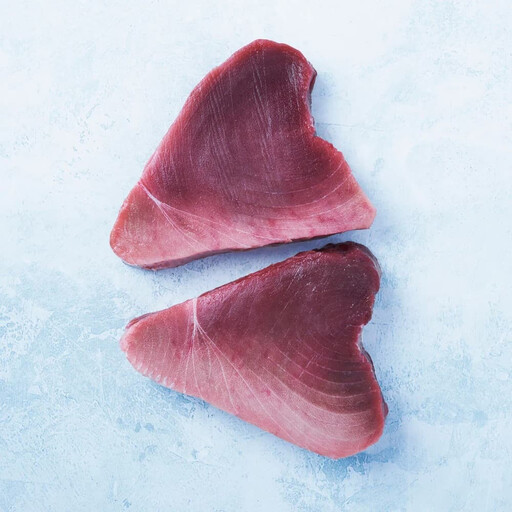
Super Frozen Tuna Steaks, Sashimi Grade, two steaks

Super Frozen Tuna Steaks, Sashimi Grade, 2 × 130g (260g)

Choose these frozen steaks if you want to cook tuna alongside breakfast rather than open a tin. The listing gives pan-frying and grilling instructions. Keep frozen at −18°C or colder; follow the thawing instructions, do not refreeze after thawing and use within 48 hours as stated.

View on Joybuy
Tropical Sun Tuna Steaks in Sunflower Oil

Tropical Sun Tuna Steaks in Sunflower Oil

This tinned, oil-packed tuna is described as ready to eat, so it suits a plated addition without cooking a raw fillet. After opening, transfer unused contents to a non-metallic container, refrigerate and consume within 24 hours, as the listing instructs.

View on Joybuy
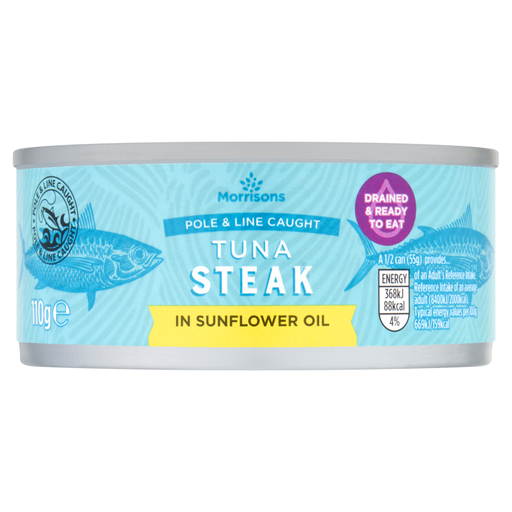
Morrisons Tuna Steaks with Sunflower Oil 110g

Morrisons Tuna Steaks with Sunflower Oil 110g

This is a tinned tuna-steak option in sunflower oil, not a raw fillet to cook from fresh. If draining matters to your preparation, check the pack: the product title and description give conflicting draining instructions.

View on Joybuy
Tropical Sun Tuna Steaks in Brine 160g

Tropical Sun Tuna Steaks in Brine 160g

Although this is a tinned tuna-steak product, its listing says it is not ready to eat and must be cooked thoroughly. Do not treat it as either a ready-to-eat tin or a confirmed fresh raw fillet. After opening, remove unused tuna from the can, cover, refrigerate and consume within 24 hours as instructed.

View on Joybuy

Frequently asked questions

Is tinned tuna steak the same as a fresh tuna fillet?

No. Chelmsford City Council distinguishes tuna purchased cooked in a tin from chilled or frozen fresh fish. If you want to cook a fillet from raw, select a product explicitly labelled raw and follow its cooking instructions.

Does tinned tuna steak need cooking before breakfast?

Check the particular pack. The cited ready-to-eat tinned products do not need cooking, but the Tropical Sun Tuna Steaks in Brine listing says that product is not ready to eat and must be cooked thoroughly.

Should I choose spring water, brine or sunflower oil?

Choose by the preparation instructions, ingredients and nutrition panel of the exact product, rather than the liquid name alone. For instance, Sainsbury’s lists 0.9g fat per 100g for a John West spring-water pot and 6.4g for its sunflower-oil pot; check salt separately on whichever pack you choose.

How should I store leftover tinned tuna?

Remove unused tuna from the opened tin, refrigerate it in a suitable container and follow the product’s after-opening deadline. Chelmsford City Council advises consuming opened tuna within two days, while the Tropical Sun products shown here specify 24 hours.