Who is choosing?
The useful distinction is not simply tinned versus frozen: it is how much preparation the meal allows and what texture the fish has when served.
People planning soft-texture meals
If the fish needs to be soft, moist and easy to break apart, assess the prepared meal rather than relying on its packaging. Cambridge University Hospitals NHS Foundation Trust describes easy-to-chew fish as soft enough to break apart with the side of a fork or spoon.
Shoppers making quick cupboard meals
Ready-to-eat tinned tuna can be flaked into a moist pasta dish, mash or filling without cooking the fish. John West also offers a no-drain format, although its chunks still need a texture and bone check.
Cooks using frozen portions
Frozen steaks suit a planned cooked meal when there is time to follow the pack instructions and assess tenderness afterwards. ASDA and M&S describe their cited tuna steaks as meaty or firm, so the frozen format alone does not settle the easy-chew question.
What matters when buying?
Choose the fish format around the finished meal: preparation convenience cannot replace a texture and bone check. If a texture-modified diet has been prescribed, follow the individual instructions from the relevant clinician.
Tinned tuna chunks
Consider when: You need ready-to-eat fish to flake into a moist meal.
Allow for: Chunks may need mashing or added moisture, and cited tinned products warn that bones may remain.
Frozen tuna steaks
Consider when: You want a cooked fish-steak meal and can assess the texture after cooking.
Allow for: Cooking and pack-specific handling take time; cited steaks are described as firm or meaty and may contain bones.
| Concern |
What to check |
Who this matters to |
| Finished texture and bones |
Check whether the prepared fish breaks apart easily with a fork or spoon, and inspect it for bones. |
When chewing the finished fish is the main concern, a moist, manageable texture matters more than whether it came from a tin or freezer. About 50% of consumers put finished texture and bone checks first. |
| Preparation effort |
Check whether the tin needs draining, or whether a frozen steak needs defrosting before cooking. |
A meal assembled without cooking calls for a ready-to-eat ingredient; frozen steaks require a different plan. For about 30% of consumers, immediate usability is the primary need. |
| Storage and portions |
Check the pack size and the exact instructions for storing opened tins or handling frozen fish. |
If one meal uses only part of a pack, fitting the remainder into the next meals matters. Storage and portion planning come first for about 20% of consumers. |
Brands to consider
These examples show different tinned and frozen formats; a brand name does not determine the texture of the finished meal.
John West
Its cited range includes spring-water tuna chunks and a ready-to-eat no-drain format.
- The no-drain product can reduce preparation steps when draining is inconvenient.
- The cited chunks carry a possible-bones warning; check their texture after preparing the meal.
Princes
The cited four-pack contains tuna chunks in spring water for cupboard-meal use.
- The separate tins let you open a portion when needed.
- ASDA Groceries’ listing instructs shoppers to refrigerate opened contents and use them within two days; assess the served texture separately.
Tesco
Tesco Groceries lists own-label spring-water chunks in different tin sizes alongside tuna steaks.
- The listed formats offer a choice between chunks and steak-style tuna.
- Check each product’s label and finished texture rather than assuming one listed format is easier to chew.
Asda
Its cited products include tinned chunks and frozen yellowfin tuna steaks.
- The frozen product provides portioned steaks for a cooked meal.
- ASDA Groceries describes those steaks as meaty and warns that bones may remain; follow the cooking instructions and assess the result.
M&S
Marks & Spencer lists tinned skipjack chunks in spring water and yellowfin tuna steaks.
- The two cited formats suit different approaches to preparing a fish meal.
- Its tinned chunks may contain bones, while its cited steaks are described as firm and meaty and must be cooked.
Tinned tuna selections on Joybuy
These tinned chunks are options for cupboard meals that you can prepare with moisture and check before serving. The selection covers sunflower oil, brine and spring-water formats, not frozen steaks.
 No image available
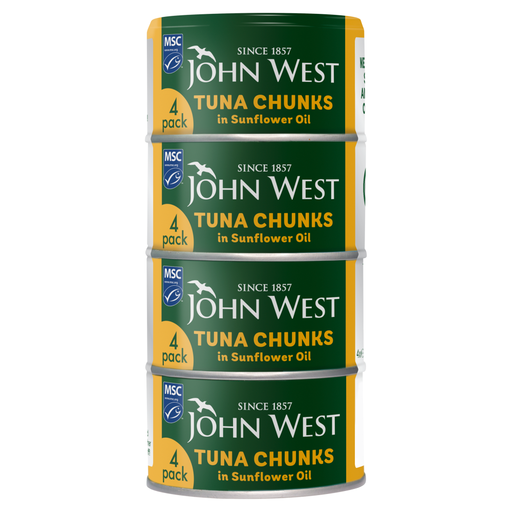
John West Tuna Chunks in Sunflower Oil, 4 × 125 g
For a cupboard meal, drain and flake the chunks into a moist dish, then check the finished texture. The listing warns that bones may remain, so inspect the tuna before serving.
View on Joybuy
 No image available
Princes Tuna Chunks in Brine, 4 × 145 g
The four-tin pack suits meals assembled from cupboard ingredients. Drain the brine as directed, add moisture if needed and check the prepared tuna’s texture and any bone fragments before serving.
View on Joybuy
 No image available
John West No Drain Tuna Chunks in Springwater, 3 × 100 g
Consider this format when draining is inconvenient, but check the pack’s preparation directions: the product wording also mentions draining. Add moisture if the finished dish needs it, and inspect the chunks and their texture before serving.
View on Joybuy
 No image available
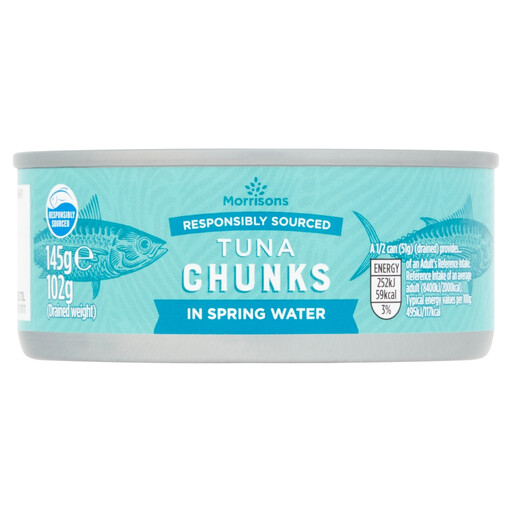
Morrisons Fad Free Tuna Chunks in Spring Water, 145 g
This single tin suits a meal needing spring-water tuna rather than a multipack. Flake the chunks into a moist preparation, inspect for bones and check the texture of the finished dish.
View on Joybuy
Questions about choosing and using tuna
Is tinned tuna automatically suitable for an easy-chew meal?
No. Cambridge University Hospitals NHS Foundation Trust describes easy-to-chew fish by whether it breaks apart easily with the side of a fork or spoon. Prepare the tuna with enough moisture for the intended meal, inspect it for bones and follow individual clinical instructions if a texture-modified diet has been prescribed.
Can frozen tuna steaks be used in an easy-chew meal?
Only if the cooked fish has a suitable finished texture for the person eating it. Follow the pack’s cooking instructions, then check whether the steak breaks apart easily and inspect it for bones; ASDA and M&S describe their cited steaks as meaty or firm.
How should I store tuna left in an opened tin?
Follow the instructions on the tin you bought. For the cited Princes product, ASDA Groceries instructs shoppers to empty and cover the unused contents, refrigerate them and use them within two days.
What should I check before preparing frozen tuna steaks?
Check the exact pack for its storage, defrosting and cooking instructions. Morrisons instructs shoppers to defrost its cited frozen yellowfin steaks in the refrigerator for approximately 12 hours and use them the same day; apply that timing only to that product.


