What should you check before choosing?
Start with the recipe’s quantity and flavour, then check the nutrition panel and what you will do with any tuna left after opening.
| Priority | What to check | Your needs |
|---|
| Packing medium |
Check whether the tuna is in spring water, brine or oil. Compare salt and fat using the same per-100g basis; Sainsbury’s lists 0.70g salt per 100g drained for its spring-water chunks, while its Princes brine listing gives 0.90g per 100g drained. |
I want a plain base if I’m adding my own sauce and seasoning. For a savourier recipe, brine may fit, but I would account for the salt in the rest of the dish. |
| Usable quantity |
Look for drained weight when a recipe specifies a precise amount of tuna. Do not treat the stated weight of a conventional tin as its drained yield; a no-drain pot is a different format. |
Will one unit give me enough tuna for the portions I’m making, or will I need to open another? |
| Preparation |
Check whether the pack needs draining and whether you want chunks or larger steak pieces. Tesco describes its 110g John West spring-water pot as no-drain; conventional tins require handling according to their labels. |
For a small batch, avoiding the draining step matters to me. For a larger dish, I would check the quantity before choosing a smaller pot for convenience. |
| Leftovers |
Read the particular pack’s instructions for transferring, refrigerating and using tuna after opening. The products described by Sainsbury’s, Princes, John West and M&S do not all give the same timeframe. |
If I will use only part of the tin, I need a plan for the remainder that follows that product’s label. |
| Repeat meals |
Count tuna used across the week as well as in one recipe. The Food Standards Agency advises people who are pregnant or trying for a baby to have no more than four medium cans or two tuna steaks a week; the NHS says canned tuna does not count as oily fish. |
If I’m preparing tuna for several days, I want to consider the whole week’s meals rather than treating each portion separately. |
Relevant brand examples
These examples illustrate particular UK product formats; a brand name alone does not tell you the packing medium, drained yield or storage instruction of another product.
John West
Tesco lists a 110g No Drain Fridge Pot with tuna steak and a little spring water.
- The listed no-drain format avoids a draining step when adding tuna to a small batch.
- Its 110g pack is smaller than the 145g and 160g chunk examples, so check the quantity a recipe requires.
Princes
Sainsbury’s lists Princes Tuna Chunks In Brine in a 145g tin.
- A conventional brine-packed chunk format for recipes where that packing medium suits the dish.
- The listing gives 0.90g salt per 100g drained; consider other salty ingredients in the recipe.
Sainsbury’s
Its listed 145g tuna chunks in spring water provide a conventional plain-ingredient tin.
- Sainsbury’s lists 26.1g protein and 0.70g salt per 100g drained for this product.
- Its instructions say to transfer leftovers to a non-metallic container, refrigerate and use within one day.
M&S
Its listed spring-water options include a 160g chunk tin and a 200g skipjack tuna-steak tin.
- The two formats offer a choice between chunks and larger steak pieces for different recipes.
- Check the quantity and texture you need: a 200g tin may leave unused tuna when preparing a smaller batch.
Joybuy single-tin options
These single-unit tuna chunks offer spring-water, brine and sunflower-oil formats for batch recipes. Compare the pack and label with the amount and seasoning your dish calls for.
 No image available
Morrisons Fad Free Tuna Chunks in Spring Water 145g
Spring-water chunks provide a plain packing medium for pasta and other batch recipes. Check the drained weight if your recipe specifies an exact tuna quantity.
The product instructions say to transfer unused tuna to a non-metallic container, refrigerate it and consume it within two days.
Joybuy
 No image available
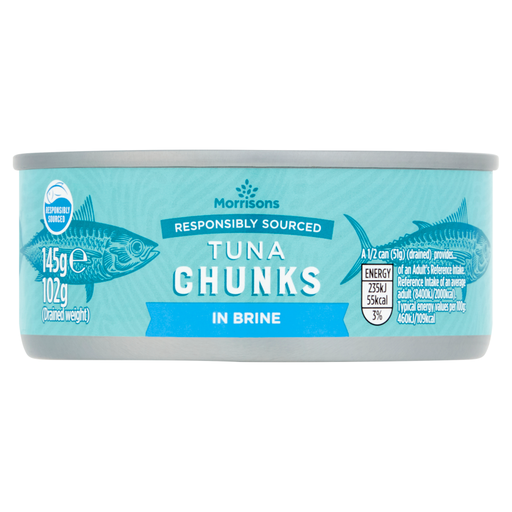
Morrisons Fad Free Tuna Chunks in Brine 145g
This brine-packed chunk tin is an option when that savoury packing medium fits the recipe. Its product description lists 0.9g salt per 100g drained; check the drained weight when measuring a batch.
The description warns that small bones may remain and says to refrigerate unused tuna for up to two days after opening.
Joybuy
 No image available
Topical Sun Tuna Chunks in Springwater 160g
A 160g spring-water chunk format for recipes calling for a larger single unit. Check the drained weight for a precise recipe quantity.
Check the pack’s nutrition panel before using protein figures to compare products: the product description’s protein wording and nutrition figure conflict. Its instructions say to refrigerate unused tuna and consume it within two days.
Joybuy
 No image available
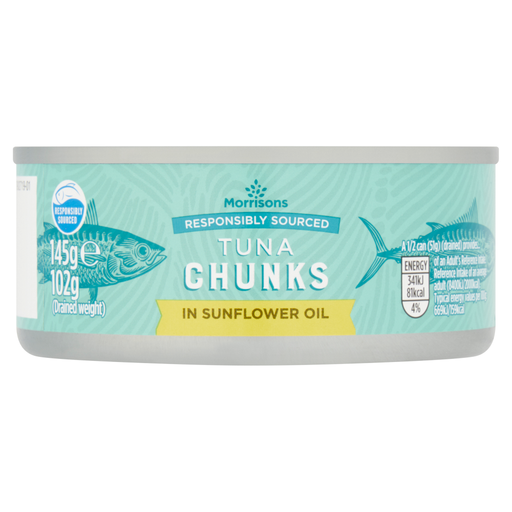
Morrisons Fad Free Tuna Chunks in Sunflower Oil 145g
Choose this 145g chunk format when sunflower oil fits the recipe rather than when you need a spring-water base. Its description lists 6.4g fat per 100g drained; check the drained weight for precise quantities.
The product instructions say to transfer unused tuna to a non-metallic container, refrigerate it and consume it within two days.
Joybuy
Questions about tuna meal prep
Should I choose spring water, brine or oil for a batch recipe?
Choose by the packing medium you want in the finished dish: spring water gives you a plain base, brine contributes a savourier one, and oil adds fat to the format. Compare the specific labels rather than assuming their nutrition is identical. Sainsbury’s lists 0.70g salt per 100g drained for its spring-water chunks and 0.90g for its Princes brine chunks on the same basis.
Is a no-drain pot a substitute for a conventional tin?
It can work when the recipe needs its quantity and avoiding draining matters. Tesco’s John West no-drain pot is 110g, while the conventional chunk tins discussed here include 145g and 160g formats. Check the amount the recipe requires before swapping one unit for another.
How should I store tuna left after opening?
Refrigerate unused tuna promptly and follow the instructions on the pack, including any direction to move it out of the opened tin. The Sainsbury’s spring-water example says to use leftovers within one day, whereas the Princes, John West and M&S examples described here allow up to two days.
How does pregnancy guidance affect a tuna meal-prep plan?
The Food Standards Agency advises people who are pregnant or trying for a baby to have no more than four medium cans of tuna or two tuna steaks a week. Count tuna across all the week’s planned meals, and check the pack and drained weight rather than assuming every single-unit product equals a medium can.
Does tinned tuna count as oily fish?
No. The NHS states that fresh and canned tuna do not count as oily fish, so a tuna batch does not fulfil the oily-fish part of its fish guidance.


