What matters when buying?
For a large family shop, start with the portions needed for planned meals, then choose the texture and packing medium that suit each use.
| Concern |
What to check |
Who this matters to |
| Usable quantity |
Check both the stated tin weight and the drained contents, then count the tins needed for the meals you have planned. |
When I am making several family meals, I need to know how much tuna I can actually use from each tin. About 36% of consumers would put usable quantity first. |
| Texture and recipe fit |
Look for chunks, steaks, flakes or a no-drain format, and match the form to the intended dish. |
For a dish where the pieces of fish will be noticeable, I want to choose the texture before stocking up. Roughly 29% of consumers would make recipe fit their primary concern. |
| Packing medium and ingredients |
Read the ingredient list and compare salt, energy and fat per 100 g on the same stated basis. |
If tuna is going into a meal with other ingredients, I want the water, brine or oil version that suits the recipe and the labels I need to check. About 21% of consumers would prioritise the packing medium and ingredient information. |
| Opening and leftovers |
Check whether draining is needed and follow the particular product’s instructions for any unused tuna. |
When a meal uses only part of a tin, I need an opening and storage routine that works for my household. Around 14% of consumers would put ease of use and leftovers first. |
Brands to compare for individual-tin choices
These ranges illustrate different tin sizes, packing liquids and serving formats. Check the specific product rather than assuming every tin from a brand has the same ingredients or instructions.
Tesco
Tesco Groceries lists own-label 145 g spring-water chunks alongside other tin and pack formats, making its range relevant when planning how many tins a family meal will use.
- The listed formats allow a choice between individual tins and packs.
- Check the drained contents of the specific format before comparing usable quantities.
Sainsbury’s
Sainsbury’s lists own-label tuna chunks in spring water and brine as 4 × 145 g packs, as well as a 145 g sunflower-oil single tin.
- The listed products provide packing-medium and pack-format choices.
- Check the format and label of the exact variant; one own-label listing does not describe the whole range.
Asda
ASDA’s reviewed 4 × 145 g brine-chunks product provides an example of the ingredient, allergen, nutrition and storage details to inspect before choosing a tin.
- The reviewed product declares fish in its ingredients and gives leftover-storage instructions.
- Use the current pack label for the particular ASDA product, as product information can change.
M&S
Marks & Spencer lists a 160 g spring-water chunks tin, a different stated size from the 145 g formats elsewhere in this selection.
- Its product information identifies the format and gives nutrition figures for that tin.
- A larger stated tin weight is not a substitute for checking its drained contents and the portion needed.
Princes
Princes describes tuna chunks in spring water and sunflower oil, offering two ingredient and nutrition labels to compare for different recipes.
- Its spring-water chunks list tuna and spring water as ingredients; its sunflower-oil version includes oil and salt.
- The figures for one Princes variant should not be applied to another packing medium.
John West
John West’s range includes standard chunks and spring-water no-drain chunks for shoppers who want to consider preparation as well as tin size.
- John West describes its no-drain product as usable without a draining step.
- Check whether the item is an individual tin or a multipack; the no-drain listing cited here is a 3 × 100 g pack.
Individual tins on Joybuy
These individual tins cover tuna chunks in brine, sunflower oil and spring water, plus a sunflower-oil steak format. Choose by the meal you have planned, and check each tin’s label for its drained contents and serving instructions.
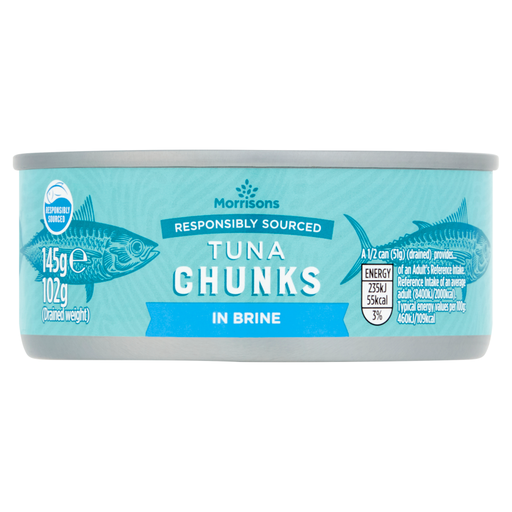 Image unavailable
Morrisons Fad Free Tuna Chunks in Brine 145g
A single tin of brine-packed chunks for a planned salad, sandwich or pasta dish. The stated tin size is 145 g; check the current label for drained contents, salt and fish allergen information, and inspect the tuna for possible bones before serving.
View on Joybuy
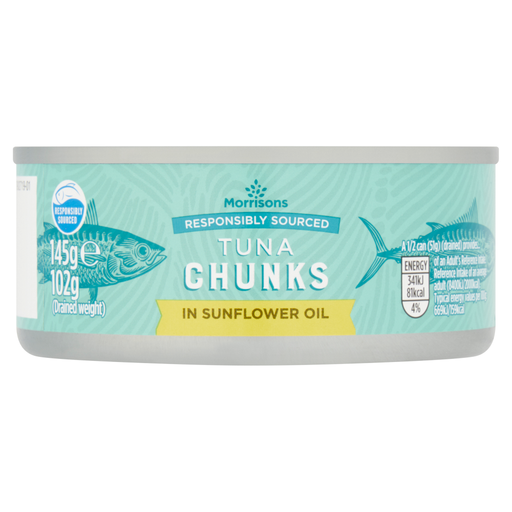 Image unavailable
Morrisons Fad Free Tuna Chunks in Sunflower Oil 145g
An individual oil-packed chunks tin to consider when sunflower oil suits the planned salad, sandwich or pasta dish. Its stated size is 145 g; check the specific tin’s drained contents, nutrition and fish allergen label before use.
View on Joybuy
 Image unavailable
Morrisons Fad Free Tuna Chunks in Spring Water 145g
A single spring-water chunks tin for meals such as pasta, salads or sandwiches when that packing medium fits the recipe. The stated size is 145 g; use the current pack label to check drained contents, salt and fish allergen information.
View on Joybuy
 Image unavailable
Topical Sun Tuna Chunks in Springwater 160g
A spring-water chunks option with a stated 160 g tin size for a meal needing that format. Confirm the drained contents before comparing it with smaller tins, and read the current allergen and nutrition label for this product.
View on Joybuy
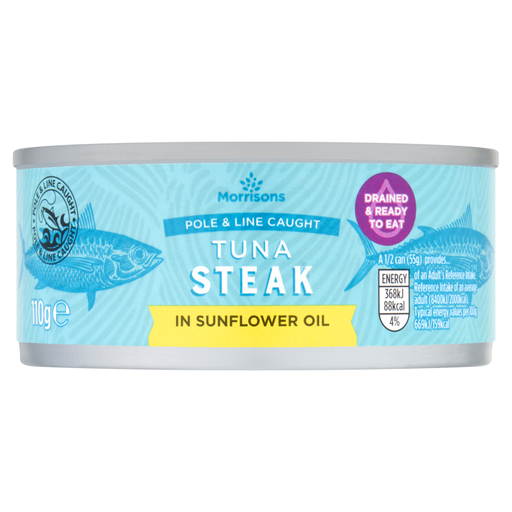 Image unavailable
Morrisons Drained Tuna Steaks with Sunflower Oil 110g
A 110 g sunflower-oil tuna-steak tin to consider when the form of the fish matters to the dish. Check the pack for its drained contents and preparation instructions; the word “Drained” in the title alone does not establish whether another draining step is needed.
View on Joybuy
Questions about choosing and using tuna
Should I use the weight on the front of the tin or its drained weight?
Use the drained weight to judge how much tuna the meal will have, where that figure is given. The front-of-pack weight can include the packing liquid, so check the particular tin rather than treating two tins with similar stated weights as equal portions.
Does spring-water tuna suit every family recipe?
No single packing medium suits every recipe. Spring water, brine and sunflower oil have different ingredient and nutrition declarations; for example, Princes lists 99 kcal and 0.5 g fat per 100 g drained for its spring-water chunks, compared with 180 kcal and 9.5 g fat for its sunflower-oil chunks. Choose for the dish and check the label of the exact variant.
What allergen information should I check on tinned tuna?
Check the current tin for its fish allergen declaration and any other relevant label information. The reviewed ASDA and Marks & Spencer products identify fish as an allergen; anyone managing a fish allergy should not rely on a listing for a different tuna product.
How should I store tuna left over from an opened tin?
Follow the storage instructions on that tin. The reviewed ASDA and Marks & Spencer products instruct shoppers to transfer leftovers to a suitable non-metallic container, cover and refrigerate them, and use them within two days.
Does canned tuna count as oily fish?
No. NHS guidance classifies neither fresh nor canned tuna as oily fish, so a tuna tin should not be counted as an oily-fish choice when planning family fish meals.


