Parents planning several tuna lunches
A multipack may suit repeated sandwiches, wraps or pasta salads. Check how much tuna each tin yields after draining and whether you can use it within the label’s storage instructions.


For several school lunches, plain tuna chunks in spring water are a practical starting point if the child can eat fish and the school permits it. Compare the usable drained weight and likely portions across packs, then check the exact label for allergens, salt and instructions for opened tuna; a larger pack is not automatically the better fit for your lunches.
A multipack may suit repeated sandwiches, wraps or pasta salads. Check how much tuna each tin yields after draining and whether you can use it within the label’s storage instructions.
The Food Standards Agency identifies fish as an allergen. Check the current tin and the school’s allergy arrangements before packing tuna; other declared allergens may differ between products.
If certification, catch method or traceability matters to you, look for the statement on the exact product. An MSC mark and a brand’s dolphin-friendly statement describe different claims.
Start with the amount and format you will use, then check the child’s allergy requirements and the rest of the planned lunch.
| Priority | What to check | Your needs |
|---|---|---|
| Usable portions | Compare tin count, net weight and drained weight where stated. Plan how many lunches you will make from an opened tin. | I’m making several lunches, so a multipack is useful only if its tins suit the portions and storage time I have planned. |
| Allergens | Read the current ingredient and allergen label on the exact tin. Check the school’s arrangements for packed lunches. | Fish must be avoided in this lunch if the child cannot eat it. I also need to check any other allergens declared for the product. |
| Lunch ingredients | Choose a packing medium that suits the recipe, and read the salt information for the exact product. Consider the other ingredients you will add. | For a sandwich or pasta salad, I want tuna that works with the bread, pasta, vegetables or dressing I’m using. |
| The whole lunch | Plan the tuna alongside starchy food and fruit or vegetables. Southampton City Council’s packed-lunch guidance suggests including these foods and water. | Tuna is one part of the lunch; I still need to pack the foods and drink that will go with it. |
| Sourcing statement | Look for the exact certification mark or catch-method statement on the chosen product. Do not transfer a claim between tins or brands. | If sourcing affects my choice, I want to know whether this particular tin carries an MSC mark, a pole-and-line statement or a brand traceability claim. |
| Opened-tin storage | Follow the chosen tin’s instructions for transferring, refrigerating and using leftovers. The cited John West and M&S labels specify use within two days after opening. | If one tin will cover more than one lunch, I need a plan for the unused tuna as soon as I open it. |
The net weight includes the packing liquid, so it does not tell you how much tuna will remain after draining.
Compare drained weights when they are stated, then work out whether the tin sizes suit the lunches you plan to make.
Tuna contains fish. The Food Standards Agency identifies fish as an allergen, making a tuna lunch unsuitable where the child must avoid it.
Check the physical label of the tin you buy and follow the child’s allergy arrangements and the school’s packed-lunch policy.
The cited ASDA pack states MSC certification; Sainsbury’s describes a pole-and-line catch and an MSC-certified fishery for its cited tin. Princes’ traceability and dolphin-friendly statements are brand claims.
Decide which information matters to you and look for that precise mark or statement on the product you intend to buy.
An opened tin may provide more tuna than one lunch needs. The cited John West and M&S product instructions call for refrigeration and use within two days.
Portion out the lunch and store any remainder according to the exact tin’s instructions.
These examples describe particular products and brand statements, not every tin sold under each name.
Tesco describes its 4 × 145g spring-water pack as hand-filleted skipjack tuna.
ASDA’s cited 4 × 145g spring-water pack lists tuna and spring water as ingredients and states MSC certification.
Sainsbury’s describes its cited 145g spring-water skipjack tin as pole-and-line caught and from an MSC-certified fishery.
The cited John West spring-water chunks come in a 4 × 125g pack, with 102g drained weight stated per tin.
Princes lists tuna and spring water as ingredients for its cited chunks, with single-tin and multipack formats.
M&S describes its cited 160g spring-water skipjack tin as pole-and-line caught under its Forever Fish policy.
These spring-water tins include single cans and multipacks for sandwiches, wraps or salads. Compare the format and exact label with the lunches you plan to make.
 No image available
Six tins allow for more than one planned tuna lunch. This product contains fish; check the current label and school allergy arrangements, and follow the tin’s instructions for any leftovers.
 No image available
This four-tin format can be portioned across planned lunches. Ocado’s listing for the same pack states 102g drained weight per tin, 25g protein and 0.80g salt per 100g drained, and a possible-bones warning. Check the current tin for fish-allergen and storage instructions.
 No image available
The three-tin No Drain format is an option for separate sandwich or salad preparations. It contains fish; check the current label and refrigerate any opened remainder as instructed on the tin.
 No image available
A single tin may suit a lunch plan that does not call for a multipack. This tuna contains fish; check the current label and plan how you will store any unused contents after opening.
 No image available
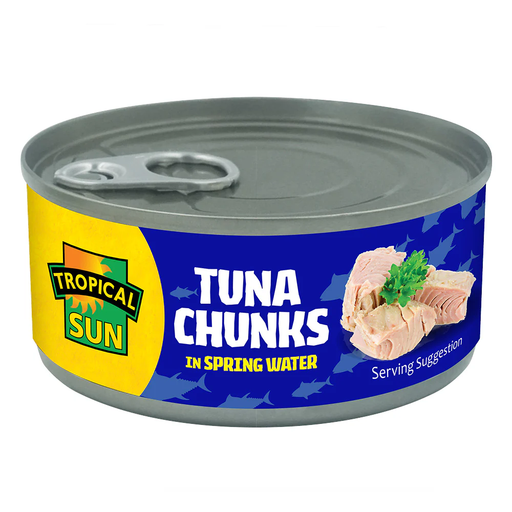
This single tin can be considered for a sandwich, wrap or salad. It contains fish, and the product information warns of possible traces of soybeans and wheat; check the current label against the child’s allergy requirements.
Yes, if the child can eat fish and the school permits it. Pack tuna as one part of the lunch, alongside suitable starchy food and fruit or vegetables; Southampton City Council’s packed-lunch guide also suggests water.
Spring-water chunks provide a plain base when you plan to add other sandwich or salad ingredients. To compare them with tuna in brine or oil, read the exact tins’ salt, fat and drained-weight information rather than assuming one packing medium determines the whole lunch.
No. The NHS says that fresh and canned tuna do not count as oily fish.
Follow that tin’s storage instructions. The cited John West and M&S product pages instruct shoppers to refrigerate unused tuna and use it within two days; M&S also specifies a non-metallic container.
Do not pack tuna for a child who must avoid fish. The Food Standards Agency identifies fish as an allergen; check the current product label and follow the child’s allergy arrangements and the school’s policy.