What should you check?
Start with the usable portion and preparation format, then compare the current labels for the details that matter to the lunch being made.
| Priority | What to check | Your needs |
|---|
| Portion |
Compare the tin’s total and drained weights. Read its stated servings and any instructions for leftovers. |
I want enough tuna for the lunch without mistaking packing liquid for the usable portion. |
| Packing liquid |
Check whether the tin contains spring water, brine or oil. Compare salt figures only on the same stated basis; the Sainsbury’s spring-water and Princes brine examples list 0.12g and 0.9g salt per 100g drained respectively. |
The liquid needs to suit the filling I am making, and I want to compare the salt declarations on the tins I am considering. |
| Preparation |
Look for explicit drained-and-ready or no-drain wording. Check the pack size too: Tesco lists John West’s no-drain spring-water product as a 3 × 100g pack. |
A draining step matters when I am preparing lunch quickly, but I still want to know whether I am buying one tin or a multipack. |
| Allergens |
Read the current ingredients and allergen statement. The Food Standards Agency lists fish, crustaceans and molluscs as separate allergen categories; do not infer additional allergens from the word “tuna”. |
I need to check the exact tin before packing it for a pupil with an allergy. |
| After opening |
Read that tin’s instructions for transferring, refrigerating and using leftovers. Do not apply one product’s storage period to another. |
If one tin covers more than one serving, I need a plan for the unused tuna. |
Relevant brand ranges
These examples illustrate formats to compare; a brand name alone does not establish a tin’s ingredients, portion or preparation instructions.
Sainsbury’s
Its examples include a conventional 145g spring-water tin and a 120g Drained & Ready tin in brine.
- The 145g spring-water product lists skipjack tuna and spring water, 0.12g salt per 100g drained, and two servings.
- Check the liquid as well as the preparation format: the Drained & Ready example is in brine, not spring water.
Princes
The 145g tuna chunks in brine provide a conventional single-tin option.
- The product lists tuna, water and salt, with 0.9g salt per 100g drained.
- Its listed salt is higher than Sainsbury’s specific 145g spring-water example when both are compared per 100g drained.
Tesco
Tesco lists an own-label 145g single tin of tuna chunks in spring water.
- It offers a conventional single-tin format to consider for lunch preparation at home.
- Check the physical tin for its drained weight, servings, ingredients and storage instructions.
John West
A listed No Drain spring-water tuna product offers a different preparation format.
- Tesco identifies the No Drain product as tuna chunks with a little spring water.
- That listed product is a 3 × 100g pack, not a single-tin purchase; do not assume other John West tins are no-drain.
M&S
M&S lists a 160g single tin of tuna chunks in spring water.
- M&S describes this product as pole-and-line caught and responsibly sourced under its Forever Fish policy.
- Check its drained weight and servings before treating a 160g tin as one pupil’s portion.
Single-tin options on Joybuy
These single tins cover brine, spring-water and sunflower-oil formats for lunches prepared at home. Compare each tin’s current label for the usable portion, allergens and any draining instructions.
 No image available
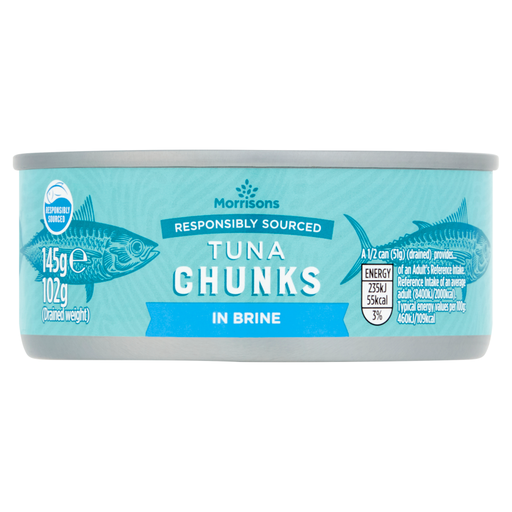
Morrisons Fad Free Tuna Chunks in Brine 145g
A single brine-packed tin to consider for a sandwich filling. Check the drained weight and servings for the portion you intend to use, and read the current fish-allergen and storage information.
 No image available
Morrisons Fad Free Tuna Chunks in Spring Water 145g
A single spring-water tin for a lunch filling prepared at home. Check its drained weight, stated servings and preparation instructions rather than assuming it has the same nutrition or no-drain format as another product.
 No image available
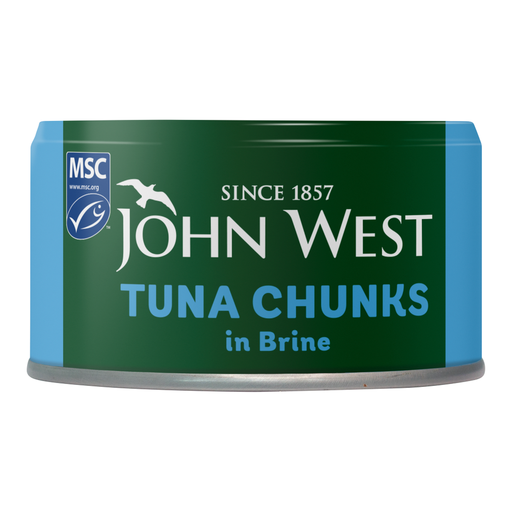
John West Tuna Chunks in Brine 125g
This single tin has a stated pack weight of 125g. Check its drained weight to judge the usable portion, and confirm the nutrition basis on the pack before comparing it with figures given per 100g drained.
 No image available
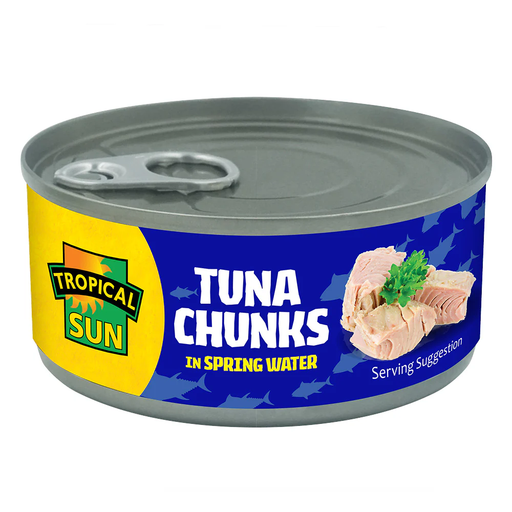
Topical Sun Tuna Chunks in Springwater 160g
A single 160g spring-water tin to assess for a sandwich or wrap filling. Check the drained portion and preparation instructions; read the current pack’s full allergen statement, particularly if soybeans or wheat are a concern.
 No image available
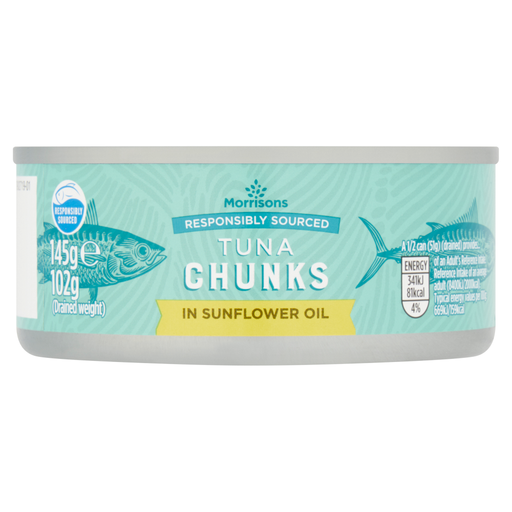
Morrisons Fad Free Tuna Chunks in Sunflower Oil 145g
This single 145g tin is packed in sunflower oil rather than spring water or brine. Check whether that liquid suits the planned filling, along with the drained portion, fish-allergen statement and instructions for leftovers.
Frequently asked questions
Is tuna a fish allergen?
Yes. The Food Standards Agency lists fish as an allergen category, and the Sainsbury’s and Princes tuna examples identify fish in their ingredients. Check the current tin’s complete ingredient and allergen statement before packing it for a pupil with an allergy.
Does a tuna tin automatically contain shellfish?
No: tuna being fish does not itself establish the presence of shellfish. The Food Standards Agency lists fish, crustaceans and molluscs separately; check the exact product label for any additional allergen declaration.
Should I choose spring water or brine for a packed lunch?
Choose according to the filling and the exact tin’s nutrition label, rather than assuming the formats are interchangeable. Sainsbury’s 145g spring-water tuna lists 0.12g salt per 100g drained, versus 0.9g for the specific Princes 145g brine product; those figures do not describe all spring-water or brine tins. Compare an oil-packed tin using its own label.
Is a 145g tin one pupil’s lunch portion?
Not necessarily: the pack weight includes any packing liquid, and Sainsbury’s describes its 145g spring-water product as containing two servings. Check the tin’s drained weight and servings, then plan how to store any tuna left after making the lunch.
How should I keep tuna left after opening a tin?
Follow the instructions on the tin you opened. The Princes 145g brine product says to put leftovers in a sealed container in the fridge and use them within two days; do not assume that period applies to another product.


