What to check before buying
Start with the records you own and the equipment you will connect, then decide how much setup and manual operation you want. An automatic Bluetooth deck, an adjustable manual deck and a conventional wired turntable answer different parts of that decision.
Automatic Bluetooth turntable
Choose it when: You want automatic playback with a compatible Bluetooth speaker or headphones, or a built-in phono preamp for a suitable wired input.
Bear in mind: Check record-speed support on the exact model; Sony lists 33⅓ and 45 RPM for the PS-LX310BT, not 78 RPM.
Adjustable manual turntable
Choose it when: You need capabilities such as 78 RPM playback, tracking-force adjustment or USB recording; Audio-Technica lists these for the AT-LP120XUSB.
Bear in mind: Manual cueing and adjustable controls require you to follow the setup instructions, including any cartridge and stylus requirements for your records.
Manual belt-drive hi-fi turntable
Choose it when: You want a dedicated wired listening setup and are comfortable operating a manual deck. Rega supplies the Planar 1 with a factory-fitted cartridge and preset bias.
Bear in mind: Match the deck to a suitable phono input or separate phono stage; Rega identifies the Planar 1 Plus as the variant with a built-in MM phono stage.
| Concern |
What to check |
Who this matters to |
| Record care |
Check whether the stylus can be replaced. On a used deck, inspect the stylus and tonearm; if you want to make your own adjustments, check tracking-force and anti-skate controls. |
If the condition of my used records or the deck’s stylus is uncertain, I want to address possible wear before playing them; around 40% of consumers put record care first. |
| System setup |
Match the turntable’s phono or line output to your speakers or amplifier. If you want wireless playback, check Bluetooth compatibility with the receiving device. |
I want to listen in the hobby room without putting together the wrong audio chain; roughly 30% of consumers prioritise an uncomplicated setup. |
| Formats and control |
Check your records’ speeds, whether you need USB recording and whether manual cueing suits you. For 78 RPM records, confirm the appropriate stylus and cartridge setup too. |
If my collection includes different record formats or I plan to record playback to a computer, I need the deck’s controls and connections to fit; about 30% of consumers place that flexibility first. |
Brands to consider
These examples show why it is worth comparing exact models and variants, rather than assuming every turntable from a brand has the same controls or connections.
Audio-Technica
Its UK range includes an automatic Bluetooth route and a more adjustable manual route.
- Audio-Technica lists automatic operation, Bluetooth, a built-in phono preamp and a replaceable stylus for the AT-LP3XBT.
- The AT-LP120XUSB adds manual controls, USB and 78 RPM support, but those controls require careful setup.
Rega
The Planar 1 is a manual belt-drive option for a wired hi-fi system.
- Rega describes a factory-fitted Carbon cartridge and preset bias on the Planar 1.
- Check the variant and your system’s phono input: Rega specifically identifies the Planar 1 Plus as adding a built-in MM phono stage.
Sony
The PS-LX310BT is an automatic Bluetooth option for listeners using 33⅓ and 45 RPM records.
- Sony lists automatic start, stop and return, Bluetooth and a built-in phono preamp for the PS-LX310BT.
- Its published speed specification lists 33⅓ and 45 RPM; check a different model if your collection includes 78s.
Pro-Ject
The Debut EVO 2 is a manual belt-drive option for a wired hi-fi setup.
- Pro-Ject specifies an 8.6-inch carbon-fibre tonearm and an adjustable anti-skating mechanism for this model.
- Check the supporting electronics and connections needed for your planned system before choosing this route.
Automatic turntables on Joybuy
These Sony models are choices for a hobby room where Bluetooth and automatic playback are priorities. Compare their exact specifications and the equipment you will use with them, particularly if your second-hand collection includes 78 RPM records.
 No image available
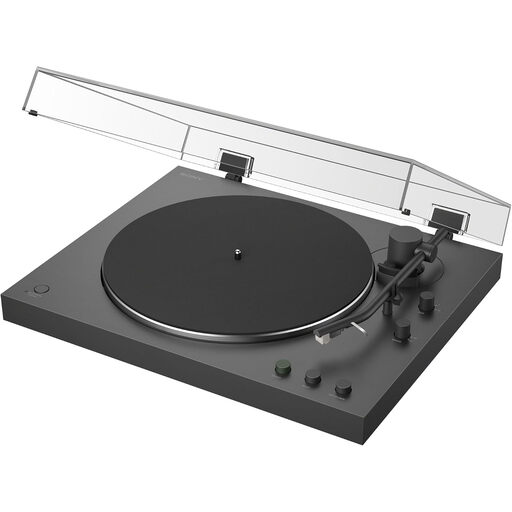
Sony PS-LX3BT Bluetooth Automatic Turntable
Consider this model if automatic playback and a Bluetooth connection suit your hobby-room setup.
If you own 78 RPM records, confirm speed and stylus compatibility before buying. Also check the stylus replacement options, audio connections and supplied power arrangement for your setup.
View on Joybuy
 No image available
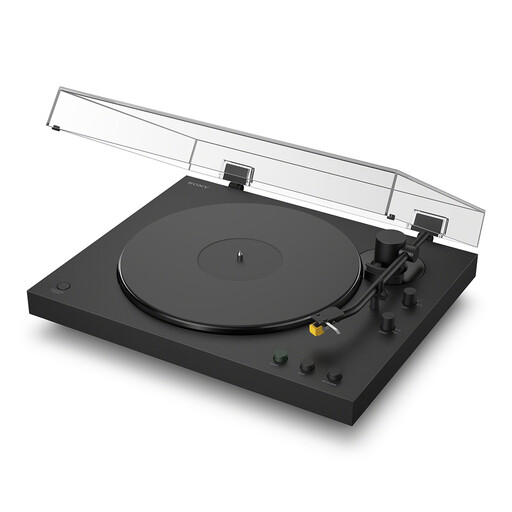
Sony PS-LX5BT Bluetooth Automatic Turntable with Cartridge and Stylus
Consider this model if you want automatic Bluetooth playback and are comparing the cartridge and stylus arrangement supplied with the deck.
Check replacement-stylus options, record-speed support and the audio inputs you intend to use. Confirm that the supplied power arrangement suits UK use.
View on Joybuy
Common questions
Do I need a phono preamp for a hobby-room turntable?
You need a suitable phono stage somewhere in the wired audio chain, unless the turntable provides the line-level output your equipment requires. Audio-Technica lists built-in phono preamps for the AT-LP3XBT and AT-LP120XUSB; Rega identifies the Planar 1 Plus as the Planar 1 variant that adds a built-in MM phono stage. Check the exact turntable setting and your amplifier or speakers’ inputs.
Could an old stylus damage second-hand records?
Yes, a worn stylus can potentially damage records, according to Which?. If you are buying a used deck and cannot establish the stylus’s condition, check the compatible replacement before playing records you want to preserve.
Will an automatic Bluetooth turntable play every record I own?
No: check the speeds supported by the exact model against your records. Sony’s PS-LX310BT specification lists 33⅓ and 45 RPM, while Audio-Technica lists 33⅓, 45 and 78 RPM for the manual AT-LP120XUSB. For 78 RPM records, speed support alone is not enough; confirm the appropriate stylus and cartridge setup.
What should I check about power and disposal?
Check that the supplied power arrangement suits where you will use the turntable, and keep its product documentation. For end-of-life disposal, use an appropriate electrical recycling route; UK government guidance on waste electrical and electronic equipment addresses recovery, reuse and recycling.


