Focused classical-LP listeners with an existing hi-fi system
If you enjoy listening through complete sides and are comfortable operating a manual deck, check that your system has a suitable phono stage before choosing one.


Choose a manual turntable if you are comfortable cueing records and have a suitable phono-stage, amplifier and speaker arrangement for focused LP listening. If easier connection, automatic operation or headphones matter more in your open-plan flat, consider a deck with the relevant built-in features. Whichever route you take, check the complete playback chain and place the turntable on a level surface away from speakers that could cause vibration.
If you enjoy listening through complete sides and are comfortable operating a manual deck, check that your system has a suitable phono stage before choosing one.
If you use powered speakers, an amplifier without a phono input or compatible Bluetooth headphones, the turntable’s outputs and phono-stage arrangement will shape your choice.
Plan where the deck and speakers will stand, and decide when headphones would be more considerate. Audio-Technica advises placing a turntable on a flat, level surface away from speakers that could cause vibration.
Choose it when: You want to cue classical LPs yourself and already have, or plan to assemble, a compatible phono-stage and amplifier arrangement.
Trade-off: The connections need more planning than with a deck that has an integrated phono stage.
Choose it when: You prefer a wired setup using a suitable line-level input but still want a traditional manual deck.
Trade-off: A built-in stage does not provide automatic cueing or Bluetooth; check that the particular deck has every feature you need.
Choose it when: Automatic operation and listening through compatible Bluetooth headphones or speakers matter more to you.
Trade-off: Wireless playback does not control the sound others hear when you use speakers, and device compatibility still needs checking.
| Concern | What to check | Who this matters to |
|---|---|---|
| Focused LP playback | Check the speeds your records require, how the deck changes speed and whether your system has a suitable phono stage. | If I settle in for a complete classical LP side, I want a setup I am comfortable operating without overlooking the connections it needs. Around 42% of consumers put this focused-listening need first. |
| Simple connections | Match the turntable’s phono-stage setting and outputs to the inputs on your equipment; check Bluetooth compatibility if you plan to use it. | With powered speakers or headphones already in mind, I want to know how the deck will connect before I order. For around 33% of consumers, straightforward connection is the primary concern. |
| Shared-space listening | Plan a flat, level position away from speakers, and decide whether speaker playback or headphones suit the space. | When other people are nearby, I need a place for the deck that avoids speaker vibration and a way to listen considerately. This is the leading need for around 25% of consumers. |
Turntable placement can help avoid vibration affecting playback, but it does not determine how loudly speakers are heard elsewhere in an open-plan flat.
Decide whether you will normally use speakers or headphones, then give the deck a flat, level position away from the speakers. Audio-Technica gives the same placement advice for the AT-LP70XBT.
Choosing headphones or a different position for the system may change how and where you can listen.
A turntable and a line-level input need a suitable phono stage between them, whether it is built into the deck, built into the receiving equipment or supplied separately.
Identify the input on your amplifier or powered speakers and check the chosen turntable’s output and settings before ordering.
A system without a suitable phono stage may need an additional component or a different connection arrangement.
Those features describe how you use or connect a deck; they do not, by themselves, establish how a particular classical record will sound through your system.
Choose the operating and connection features you will use, then compare the specific models’ supported specifications and the needs of your playback chain.
A reference point for a conventional manual belt-drive setup, represented here by the Debut Carbon EVO.
A reference point for manual wired listening with an integrated phono stage, represented here by the Planar 1 Plus.
A reference point for automatic playback and flexible connections, represented here by the AT-LP70XBT.
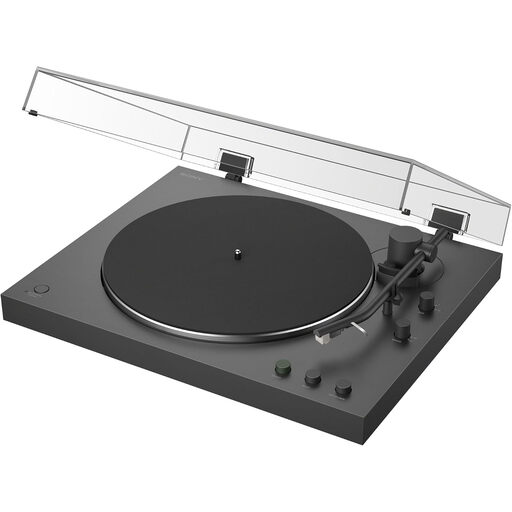
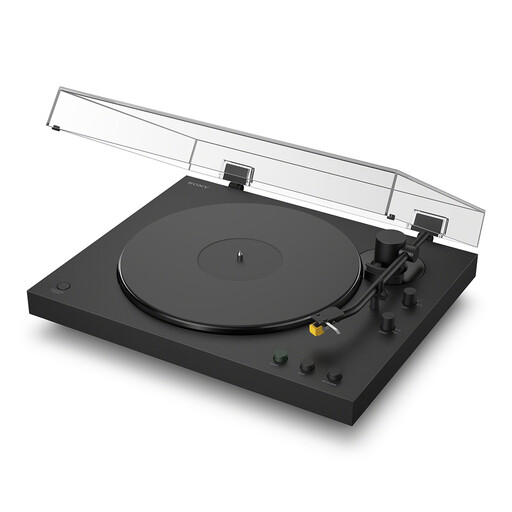
These Sony turntables suit consumers considering automatic playback and Bluetooth listening for classical LPs in a shared space. Check each model’s connections against the equipment you intend to use.
 No image available
Consider this model if automatic playback and Bluetooth are priorities for your LP listening. Confirm compatibility with your intended headphones or speaker, and check its wired connections against your existing equipment.
 No image available
Consider this model if you want automatic LP playback with a Bluetooth listening option. Check pairing with your intended device and confirm that the wired output connector suits your amplifier or powered speakers.
You need a suitable phono stage somewhere in the playback chain, but it need not be separate. Rega specifies one built into the Planar 1 Plus, while Audio-Technica specifies a switchable preamp in the AT-LP70XBT; for another deck, check both its output and the input on your amplifier or powered speakers.
Put it on a flat, level support away from speakers that could transmit vibration, as Audio-Technica advises in its setup guidance. Placement helps protect playback from vibration; considerate speaker volume or headphones address the separate question of what others can hear.
Yes, provided you use the appropriate connection and preamp setting. Audio-Technica says to select LINE for powered speakers or other non-phono inputs, and PHONO when connecting to an input labelled PHONO.
GOV.UK states that customers can cancel eligible distance orders up to 14 days after delivery without giving a reason. Check the seller’s cancellation instructions and whether an exception applies before ordering; change-of-mind cancellation is separate from remedies for faulty or misdescribed goods.