Quiet-room listeners using wireless audio
You want to play records through Bluetooth headphones or speakers at a restrained volume and would value automatic operation. Check that the receiving device works with the turntable you choose.


For quiet listening, choose the connection to your headphones or speakers before choosing the turntable. Bluetooth and automatic operation can simplify a wireless setup if the receiving device is compatible; a turntable with an integrated phono preamp can suit a wired line-level setup, but neither route supplies the rest of the listening equipment.
You want to play records through Bluetooth headphones or speakers at a restrained volume and would value automatic operation. Check that the receiving device works with the turntable you choose.
You already have equipment with a line-level input and want to check whether a turntable’s phono-preamp arrangement will let you use that connection.
You expect to play an existing collection regularly, so a compatible replacement stylus and a practical record-cleaning routine matter alongside ease of setup.
For low-volume playback, establish how you will hear the records, then decide how much manual operation and ongoing care fit your routine.
| Concern | What to check | Who this matters to |
|---|---|---|
| Listening connection | Match Bluetooth transmission or the turntable’s phono-preamp output to the input on your intended headphones, speakers or amplifier. | If I listen through equipment I already own, I need a connection it can accept; around 27% of consumers put connection compatibility first. |
| Ease of operation | Check whether start and stop are automatic, how the tonearm is operated and how the deck changes speed. | For short listening sessions, I would rather start a record without managing every tonearm movement; roughly 33% of consumers prioritise simpler operation. |
| Collection care | Confirm the exact compatible replacement stylus and follow suitable record and stylus-cleaning guidance. | When I play records regularly, I need a way to maintain the stylus and keep the collection clean; around 20% of consumers make ongoing care their primary concern. |
| Wired hi-fi setup | Check the amplifier input, phono-stage arrangement and the exact model’s manual operating requirements. | If my records will stay in a fixed wired system, I am comfortable weighing equipment matching against hands-on operation; about 20% of consumers put that setup first. |
A turntable’s cartridge signal may need a phono stage before it can feed a standard line-level input. An integrated, switchable phono preamp is a model-specific feature, not something to assume from the word “turntable”.
Note the exact input on your powered speakers or amplifier, then check the chosen deck’s phono-preamp arrangement.
A separate phono stage may be needed if neither the turntable nor the receiving equipment provides a suitable one.
Bluetooth provides a connection option, but listening still requires compatible receiving headphones or speakers and a way to control playback volume.
Check the intended receiving device and decide whether you also want a wired connection available.
Operation varies by model. Rega’s Planar 1 Plus instructions, for example, specify moving the belt to change between 33⅓ and 45 RPM.
Check the exact model’s cueing and speed-change instructions if you want low-effort sessions or often switch record speeds.
A stylus wears with use, while dust on records and the stylus makes cleaning part of regular collection care.
Identify the compatible replacement part for the exact cartridge and follow the manufacturer’s cleaning guidance.
Regular use also means obtaining a compatible replacement stylus and suitable cleaning supplies when needed.
The AT-LP60XBT and AT-LP70XBT are examples to consider when automatic operation and Bluetooth listening are priorities.
The wired T1 EVO Phono is relevant if you want a turntable with an integrated phono stage for a compatible system.
The Planar decks are relevant to listeners considering a traditional wired setup; the Planar 1 Plus has an integrated MM phono stage.
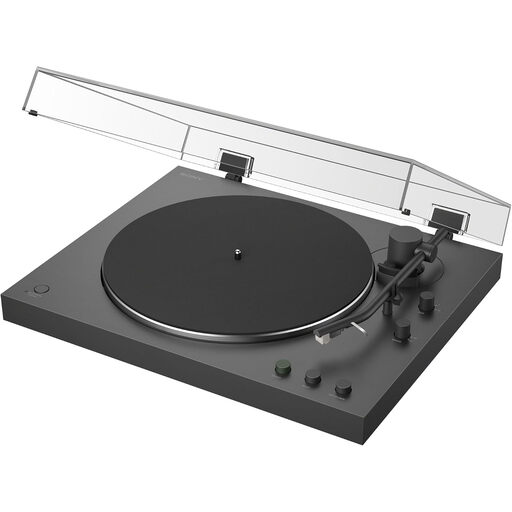
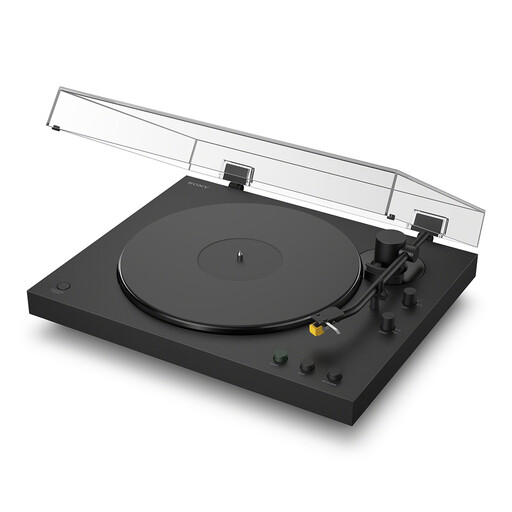
These Sony models are options for listeners considering Bluetooth headphones or speakers and automatic playback. Match any wired connection and the replacement stylus to your own setup before choosing.
 No image available
Consider this model for quiet sessions with compatible Bluetooth headphones or speakers when automatic playback matters to you.
If you plan to use a wired system, check its intended input and connection arrangement. Confirm the compatible replacement stylus for ongoing collection care.
 No image available
Consider this model if you want automatic playback through compatible Bluetooth headphones or speakers.
For a wired system, check that its output suits your intended input, particularly if you use a dedicated phono input. Confirm the compatible replacement stylus before buying for regular use.
No: plan the complete route to your headphones or speakers. Which? distinguishes turntables that use separate amplification and speakers from standalone record players with built-in amplification and speakers; for a turntable, check its output, any phono-stage requirement and your receiving equipment.
Not if the chosen turntable has a suitable integrated phono preamp feeding an appropriate line-level input. If it does not, check whether your amplifier has a compatible phono input or whether your setup needs an external phono stage.
Yes, when the turntable transmits Bluetooth audio and the intended headphones or speakers can receive it. Audio-Technica describes Bluetooth listening for its AT-LP60XBT and AT-LP70XBT; check the connection options on the exact model you choose.
Plan for record and stylus cleaning and eventual stylus replacement using a part compatible with your cartridge. Audio-Technica gives an approximate 300–500-hour life for its ATN3600LC replacement stylus; use the guidance for the stylus actually fitted to your turntable rather than applying that interval to every model.