Start with the records you want to play: check for 45 RPM playback and whether your 7-inch singles need a large-centre-hole adaptor, then match the turntable’s output to your speakers or amplifier. Automatic operation suits listeners who want less cueing, while manual decks may offer adjustments, USB recording or 78 RPM playback on particular models; those features are worth choosing only if you will use them.
Who is this for?
7-inch jazz-single listeners
If your collection centres on 45 RPM singles, check how the deck changes speed and whether you need an adaptor for records with a large centre hole. Rega, Pro-Ject Audio Systems and Sony describe different speed-change arrangements or adaptor provision for their cited models.
Hobby-room system builders
If you already have speakers or an amplifier, work out which inputs they accept before choosing a turntable. A built-in phono stage, a separate phono stage and a suitable amplifier input lead to different wired setups.
Listeners who prefer less hands-on operation
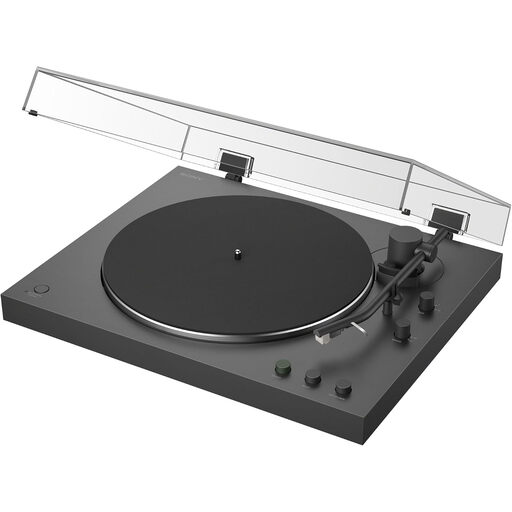
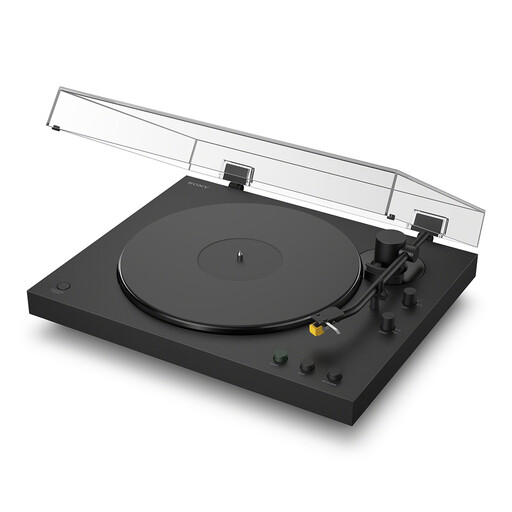
If you would rather avoid cueing and returning the tonearm yourself, automatic operation may matter more to you than manual adjustments. Sony describes automatic playback and return on its PS-LX310BT; check the exact model and the audio device you plan to use with it.
What matters when choosing?
For jazz singles, establish the record format first, then the connection to your room’s audio equipment. After that, decide whether automatic playback or hands-on operation better suits you.
| Concern |
What to check |
Who this matters to |
| Single format and speed |
Confirm 45 RPM playback, adaptor provision for large-centre-hole singles and how the deck switches speeds. Check for 78 RPM only if your records require it. |
If I alternate between singles and LPs, I want both formats to play without an awkward speed change; roughly 45% of consumers would put single-format handling first. |
| System connection |
Identify your speakers’ or amplifier’s input and whether the chosen deck has a built-in phono stage or needs a separate one. |
When I already have speakers in the hobby room, I need a turntable output that works with them; around 33% of consumers would make system fit their primary concern. |
| Operation and care |
Choose between automatic playback and manual cueing, and follow the cartridge maker’s stylus-care instructions. |
If I want to put on a record without handling the tonearm each time, ease of operation comes first; approximately 22% of consumers would prioritise that need. |
Mistakes to avoid
-
Assuming a turntable includes speakers
Which? distinguishes turntables used with separate amplification and speakers from record players with built-in sound systems. Rega’s Planar 1 Plus has an integrated moving-magnet phono stage, but it still needs suitable equipment to produce sound.
Before buying, identify whether your system has a phono input or a line-level input, then check the exact deck’s output arrangement.
Depending on the deck and what you already own, you may also need powered speakers, an amplifier or an external phono stage.
-
Overlooking the records’ speed and centre holes
Sony specifies 33 1/3 and 45 RPM, but not 78 RPM, for the PS-LX310BT. Sony lists a 45 RPM adaptor for that model, while Pro-Ject Audio Systems lists a 7-inch single adaptor for the Debut EVO 2; provision varies by model.
Read the labels on your records, then check the exact turntable’s speeds and package contents. If you own 78 RPM records, do not assume a 33/45 RPM deck will play them.
Large-centre-hole singles may require a separate adaptor if one is not supplied.
-
Treating stylus care as optional
Ortofon warns that solvents can damage stylus cement or cartridge components.
Keep records free of dust and follow the cartridge maker’s directions for brushing the stylus. Avoid touching the stylus, and fit its guard when the deck is not in use if one is supplied.
Brands to consider for this setup
Audio-Technica
Its AT-LP120XUSB is a manual option for listeners who want format flexibility and adjustment controls.
- Audio-Technica specifies 33 1/3, 45 and 78 RPM playback, USB output, a switchable phono preamp and adjustable tracking force for the AT-LP120XUSB.
- The AT-LP120XUSB is fully manual, so it does not offer automatic tonearm operation.
Rega
The Planar 1 line is relevant if you favour a largely pre-set, wired belt-drive setup.
- Rega specifies pre-set bias and a factory-fitted cartridge for the Planar 1; the Planar 1 Plus adds an integrated moving-magnet phono stage for a suitable line-level connection.
- Rega’s Planar 1 manual instructs users to move the belt on the pulley to change between 33 1/3 and 45 RPM.
Pro-Ject
The Debut EVO 2 is a hands-on belt-drive option for a wired system where speed-switching convenience matters.
- Pro-Ject Audio Systems specifies electronic 33/45 RPM selection and a supplied 7-inch single adaptor for the Debut EVO 2.
- The Debut EVO 2 is supplied partly disassembled; its user guide covers tracking-force and anti-skating adjustment.
Sony
The PS-LX310BT is relevant if you want automatic playback and Bluetooth connectivity.
- Sony specifies automatic start and return, 33 1/3 and 45 RPM playback, a built-in phono preamp and a supplied 45 RPM adaptor for the PS-LX310BT.
- Sony states that the PS-LX310BT does not play 78 RPM records.
Turntables on Joybuy
These Sony models are options for listeners considering automatic playback and Bluetooth in a hobby room. Check each exact model’s 45 RPM support, adaptor provision and connection requirements against your records and audio equipment before choosing.
 No image available
Sony PS-LX3BT Bluetooth Turntable with Auto Playback
If you prefer automatic playback, the Sony PS-LX3BT offers that operation alongside Bluetooth connectivity.
For jazz singles, confirm 45 RPM support and whether the package includes an adaptor for large-centre-hole records. Check how it connects to your intended audio device.
View on Joybuy
 No image available
Sony PS-LX5BT Bluetooth Turntable with Auto Playback
The Sony PS-LX5BT is another automatic-playback option with Bluetooth connectivity for listeners who prefer less manual cueing.
Before choosing it for singles, confirm 45 RPM support, adaptor provision and compatibility with your audio device. If recording to a computer matters, check that feature on this exact model.
View on Joybuy
Frequently asked questions
Do jazz singles require a 78 RPM turntable?
No, not if your singles are 45 RPM records. Check their labels rather than assuming every jazz single uses the same speed: Audio-Technica specifies 78 RPM playback for the AT-LP120XUSB, whereas Sony states that the PS-LX310BT supports only 33 and 45 RPM.
Can I connect a turntable directly to my speakers?
You can connect it directly only when the turntable’s output and the speakers’ input are compatible; you still need equipment that produces sound. Rega describes the Planar 1 Plus’s built-in phono stage as suitable for a line-level connection. For a deck without one, check whether your system has a suitable phono input or requires an external phono stage.
How should I care for the stylus?
Follow the cartridge maker’s cleaning instructions and avoid touching the stylus. Ortofon recommends brushing its stylus along the cantilever in the specified direction and advises against solvents on the stylus or record surface because they can damage cartridge components.


