Shared-lounge listener
You want a turntable that different household members can operate without much manual handling, with a connection that works for the lounge's speakers or compatible headphones.


For jazz singles in a shared lounge, start by checking for 45 RPM playback and a connection that suits your speakers or amplifier. An automatic Bluetooth turntable suits shared use if your receiving equipment is compatible; a wired deck with an integrated phono stage can feed a suitable line-level input. A manual deck may fit an existing hi-fi system, but check its phono-stage requirements and how it changes speed.
You want a turntable that different household members can operate without much manual handling, with a connection that works for the lounge's speakers or compatible headphones.
Your collection makes 45 RPM playback essential. If any singles have large centre holes, the adapter supplied with the exact model matters too.
You have, or plan to assemble, suitable amplification and speakers. Your main choice is whether the turntable needs an integrated phono stage or can use one already in your system.
Check your singles and the lounge's receiving equipment before deciding how much automatic operation you want. The choice between electronic speed selection and moving a belt matters most if you regularly alternate between singles and LPs.
| Concern | What to check | Who this matters to |
|---|---|---|
| 45 RPM singles | Confirm 45 RPM playback and the speed-change method. For large-centre-hole singles, check whether a compatible adapter is included. | If I regularly switch between singles and LPs, I want to know whether changing speed means pressing a control or moving a belt. Around 29% of consumers put single-playback convenience first. |
| Lounge connections | Match Bluetooth output or the wired phono-stage setting to the intended speakers, headphones or amplifier input. | When the lounge's speakers are shared, I need the turntable to work with the equipment I can actually use. Connection flexibility is the primary need for roughly 29% of consumers. |
| Shared operation and placement | Check whether playback is automatic and plan a flat, level position away from speaker vibration. | If several people use the deck, I would rather minimise manual cueing and give it a stable place in the room. For around 24% of consumers, straightforward shared use comes first. |
| Existing hi-fi system | Identify any PHONO input or separate phono stage, and check the exact model's stylus or cartridge options if future maintenance matters. | With a hi-fi system already in place, I want a deck that connects correctly and fits how I plan to maintain it. About 18% of consumers prioritise that system-building route. |
A turntable's phono output is not the same as a line-level output. Rega's Planar 1 manual specifies an appropriate phono stage, whereas the Planar 1 Plus has an integrated stage designed for line-level inputs.
Check the labels on your receiver or powered speakers before choosing the turntable's output configuration.
Audio-Technica lists an adapter with the AT-LP60XBT, and Pro-Ject lists one with the E1 Phono. Inclusion is a detail to check on the exact model, particularly for records with large centre holes.
Look at your singles and confirm the box contents before relying on an included adapter.
Rega's Planar 1 manual specifies moving the belt between pulley steps to change between 33⅓ and 45 RPM. That step may matter if you often alternate between LPs and singles.
Choose electronic speed selection if avoiding belt changes is important to you; otherwise, allow for that step in everyday use.
Audio-Technica's setup guidance calls for a flat, level surface away from speakers that can cause vibration.
Decide where the turntable will sit before buying, allowing room for its connections and dust cover.
Its AT-LP70XBT, AT-LP60XBT and AT-LP3XBT are relevant if automatic operation and Bluetooth listening suit the shared lounge.
The Planar 1 and Planar 1 Plus offer different connection routes for a conventional wired hi-fi setup.
The E1 Phono and T1 EVO Phono are wired options for buyers who want electronic speed selection and an integrated phono stage.
These Sony models are automatic Bluetooth turntables to consider if shared operation and a compatible wireless listening setup are priorities. Check each model's 45 RPM arrangements and the inputs available on your lounge equipment before choosing.
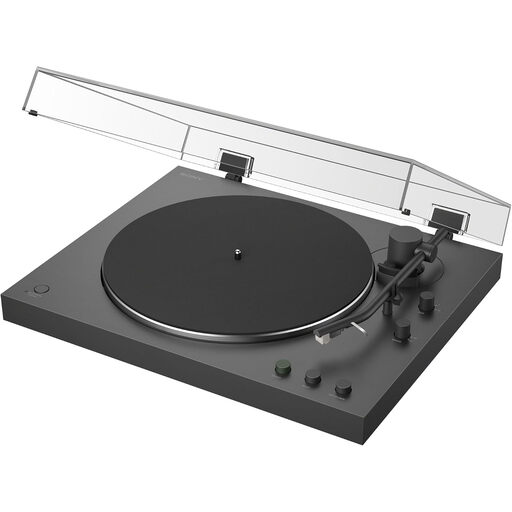 No image available
Automatic playback may suit a lounge used by several listeners. Bluetooth listening requires compatible receiving equipment; for wired listening, check the intended input. Confirm how the deck changes speed if you frequently switch between singles and LPs.
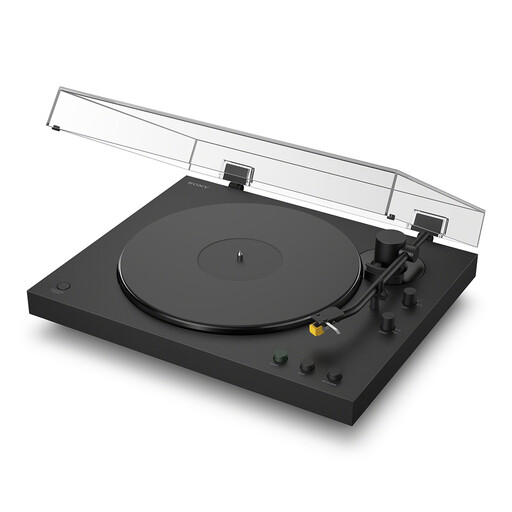 No image available
Automatic playback is relevant when several people use the lounge. Check compatibility with your Bluetooth receiver or intended wired input. If your singles have large centre holes, confirm adapter inclusion; also check the speed-change method and dust-cover provision against your needs.
Choose a model that specifies 45 RPM playback, and check whether your singles have large centre holes that need an adapter. Audio-Technica lists an adapter with the AT-LP60XBT, while Pro-Ject lists one with the E1 Phono; check the contents of any other model separately.
Not if the chosen turntable has an integrated phono stage suitable for your line-level input. Rega specifies one on the Planar 1 Plus, while its Planar 1 manual calls for an appropriate phono stage. You will still need a suitable way to power the speakers.
Put it on a flat, level surface away from speakers that cause vibration, as Audio-Technica advises in its setup guidance. Check that the position also leaves room for the connections and for opening any dust cover.
GOV.UK says retailers must offer take-back of electrical waste of the same type as an item you buy from them, including when you purchase online. Ask the retailer how to use its take-back route for your old turntable.