For mainly 33⅓ and 45 RPM records, an automatic turntable with a built-in phono preamp suits listeners who want straightforward playback through compatible powered speakers. A manual deck suits those willing to cue records and plan a compatible hi-fi system; if your collection includes 78s, check both the playback speed and the stylus required for the record material.
Who each approach suits
Low-fuss hobby-room listeners
If you mainly play second-hand LPs and singles, look for simple operation and an output that works with your existing speakers. Automatic operation and a built-in phono preamp can simplify this setup; check Bluetooth support separately if you need a wireless connection.
Second-hand collection builders
If you expect to change a stylus, cartridge or other hi-fi components later, check which changes the particular deck allows. A manual, upgrade-oriented model can suit this approach, provided you are comfortable with its setup and amplification requirements.
78 RPM record hunters
If second-hand finds may include 78s, identify their material and era before playing them. Audio-Technica advises using a stylus appropriate to the record as well as a turntable with the correct speed.
What to check before buying
Start with the records you own and the speakers already in your hobby room. Those two checks narrow the choice before you decide how much manual operation or scope for later changes you want.
| Concern |
What to check |
Who this matters to |
| Connection and operation |
Match the turntable output to your speakers or amplifier; check for a built-in phono preamp and automatic operation if you need them. |
If I want to put on a record without manually cueing the arm or adding a separate phono stage, connection and operation come first. Around 33% of consumers put this need first. |
| Record format and stylus |
Confirm the speeds in your collection; for 78s, identify the record material and check the compatible stylus. |
When second-hand finds might include 78s, I want to know that both the speed and stylus suit the record before playing it. Format and stylus suitability come first for around 27% of consumers. |
| Scope for later changes |
Check stylus and cartridge options, along with the phono stage the deck requires. |
I would rather learn a more involved setup than replace the whole deck when I want to change parts of my system. Around 20% of consumers make that flexibility their primary concern. |
| Hobby-room placement |
Measure the intended surface and dust-cover clearance; choose a stable, level position away from speaker vibration. |
If my available desk or shelf is close to speakers, I need a workable position for the turntable before choosing extras. Placement is the leading concern for around 20% of consumers. |
Buying pitfalls
-
Assuming any turntable will work with any speaker
Which? distinguishes turntables that need external equipment from record players with amplification and speakers built in. A turntable with phono-level output cannot simply be treated as a line-level source.
Check the turntable output and the inputs on your speakers or amplifier before choosing a connection route.
A separate phono stage or an amplifier with a phono input may be needed for a deck without a built-in phono preamp.
-
Using an ordinary LP stylus for a shellac 78
A 78 RPM setting does not establish stylus compatibility. Audio-Technica distinguishes a 3 mil stylus for pre-1958 shellac from a 0.6 mil stylus for 78 RPM vinyl.
Identify the record material and era, then confirm the appropriate stylus and 78 RPM speed support before playing it.
The appropriate 78 RPM stylus or cartridge may be an additional item.
-
Choosing a manual deck without planning the system
For example, Henley Audio specifies that the Pro-Ject Debut EVO 2 needs a system with a moving-magnet phono stage; its manual, upgrade-oriented design does not provide a built-in line-level output.
Confirm that your amplifier has a suitable phono input or plan for a separate phono stage before choosing that deck.
-
Leaving room placement until after purchase
Motor and foot designs differ between decks, but the intended furniture and nearby speakers still matter when deciding where a turntable will sit.
Measure the surface and dust-cover clearance, and choose a stable, level position away from direct speaker vibration.
Brands to consider
Audio-Technica
Its turntable range offers different routes for automatic listening and for collections that include 78 RPM records.
- Audio-Technica specifies fully automatic operation, a built-in phono preamp and a replaceable stylus on the AT-LP3XBT.
- The AT-LP3XBT and AT-LP60XBT are specified for 33⅓ and 45 RPM. The 78 RPM-capable AT-LP120XUSB is fully manual, and 78s also need an appropriate stylus.
Rega
The Planar 1 models are manual hi-fi turntables; the Planar 1 Plus is the option with an integrated moving-magnet phono stage.
- Rega describes the Planar 1 as supplied with a factory-fitted cartridge and pre-set bias; the Planar 1 Plus adds a phono stage for connection to a line-level input.
- Neither model offers automatic cueing, and Rega does not present these models as 78 RPM turntables.
Pro-Ject
The Debut EVO 2 is a manual belt-drive option for listeners planning a compatible, changeable hi-fi system.
- UK distributor Henley Audio specifies a supplied moving-magnet cartridge, carbon-fibre tonearm and adjustable damped feet.
- The Debut EVO 2 needs a moving-magnet phono stage. Playing 78 RPM records requires a separately available pulley and belt change, as well as a stylus suited to the record.
Automatic turntables on Joybuy
These Sony models suit listeners considering automatic playback and Bluetooth for a hobby-room setup. Check the connection you intend to use and your record formats before choosing between them.
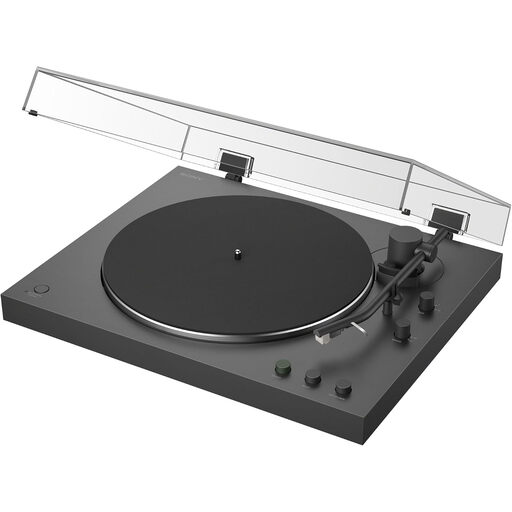 Image unavailable
Sony PS-LX3BT Bluetooth Turntable
Consider this model if automatic playback and Bluetooth suit the way you listen in your hobby room.
The product title specifies automatic playback and Bluetooth. If your collection includes 78s, confirm both speed and stylus compatibility before buying; check replacement-stylus options if later changes matter to you.
View on Joybuy
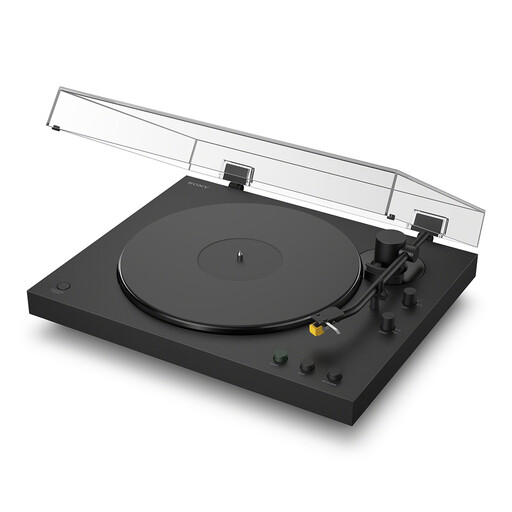 Image unavailable
Sony PS-LX5BT Bluetooth Turntable with Cartridge and Stylus
Consider this model if you want automatic playback and Bluetooth, and the supplied cartridge and stylus are relevant to your choice.
The product title specifies automatic playback and Bluetooth. For 78s, confirm speed and stylus compatibility; if you plan future upgrades, check which replacement styli and cartridges fit this model.
View on Joybuy
Common questions
Can I connect a turntable directly to powered speakers?
Yes, if the turntable supplies a suitable line-level output through a built-in phono preamp, or the speakers have a compatible phono input. Rega specifies a built-in moving-magnet phono stage on the Planar 1 Plus, while Audio-Technica specifies built-in phono preamps on the AT-LP3XBT and AT-LP120XUSB; check the connections on both devices.
Do ordinary second-hand LPs and singles require 78 RPM playback?
No. For 33⅓ RPM LPs and 45 RPM singles, choose a turntable specified for those speeds and check that its stylus is suitable and in good condition. You need to consider 78 RPM support if your collection includes 78s.
Is a 78 RPM speed setting enough for shellac records?
No. Audio-Technica advises using a proper 78 RPM stylus as well as the correct speed: its guidance specifies a 3 mil stylus for pre-1958 shellac and a 0.6 mil stylus for 78 RPM vinyl. Identify the material and era before playing the record.
Should I choose Bluetooth or a wired connection?
Choose according to the inputs and placement of the speakers or headphones you intend to use. Audio-Technica specifies both Bluetooth and wired output routes for the AT-LP60XBT and AT-LP3XBT, so check the particular model and your existing equipment rather than assuming every automatic turntable offers both.


