What to check before buying
Start with the connection to your speakers or amplifier. Then consider how often you will handle the tonearm or change record speed.
| Concern |
What to check |
Who this matters to |
| Audio connection |
Identify your speaker or amplifier input, then match it to the turntable’s PHONO or LINE output and any required phono stage. |
If my speakers accept only a line-level signal, I need a compatible path before I can listen without an extra component; around 33% of consumers put connection compatibility first. |
| Everyday handling |
Check whether start, stop and tonearm return are automatic, rather than assuming a simple setup also means automatic playback. |
When I listen often, I would rather spend less time cueing and stopping each record; approximately 27% of consumers prioritise low-handling playback. |
| Record speeds |
Check the speeds on your record labels and how the deck switches between them. For 78 rpm records, confirm stylus suitability separately. |
If my collection spans different speeds, I want the deck and its speed-change routine to suit the records I own; about 20% of consumers place format flexibility first. |
| Room care and setup |
Check belt-fitting instructions, stylus protection and whether a dust cover is included; consider speaker placement and listening levels. |
When equipment sits between listening sessions, I care about protecting it and using the room without disturbing others; roughly 20% of consumers prioritise care and room practicality. |
Joybuy turntables for automatic playback
These Sony models are options to examine if automatic playback appeals to you. Both product names also specify Bluetooth; check the offered model’s wired outputs and your receiving equipment before choosing a connection.
 No image available
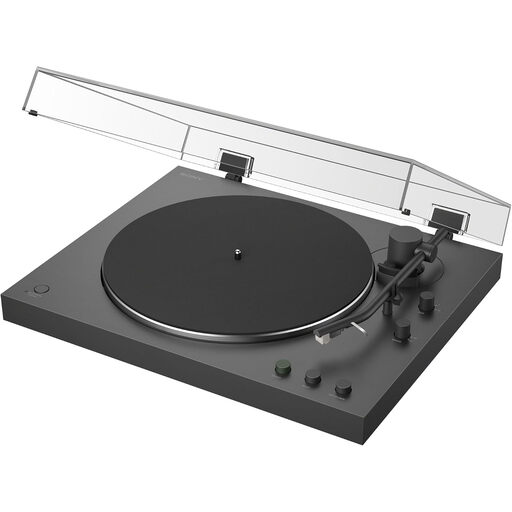
Sony PS-LX3BT Bluetooth Turntable with Automatic Playback
Consider this model if you want automatic playback for regular spoken-word listening. Bluetooth is specified in its product name; check compatibility with your listening equipment and confirm the wired output setting you need before buying.
View on Joybuy
 No image available
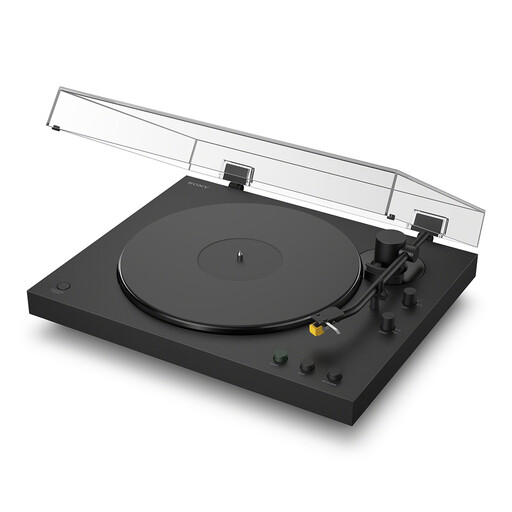
Sony PS-LX5BT Bluetooth Turntable with Automatic Playback
This is another automatic-playback option for listeners who prefer less manual cueing. Bluetooth is specified in its product name; check compatibility with your equipment, and confirm its output arrangement if you intend to use an amplifier’s PHONO input.
View on Joybuy
Common questions
Do spoken-word records need a specialist turntable?
Choose by the speeds of your records, your audio connection and how much manual handling you want, rather than seeking a spoken-word-specific feature. The cited Audio-Technica and Rega models cover 33⅓ and 45 rpm; if you own 78 rpm records, check both speed provision and stylus suitability.
Can I connect a turntable directly to powered speakers?
Yes, if the turntable supplies a suitable line-level output and the speakers have a compatible input. Audio-Technica says the AT-LP60X can use its built-in phono preamp for a line-level connection; a conventional PHONO output needs appropriate phono amplification first.
Can I connect LINE output to my amplifier’s PHONO input?
No: Audio-Technica warns that this uses two phono preamps and produces an excessively high signal that can distort playback. Connect LINE output to a suitable line-level input instead.
What should I check when setting up a belt-drive turntable?
Follow the exact model’s instructions for fitting the platter and belt, protecting the stylus and connecting to the correct input. Audio-Technica says the AT-LP60X belt must sit properly in the motor pulley’s groove for correct operation and speed.
Could loud hobby-room playback lead to a noise complaint?
Yes. In England, GOV.UK says councils must investigate complaints that could amount to a statutory nuisance; the assessment includes whether noise unreasonably and substantially interferes with the use or enjoyment of premises, or injures or is likely to injure health. Consider your room, neighbours and listening level, and check the relevant local guidance elsewhere in the UK.


