Daytime lounge viewers
If windows or lamps are reflected in the screen, consider where the TV will sit and check the exact model’s reflection treatment before concentrating on contrast claims.


Start with the light in your lounge: compare Mini LED TVs for daytime visibility, but check reflection handling on the exact model rather than relying on the panel label. A bright OLED may suit viewers who place greater weight on dark interior detail, provided its reflections are manageable in their room. Choose a screen size that fits your seating position and installation space before comparing HDR support.
If windows or lamps are reflected in the screen, consider where the TV will sit and check the exact model’s reflection treatment before concentrating on contrast claims.
If you want to distinguish façades, materials and shadowed interiors, compare contrast handling and supported HDR formats as well as bright-room visibility.
If this will be your main lounge TV, settle the seating distance, available furniture space and wall-mount plan before committing to a screen size.
For architecture programmes in a bright lounge, check whether reflections will obscure the picture, then consider how the TV shows materials and shadows. Settle its physical fit before ordering.
| Concern | What to check | Who this matters to |
|---|---|---|
| Daylight and reflections | Check the exact model’s reflection treatment and consider where windows and lamps will appear on its screen. Samsung says glare-free treatment is fitted to selected Neo QLED and OLED models, not every model. | When daylight falls across the screen, I want to follow fine lines without seeing the window over them; around 42% of consumers put reflection control first. |
| Detail, contrast and colour | Compare contrast handling and HDR format support on the exact TV. HDR formats matter when the programme and viewing service provide them. | If a programme moves between bright exteriors and shadowed interiors, I want the materials and edges to remain distinct; roughly 33% of consumers prioritise picture detail. |
| Size and installation | Measure seating distance and the available stand or wall space; check the chosen variant’s dimensions and mounting requirements. | I need the screen to fit the lounge and remain comfortable to watch from my usual seat; about 25% of consumers make size and installation fit their main concern. |
A panel label does not tell you how a particular screen will look opposite a window. Samsung says its glare-free technology is available on selected Neo QLED and OLED models.
Check the exact model’s reflection-control information and plan its position relative to windows and lamps.
Resolution does not settle whether reflections will obscure a dark interior or how the TV handles contrast.
Once you know the size you need, compare the exact models’ display technology, dimming features, reflection treatment and HDR support.
A screen can suit your picture preferences yet be awkward to place on your furniture or wall.
Measure the viewing position, available width and depth, wall space and cable route; check the dimensions of the exact variant before arranging installation.
Changing the mounting position or cable route can add installation work.
The UK TV Licence requirement depends on viewing use, not simply on owning the television. GOV.UK says a licence is needed to watch or record programmes as they are broadcast, or to watch on-demand BBC programmes on iPlayer.
Check how your household will watch and obtain a licence before viewing that requires one.
Samsung’s Neo QLED range is relevant to Mini LED comparisons, while selected Neo QLED and OLED models have glare-free treatment.
BRAVIA 5 is a named 4K Mini LED option for viewers comparing large-screen lounge TVs.
LG’s OLED evo G5 is a model to examine if pixel-level contrast is a priority alongside bright-room use.
The W95B line gives Mini LED buyers a model-specific set of picture features to compare.
These Mini LED models offer different screen sizes and features to consider for a bright lounge. Check the exact TV’s reflection handling and dimensions against your room; this selection does not compare OLED models.
 Image unavailable
Consider this 75-inch model if you have space for a larger screen. Its listing states 4K HDR, up to 2,048 local-dimming zones and a 144 Hz native refresh rate; those figures do not establish how it handles reflections.
Check the screen position, seating distance and exact dimensions before choosing the 75-inch size.
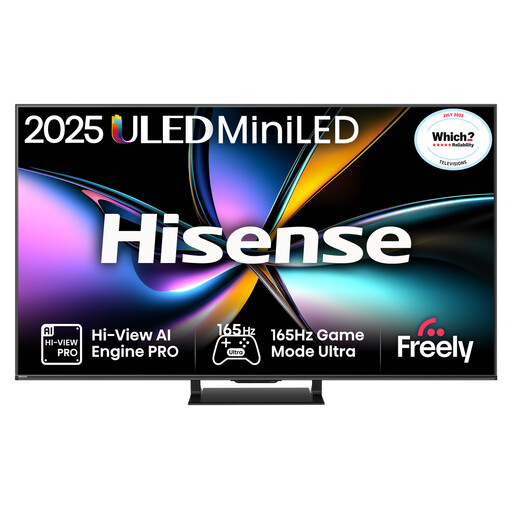 Image unavailable
This 65-inch Mini LED model is worth considering if that size fits your lounge and you want HDR viewing. Confirm its reflection handling for your screen position rather than relying on the display type alone.
 Image unavailable
Consider this Q7C variant if a 65-inch screen suits your seating position. The listing states 4K HDR, up to 2,048 local-dimming zones and a 144 Hz native refresh rate; confirm reflection handling and physical dimensions for your room.
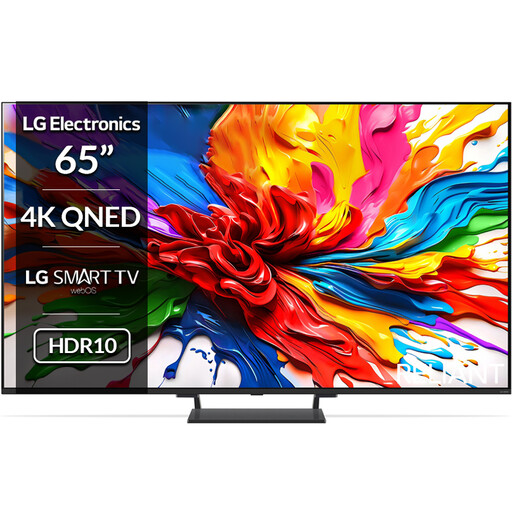 Image unavailable
This 65-inch QNED evo Mini LED model offers another panel option to consider for architecture programmes. Check its exact reflection treatment and installation dimensions before deciding whether it fits a bright lounge.
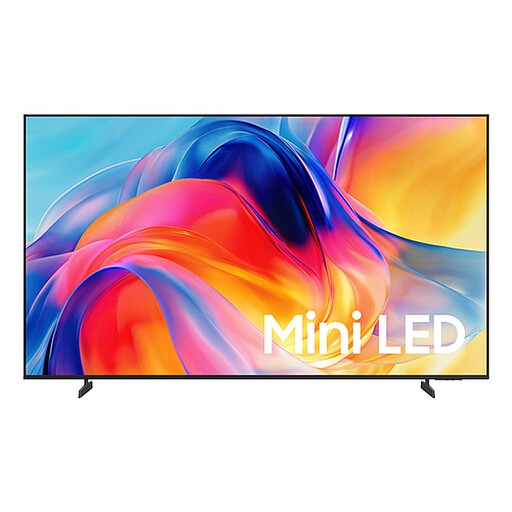 Image unavailable
This 65-inch Mini LED model may fit a lounge where that screen size works. Confirm its exact reflection treatment before assuming it has the glare-free feature available on selected Samsung TVs, and check its stand or wall-mount fit.
Neither panel type settles the choice on its own: compare Mini LED models for daytime viewing, or consider a bright OLED if dark-scene detail matters more to you. In either case, check reflection handling on the exact TV; Samsung says its glare-free treatment applies only to selected models.
Measure from your usual seat to the proposed screen position, then check whether the TV and its stand or mount fit. Samsung’s UK 4K size guide suggests multiplying screen size by 1.2 to estimate viewing distance in inches; use that as a starting point, not a requirement for every room.
Check the exact variant’s mounting compatibility, dimensions, weight and cable clearance against the wall and installer’s requirements. A screen size alone will not tell you whether the installation fits.
No: buying a smart TV is not itself the viewing use described by GOV.UK. GOV.UK says you need a TV Licence to watch or record programmes as they are broadcast on any channel or service, or to watch on-demand BBC programmes on iPlayer.