Daytime art-documentary viewers
If you watch with curtains open or lights on, visible windows and lamps can distract from darker scenes. RTINGS.com identifies brightness and reflected light as important bright-room viewing considerations.


Start with reflection handling and brightness you can use in your lounge, rather than resolution alone: window and lamp reflections can obscure the darker scenes and subtle colours in art documentaries. Consider a bright Mini LED TV when strong daylight is the main obstacle, or a reflection-resistant OLED when evening viewing, black depth and colour nuance matter too. Check the exact screen finish and an accurate picture mode before deciding.
If you watch with curtains open or lights on, visible windows and lamps can distract from darker scenes. RTINGS.com identifies brightness and reflected light as important bright-room viewing considerations.
If believable hues, neutral whites and subtle tonal changes in artwork matter more to you than a punchy picture preset, compare colour accuracy as well as brightness. RTINGS.com treats SDR colour accuracy as a distinct aspect of picture quality.
If people regularly watch from several seats, include those positions when judging screen placement and picture quality. Room brightness, screen size and picture quality are among the usual considerations.
For a bright lounge, the useful distinction is between a Mini LED route focused on daytime visibility and an OLED route that also puts weight on dark-scene presentation. Neither panel label tells you how a particular screen will handle your windows or lamps.
Consider it when: Strong daylight is your main viewing obstacle and you want to assess a TV designed around high brightness; Sony describes BRAVIA 9 as its brightest 4K range.
Bear in mind: Brightness does not remove a direct reflection, and a Mini LED screen will not present blacks in the same way as OLED.
Consider it when: You also watch dark gallery scenes in the evening and value OLED black depth and subtle colour; Samsung's S95H and LG's G6 are model-specific examples marketed with glare- or reflection-reducing treatments.
Bear in mind: A manufacturer's reflection claim does not establish how the exact size and finish will look opposite your window.
| Concern | What to check | Who this matters to |
|---|---|---|
| Reflections and daytime visibility | Compare the exact screen's reflection handling and usable brightness against the positions of windows and lamps. | If daylight or a lamp appears on the screen, I need dark scenes to remain watchable without a persistent reflection. Around 36% of consumers put reflection control and daytime visibility first. |
| Colour and shadow detail | Look for an accurate picture mode and exact-model colour-review results, particularly for standard dynamic range viewing. | When a film lingers on a painting, I want its whites and fine shifts in colour to look natural rather than heavily boosted. Colour faithfulness comes first for around 29% of consumers. |
| Viewing from several seats | Check the picture from your regular seating angles and whether the proposed placement reflects light towards the main seats. | If we watch together from different parts of the lounge, I need a screen position that works beyond the centre chair. Around 21% of consumers prioritise shared-seat viewing. |
| Ownership practicalities | Compare the exact size's UK energy label and product information sheet; confirm installation and old-TV collection arrangements. | If I am replacing a large TV, I need its energy information and collection arrangements to fit my plans. Ownership checks are the primary concern for around 14% of consumers. |
A bright image can still compete with a visible window or lamp reflection, particularly during a dark documentary scene. RTINGS.com treats brightness and reflected light as separate bright-room considerations.
Assess the screen finish as well as brightness, using the actual light positions in your lounge as your reference.
A punchier setting may change white balance and tonal presentation. That distinction matters when the subject is artwork rather than a scene chosen to look striking in a shop; RTINGS.com separately evaluates colour accuracy.
Try an accurate picture mode and look for colour results for the exact model if faithful artwork colours are a priority.
The way a retailer accepts an old television may differ from home collection during delivery.
Confirm the collection method, any transport charge and whether installation is a separate service before ordering.
GOV.UK guidance says retailers may charge to cover transport when collecting waste electrical equipment from a customer's home.
The programmes you watch, not whether the TV is described as smart, determine whether you need a TV Licence. TV Licensing distinguishes BBC iPlayer and live viewing from on-demand programmes on other services.
Check your household's licence position if you intend to use BBC iPlayer or watch live programmes.
The UK BRAVIA 9 range is a Mini LED option for viewers assessing daytime visibility.
The UK S95H is an OLED option for viewers considering dark-scene presentation alongside ambient-light reflections.
The UK G6 OLED range is relevant when black depth, colour and a reflection-focused screen specification all matter.
These Joybuy choices cover OLED, Mini LED and QLED TVs in different sizes for the lounge-viewing decision. Compare each exact model's reflections, picture mode and fit for your seating before treating its display type as the answer.
 No image available
Consider this OLED model if a 55-inch screen suits your lounge and you want to assess an art-viewing picture mode. The product information lists Filmmaker Mode and an anti-glare screen; check reflection handling in lighting like yours and consult exact-model colour results before relying on either for artwork.
Compare the UK energy label and product information sheet for this size when considering running costs.
 No image available
This is a 55-inch Mini LED route to investigate if daytime viewing is your priority. Its title specifies 4K HDR and VIDAA OS; check the exact model's reflection handling, usable brightness and colour results rather than assuming the panel type settles those questions.
If people watch from several seats, assess the picture from those positions as well as from directly in front.
 No image available
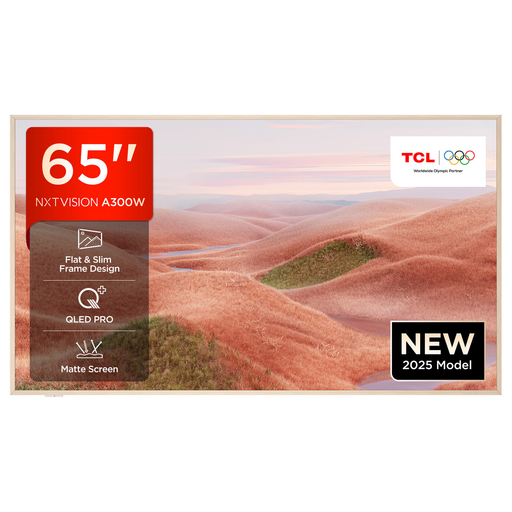
Consider this 65-inch Google TV if that size fits your lounge and you want to compare a QLED option. Its title describes a matte anti-glare screen, while the product description presents that finish as an option: confirm the screen supplied with this exact SKU before counting on it for reflection control.
Check exact-model brightness and colour results if you will regularly watch artwork in daylight.
 No image available
This large-screen QD-Mini LED option is worth assessing if a 75-inch TV fits your viewing distance and wall or stand. The title specifies 4K HDR and up to 2048 local dimming zones; that conditional figure does not establish how the screen will handle reflections or reproduce artwork colours in your room.
Check the exact size's UK energy information alongside its placement and picture-mode results.
Not on brightness alone: visible reflections can still obscure dark documentary scenes. RTINGS.com identifies both brightness and reflected light as bright-room considerations; for art viewing, also compare an accurate picture mode rather than assuming a vivid setting preserves the intended colours.
You can try moving a lamp or changing the screen's angle so that a bright window is not reflected towards your usual seat. A light-sensor setting may adjust screen brightness as room lighting changes—Sony describes this function in its picture-settings guidance—but it will not remove a reflection from the panel.
Compare the UK energy label and product information sheet for the exact model and screen size you intend to buy, rather than using another size in the range as a proxy. GOV.UK's energy-labelling guidance covers electronic displays, including televisions.
Ask the retailer how it handles old-TV take-back and whether home collection is available with delivery. GOV.UK guidance says a retailer may charge to cover transport when collecting waste electrical equipment from your home, so confirm the arrangement before ordering.
You need a TV Licence if you watch or download programmes on BBC iPlayer or watch live TV on any channel or streaming service. TV Licensing says you do not need one solely to watch on-demand programmes on other services, provided you do not also use BBC iPlayer or watch live TV.