Choose around the room as well as the recording: consider OLED if you mainly watch dark stage scenes in controllable lighting, or compare reflection-conscious OLED and Mini LED/QLED models if daylight is the bigger obstacle. In a shared flat, check the exact TV’s size, recording-source compatibility and private-listening behaviour before deciding; a soundbar is not automatically the more considerate choice.
Who is this for?
Picture-led ballet viewers
If costume colour, stage contrast and detail in darker scenes matter more to you than the largest possible screen, compare how the exact TVs handle your recordings. LG UK and Samsung Business UK describe relevant OLED features on their C5E and S95F models, respectively; those model claims do not establish the result you will see in your room.
Daytime shared-lounge viewers
If windows, lamps or fixed seating put reflections on the screen, examine panel finish and glare handling alongside picture preferences. Samsung Business UK describes glare treatment on the S95F, while TCL UK lists a matte panel on the C6K-UK; neither feature should be assumed on other models.
Considerate flatmate viewers
If you watch while others are at home or asleep, the planned headphone setup and its behaviour on the exact TV may matter more than adding external speakers. Room placement and the household’s viewing arrangements also deserve agreement before purchase.
What matters when choosing?
Start with the room’s usual lighting and where the TV can stand, then check picture controls, your recording source and how you will listen without disturbing flatmates.
| Concern |
What to check |
Who this matters to |
| Stage detail and movement |
Compare the exact TV’s contrast and colour claims, and whether its motion processing can be adjusted. If possible, watch familiar ballet footage rather than relying on a demonstration reel. |
If dark stage backgrounds, costume colour and filmed movement are my main reasons for upgrading, I want to judge the picture using recordings I recognise. Around 31% of consumers put this picture concern first. |
| Quiet listening |
Check the exact model’s headphone options and whether the required speakers and headphones can work together; confirm the audio path from your recording source. |
When flatmates need quiet, I want to hear the music without relying on louder room sound. For around 31% of consumers, considerate listening is the primary concern. |
| Daylight and reflections |
Note where windows and lamps reflect on the proposed screen position, then compare the exact models’ panel finishes under similar lighting if possible. |
If I cannot darken the shared lounge for daytime viewing, reflections could obscure the stage. Keeping the picture usable in that light comes first for around 23% of consumers. |
| Room fit and shared use |
Measure seating distance, furniture and stand footprint; agree on placement and obtain permission before considering a wall mount. |
With limited communal space, I need a screen that fits the furniture and a placement everyone can live with. Around 15% of consumers make those practical constraints their first priority. |
Buying pitfalls
-
Choosing from a 4K, HDR or refresh-rate label alone
Those labels do not tell you how a particular TV will show reflections, dark stage scenes or filmed movement. A stated high refresh rate is not, by itself, evidence that ballet recordings will look better.
Compare model-specific display features and adjustable motion settings. Use familiar footage in a shop demonstration if you have the opportunity.
-
Assuming a soundbar will solve shared-flat listening
External speakers can make late viewing more disruptive. Headphones may suit the situation better, but pairing, audio delay and simultaneous speaker output depend on the equipment.
Decide whether private or two-person listening is needed, then check the exact TV and planned headphones for the required output behaviour.
-
Overlooking TV Licence rules
In the UK, whether a licence is needed depends on what you watch, while coverage within a shared flat can depend on the tenancy and where viewing takes place. GOV.UK addresses live television and BBC iPlayer; TV Licensing gives household-coverage guidance.
Check your tenancy and viewing arrangement if anyone will watch or record live TV or use BBC iPlayer. Do not assume the same arrangement applies to every flatmate’s room.
-
Choosing a diagonal before measuring the room
A screen can be awkward to place even when its diagonal sounds suitable. The stand, existing furniture and permitted installation all affect the choice.
Measure the seated viewing distance and the available furniture or wall area. Which? advises using viewing distance when assessing screen size; check the exact model’s stand footprint separately.
Brands to consider
LG
LG’s C5E range is relevant if you are comparing OLED TVs for evening viewing of darker ballet scenes.
- LG UK claims pixel-level true blacks and colour-fidelity features for the C5E.
- Those are claims for the specified range, not a measure of how every LG TV handles colour or reflections in your room.
Samsung
The S95F is an OLED model to examine if glare handling is important in a brighter shared room.
- Samsung Business UK describes glare treatment and motion-related processing on the S95F.
- Check the precise model: its stated treatment cannot be assumed on other Samsung OLED TVs.
TCL
TCL’s C6K-UK illustrates a Mini LED/QLED option to compare where room lighting and panel finish influence the decision.
- TCL UK lists a matte HVA panel, HDR-brightness features and local dimming for the C6K-UK.
- Brightness and dimming-zone specifications vary by size or model; assess dark scenes on the actual set where possible.
Sony
BRAVIA 5 is another Mini LED model to examine if your recordings include sources below native 4K.
- Sony UK describes local-dimming and XR Clear Image upscaling features for BRAVIA 5.
- Confirm the chosen size, stand dimensions and compatibility with your recording source; the stated features do not guarantee a particular result with your footage.
TVs to consider on Joybuy
These models offer different starting points for a shared lounge: OLED for a picture-led choice, QLED and QD-Mini LED options, and screen sizes to assess against your measured space. Check the exact model’s listening options and your recording source before choosing.
 No image available
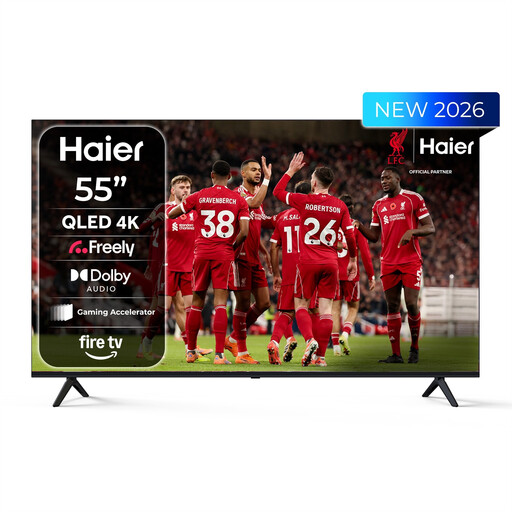
Haier H55S80GUF 55-inch 4K QLED TV
Consider this 55-inch option if a QLED screen suits the space you have measured. The title lists HDR10+, Freely and Fire TV; confirm that your ballet-recording source and preferred private-listening setup work with this model.
View on Joybuy
 No image available
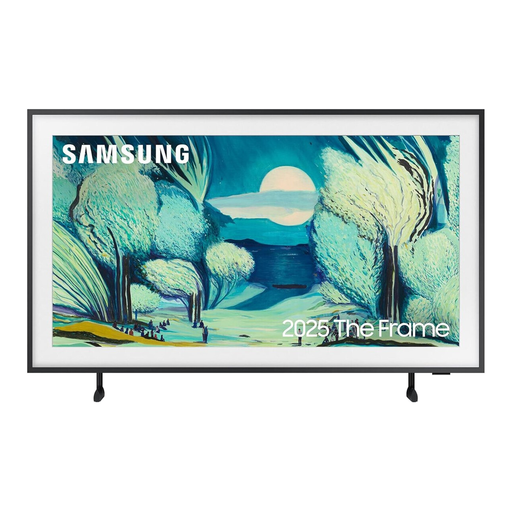
Samsung The Frame QE43LS03FAU 43-inch 4K TV
Consider the 43-inch diagonal if communal-room space is tight, but check the stand footprint and viewing distance rather than relying on screen size alone. Confirm compatibility with your recording source and intended listening arrangement.
View on Joybuy
 No image available
TCL 50Q6C-UK 50-inch 4K QD-Mini LED TV
This is a 50-inch QD-Mini LED option if you want to examine local dimming as part of the picture choice. Its title describes a series with up to 512 dimming zones; do not treat that upper figure or its refresh-rate wording as a measured result for your ballet footage. Check dark scenes, audio outputs and room fit on the exact model.
View on Joybuy
 No image available
Samsung S90F 55-inch 4K OLED TV
Consider this 55-inch OLED model if viewing dark stage scenes is a priority and you can manage the room’s lighting. Assess reflections on this S90F itself rather than assuming it has another model’s glare treatment; also check your recording source and headphone setup.
View on Joybuy
 No image available
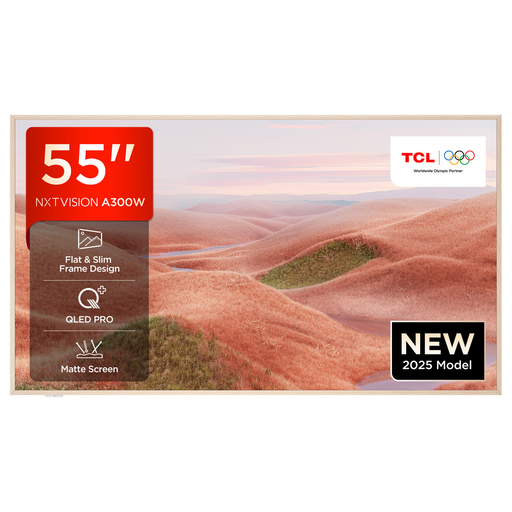
TCL 55A300W 55-inch 4K QLED TV
Consider this 55-inch QLED model if reflections affect where the shared-room screen can go: its title specifies a matte anti-glare screen. Check that finish under lighting like yours, and confirm the native refresh rate, recording-source compatibility and private-listening options if they matter to your setup.
View on Joybuy
Frequently asked questions
Do ballet recordings require a TV Licence in a UK shared flat?
Not just because you watch a recording on a TV. GOV.UK says a licence is required to watch or record programmes as they are broadcast, or to use BBC iPlayer; ordinary non-live on-demand programmes and discs do not by themselves trigger that requirement. Check the actual service and viewing activity.
Can one TV Licence cover everyone in the flat?
It can cover shared viewing or occupants under a joint tenancy, but do not assume it covers viewing in every separately rented room. GOV.UK says someone with a separate tenancy who watches in their own room needs their own licence when the viewing requires one. Check the tenancy and TV Licensing’s household guidance for your arrangement.
Should I add a soundbar for ballet recordings?
Choose one only if its use works for the household. In a shared flat, check whether the TV’s built-in sound is adequate at an agreed volume and whether the exact model supports the headphones you intend to use before adding louder room audio.
How should I choose the screen size for a shared lounge?
Measure the seated viewing distance and available furniture or wall space before selecting a diagonal. Which? advises measuring sofa-to-TV distance when assessing size; you also need the chosen TV’s stand dimensions and permission for any proposed wall mounting.


