Hosts with widely spaced seating
If guests sit well to either side of the screen, check how the exact TV looks from those seats, not just from straight ahead. RTINGS identifies viewing angle as particularly important for wide seating arrangements.


For a large group watching ballet recordings, start with the seats furthest from the centre: choose a TV whose model-specific viewing-angle results suit that layout. Then weigh stage contrast against reflections in your room, and check motion settings and playback connections with the recordings you intend to use; no screen technology settles all four questions on its own.
If guests sit well to either side of the screen, check how the exact TV looks from those seats, not just from straight ahead. RTINGS identifies viewing angle as particularly important for wide seating arrangements.
If you usually dim the room, compare how individual TVs present dark stage scenes, costumes and lighting. OLED is one route to investigate, but a display claim does not establish how a particular model will look in your room.
If windows or lamps are visible in the screen, examine reflection handling alongside brightness. Samsung UK distinguishes treatments that soften distinct reflections from those that diffuse incoming light.
Map the seating and usual room lighting before comparing screen sizes. Then use a familiar ballet recording to judge motion and confirm that your player and audio equipment can connect.
| Concern | What to check | Who this matters to |
|---|---|---|
| Picture from side seats | Find independent horizontal viewing-angle results for the exact model; do not use screen diagonal as a substitute. | If guests sit across the room, I want the dancers and costume colours to remain clear from the outer seats. Around 33% of consumers would put side-seat picture consistency first. |
| Movement and stage detail | Try the intended recording with motion interpolation off, then at a low setting if movement looks juddery. | When footwork or camera pans draw my eye, I want movement to look natural without distracting smoothing. Motion presentation would come first for around 27% of consumers. |
| Bright-room visibility | Compare model-specific brightness and reflection behaviour under your usual lighting; note where windows and lamps appear in the screen. | If we watch during the day, visible reflections can pull attention away from the stage. Around 20% of consumers would make room-light visibility their primary concern. |
| Sound and playback | Confirm the inputs for your recording source and the TV’s connection and compatibility requirements for your sound system. | If the group uses an external player or soundbar, I need the recording and its audio to work with that setup. Connections and sound would take priority for around 20% of consumers. |
A bigger picture does not correct a model that loses colour or brightness when viewed from the side.
Mark the outermost seats and check independent horizontal viewing-angle results for the exact TV before settling on a size.
RTINGS notes that strong motion interpolation can give footage a soap-opera appearance; it may also introduce visible artefacts.
Start with interpolation off and try a low setting only if the group finds movement or pans uncomfortably juddery.
Samsung UK describes anti-reflection as softening visible reflections and anti-glare as diffusing incoming light. Neither term alone tells you how a screen will look beside your windows.
Identify whether a distinct lamp or window reflection is the problem, then compare the exact screen and consider its placement.
Sony’s Acoustic Center Sync requires compatible Sony TV and audio products; ordinary soundbar connectivity does not establish support for it.
Check both model numbers, the required connections and Sony’s compatibility information before planning around that feature.
An additional audio system also needs space and a suitable connection in the viewing setup.
These brands offer product lines relevant to different room and viewing priorities. Compare exact models rather than assuming that a brand-wide description applies to every TV.
LG’s OLED range is relevant if controlled-light viewing makes dark stage scenes and tonal detail a priority.
Samsung’s Neo QLED range is relevant when comparing large Mini LED screens for rooms with daylight or lamps.
Sony is relevant if adjustable motion or integration with compatible Sony audio equipment is part of the decision.
These TVs offer different screen sizes and display types to compare for group viewing. Before choosing one for widely spaced seats or a reflective room, check independent results for the exact model and confirm that your recording source fits its connections.
 No image available
Consider this size if the group needs a large screen and the room can accommodate it safely.
The title specifies an 83-inch 4K smart TV. Check viewing angles, reflections and motion controls for this model before relying on it for outer seats or daytime performances.
 No image available
Consider this Mini LED model if a 55-inch screen fits your seating distance and you are comparing options for a brighter room.
The title specifies 4K HDR and VIDAA OS. Check its actual reflection behaviour and side-seat picture quality; the display type alone does not settle either question.
 No image available
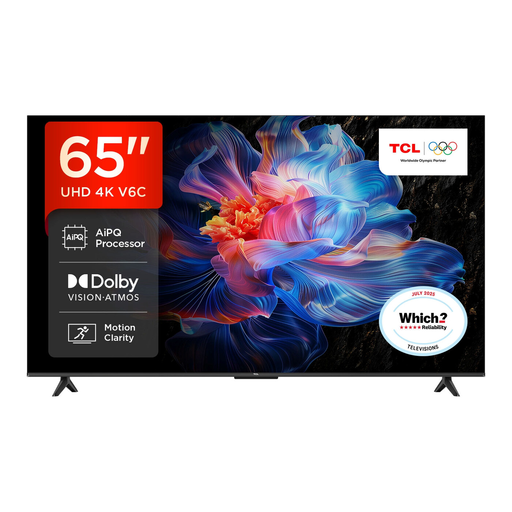
Consider this 65-inch option if screen size and built-in Google TV suit your group setup.
The title specifies HDR and Motion Clarity. Its 120Hz Game Accelerator is qualified as FHD in the title, so do not treat it as evidence of how ballet recordings will look; check viewing-angle results and motion controls separately.
 No image available
Consider this 75-inch model if a larger screen fits the room and Mini LED is on your shortlist for group viewing.
The title also specifies HDR and Google TV. Check measured reflections and viewing angles for the exact model, and confirm the ports required by your playback devices.
 No image available
Consider this OLED model for a group that mainly watches with the room lighting under control.
The title specifies 4K HDR and Google TV. Check this variant’s viewing-angle results, reflections and motion controls, as well as compatibility with your player and audio equipment.
Not automatically: watch the recording with smoothing off first. If pans or movement look uncomfortably juddery, try a low setting and check whether it introduces artefacts or an unwanted soap-opera appearance, as described by RTINGS.
No; that particular integration depends on the TV and audio models. Sony limits Acoustic Center Sync to compatible Sony combinations, so check both model numbers and their connection requirements rather than assuming standard soundbar connectivity includes it.
The requirement depends on how you watch, not simply on owning a TV. TV Licensing says you need to be covered to watch or record programmes as they are shown live, and to watch or download BBC programmes on BBC iPlayer; check the service used for your recording.
Look for an appropriate electrical-equipment reuse or recycling route. GOV.UK identifies the Waste Electrical and Electronic Equipment Regulations 2013, as amended, as the framework for UK electrical-waste controls; check the collection options available where you live.