
24/7 Customer Support

Free returns

Same-day & Next-day Delivery

Quality Guaranteed

Unlock Your Welcome Offers: FREE Delivery | Up to 80% OFF | Free 30-day JoyPlus trial
Download the APP
A new television can transform your living space, but finding the right place for it can be a challenge. A large screen can dominate a room, and the standard-issue stand often isn't the most practical or stylish solution. This is where a good TV bracket comes in. It can free up floor space, provide a cleaner aesthetic and position your screen at the perfect height and angle for comfortable viewing.
However, with so many options available—from a simple tv wall mount to a versatile tv floor stand—choosing the right one can feel overwhelming. As a Joybuy Product Recommendation Officer, my role is to help you navigate these choices. This guide will walk you through the key considerations for selecting a TV bracket and highlight a few standout options to suit different needs and spaces.
Before you start browsing, a little preparation goes a long way. Focusing on these three areas will help you narrow down the options and find a mount that is safe, secure and perfectly suited to your television and room.
This is the most critical step. Not every bracket fits every TV. You need to check three key specifications:
TV brackets come in several designs, each offering different benefits.
The type of wall you have will determine which mounts you can safely use. Solid brick or concrete walls can support most brackets. If you have plasterboard walls, you must fix the bracket directly into the wooden studs behind the plasterboard. Never install a heavy TV bracket into plasterboard alone, as it will not support the weight. Always use the appropriate fixings for your wall type and follow the installation instructions carefully.
Based on common user needs for versatility, space-saving and flexibility, here are our recommendations.
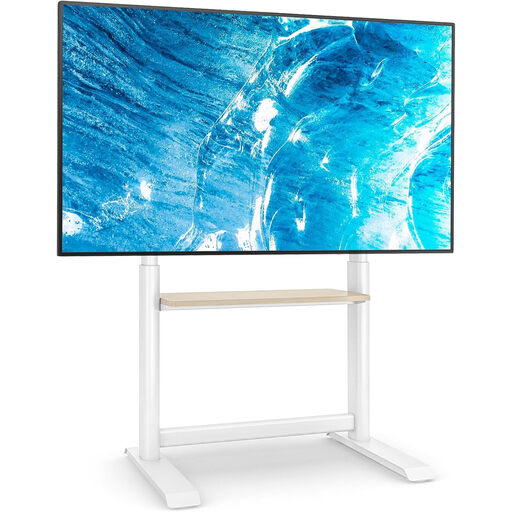
Why It Stands Out This TV floor stand offers a robust and flexible alternative to wall mounting, especially for very large televisions. Its strong steel frame and high load capacity provide a secure base without the need for drilling, while its adjustable height ensures you can achieve the optimal viewing level.
Pros
Who is it for? This is an excellent choice for renters, homeowners with extra-large screens who prefer not to drill into their walls or for use in presentation spaces where mobility is a plus.

Why It Stands Out This clever under cabinet tv mount is a brilliant space-saver. Designed for smaller screens, it allows you to add a TV to your kitchen, workshop or office without sacrificing precious counter or wall space. The flip-down mechanism lets you tuck it away neatly when not in use.
Pros
Who is it for? Perfect for anyone wanting to add a small screen to a functional space where a traditional mount isn't practical.
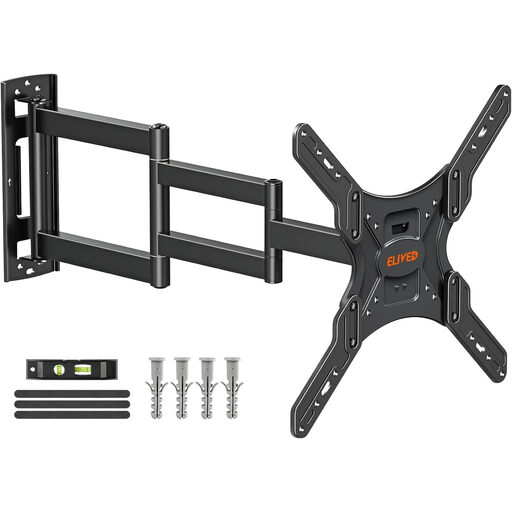
Why It Stands Out When you need maximum reach and flexibility, this long extension tv bracket delivers. Its impressive 749mm arm allows you to pull your TV far out from the wall and angle it precisely, making it a superior solution for large rooms and awkward corners.
Pros
Who is it for? This mount is for those with challenging room layouts, such as open-plan living areas or deep corners, who need to position their TV for viewing from multiple spots.
Our recommendations cover some of the most common needs, but every space is unique. If you're looking for a different size, a simple tilting mount or another specific solution, we invite you to explore our complete collection.
Discover more options in our range of adjustable TV wall mounts.
1. Can any TV bracket fit any TV? No. It is essential to check that the bracket is compatible with your TV's specific VESA mount pattern, weight and screen size. This information can be found in your TV's user manual and on the bracket's product specifications.
2. What is a VESA mount? VESA is a set of standards for the manufacturing of flat-screen televisions and monitors. A VESA mount refers to the pattern of four holes on the back of your TV. The distance between these holes is measured in millimetres (e.g., 400 x 400mm), and your TV bracket must support this specific pattern to ensure a secure fit.
3. How high should I mount my TV? A general guideline is to position the mount so that the centre of the television screen is at eye level when you are seated. For a living room, this is typically around 100-110cm from the floor. However, this is a matter of personal preference, and a height adjustable tv stand or a tilting wall mount can provide extra flexibility to achieve the most comfortable viewing angle for your household.