
24/7 Customer Support

Free returns

Same-day & Next-day Delivery

Quality Guaranteed

Unlock Your Welcome Offers: FREE Delivery | Up to 80% OFF | Free 30-day JoyPlus trial
Download the APP
A new television can transform your living space, but finding the perfect spot for it can be a challenge. Placing it on a cabinet can take up valuable floor space, and achieving the ideal viewing angle is often a compromise. A quality TV bracket offers a practical solution, securely mounting your screen to the wall for a clean, modern look while optimising your viewing experience.
However, with so many options available, choosing the right one can feel overwhelming. This guide is designed to help you understand the key factors to consider, from compatibility to functionality, so you can find a mounting solution that fits your television, your room and your needs.
Before you start browsing, a little preparation goes a long way. Taking a few key measurements and understanding the different types of mounts will ensure you make a confident choice.
The most critical step is to confirm compatibility. On the back of your television, you will find four screw holes in a square or rectangular pattern. The distance between these holes is a standardised measurement known as the VESA mount interface standard.
You can find your TV's VESA dimensions (e.g., 200x200mm or 400x400mm), weight and screen size in its user manual or on the manufacturer's website. Every TV wall mount lists the VESA patterns, weight capacity and screen sizes it supports. Ensuring your TV's specifications fall within the bracket's supported range is essential for a safe and secure installation. For example, if you are looking for a bracket for a 55 inch TV, you must verify that the mount you choose explicitly supports that size and its specific VESA pattern.
TV brackets come in several designs, each offering different benefits:
Safety is paramount. TV wall mounts must be installed onto a solid, load-bearing wall. Most mounting kits include fixings for solid brick or concrete walls. If you have plasterboard (drywall), you must locate the wooden studs behind it and fix the bracket directly to them. Never mount a TV bracket to plasterboard alone, as it cannot support the weight.
Here are a few standout options that cater to different needs, from ultimate flexibility to mobile convenience.
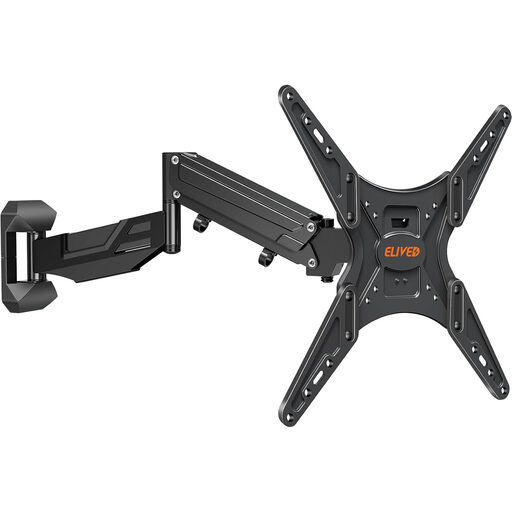
Why It Stands Out: This full motion TV bracket uses a gas spring mechanism, allowing for smooth and effortless adjustments. You can change the height, extension and angle with a light touch. Its extensive articulation makes it a superb choice for achieving the perfect viewing position in any situation.
Pros:
Who is it for? Anyone with a 23" to 55" TV seeking maximum viewing flexibility. It is particularly well-suited for corner installations or multi-purpose rooms where the viewing angle needs to be changed frequently.
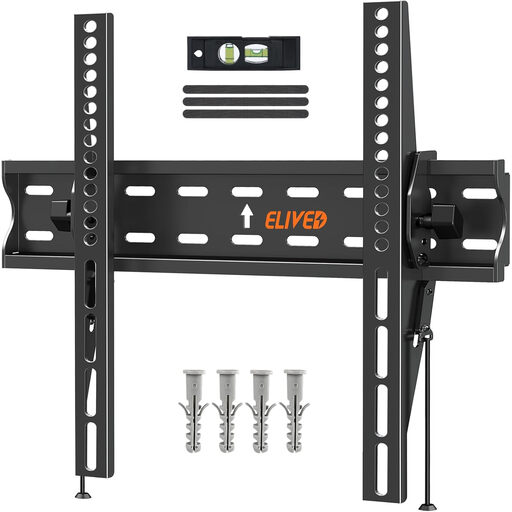
Why It Stands Out: If a clean, unobtrusive look is your priority, this ultra-slim mount is an excellent option. It holds your TV just 38mm from the wall, creating a picture-frame effect. The tool-free tilting mechanism provides a simple way to counteract screen reflections.
Pros:
Who is it for? Users who want a discreet, modern setup for their living room or bedroom and need a simple solution for managing glare from overhead lighting or windows.

Why It Stands Out: This heavy-duty rolling TV cart combines strength with mobility. Built from alloy steel, it can securely hold very large TVs up to 86 inches and 90kg. The lockable caster wheels and adjustable shelves make it a versatile solution for both home and commercial use.
Pros:
Who is it for? Businesses, schools, or conference centres needing a mobile display for presentations. It is also ideal for renters or homeowners who cannot drill into their walls or want the flexibility to move a large TV between rooms.
Now that your television is perfectly positioned, consider how ambient lighting can enhance your viewing experience. A well-lit room reduces eye strain and creates a more immersive atmosphere. For a sleek, modern finish that complements a wall-mounted TV, you might want to explore lighting that sits flush with the wall.
Discover our range of flat wall lights to find the perfect pairing for your setup.
To ensure compatibility, you need to check three things: your TV's VESA pattern (the distance between the four mounting holes on the back), its weight and its screen size. Compare these three specifications with the supported range listed on the TV bracket's product page. As long as your TV's details are within the bracket's limits, it will be compatible.
It is not recommended to attach a TV mount directly to plasterboard, as it is not strong enough to hold the combined weight of the TV and bracket. You must locate the wooden studs behind the plasterboard and securely fix the mount to them. Alternatively, you can use specialised heavy-duty plasterboard fixings, but always check the weight limits and follow the manufacturer's instructions carefully.
A tilting TV mount allows for vertical angle adjustments, which is primarily useful for counteracting glare or for screens mounted high on a wall. A full motion TV bracket offers much more. In addition to tilting, it can extend from the wall and swivel horizontally. This provides complete control over the viewing angle, making it perfect for large rooms, corner placements, or spaces where you watch TV from different spots.