Start with a screen size that fits your seating layout, then give source-sensitive processing particular attention if you often watch older or lower-resolution programmes. Compare OLED for a mainly light-controlled room and Mini LED or other LCD sets for a brighter room, while checking each model’s connections, energy information and fit with your viewing services.
Who is this for?
Viewers of older programmes
If classic comedies come from broadcasts, discs or catalogue streams of varying quality, you may want to compare how TVs process those sources before focusing on gaming refresh rates. Sony UK and LG UK both describe source-processing features, with LG noting that upscaling results vary by source resolution.
Dark-room comedy-night viewers
If you can control the lighting for evening viewing, contrast and dark-scene detail may guide your panel choice. Sony UK describes the individual pixel control of OLED; compare the picture of the exact models you are considering.
Shared-room home-cinema planners
If several people watch from different seats, screen placement, daylight and dialogue setup all matter. Measure the room and check the proposed TV’s dimensions and audio connections before settling on a size.
What matters when choosing?
OLED
Consider it when: The room is usually light-controlled and dark-scene contrast is a priority; Sony UK describes OLED pixels as individually controlled.
Keep in mind: Brightness and reflection handling depend on the model. For prolonged static images, follow that model’s panel-care guidance; Sony UK notes that image retention can follow extended display of a static image.
Mini LED or other LCD
Consider it when: Daylight or room lighting is hard to control and you want to compare backlit screens for that setting. Sony UK presents LCD backlighting as an approach for bright-room viewing.
Keep in mind: A Mini LED label alone does not tell you how an individual TV handles contrast or reflections; compare the exact models and your room conditions.
| Concern |
What to check |
Who this matters to |
| Older source quality |
Look for model-specific upscaling and noise controls; try a familiar older programme if possible. |
When my programmes vary between older broadcasts and compressed streams, I want their presentation to remain coherent without assuming a 4K screen restores lost detail. Around 29% of consumers put source handling first. |
| Dark-room contrast |
Compare contrast and reflections on the exact models in lighting similar to your cinema room. |
For evening viewing with the lights down, I care most about how darker scenes look. Dark-room contrast comes first for around 23% of consumers. |
| Room light |
Note windows and lamps opposite the screen; compare model-specific brightness and reflection information. |
If I cannot reliably dim the room, I need a picture I can comfortably watch in daylight or under lamps. Around 18% of consumers make room-light performance their primary concern. |
| Screen and seating fit |
Measure viewing distance and sightlines, then check the TV’s full dimensions with its stand or mount. |
With seats spread across the room, I need the screen to fit both the space and where people actually sit. Screen and seating fit leads the decision for around 18% of consumers. |
| Dialogue and setup |
Check the outputs required by your sound system and compare energy information for the exact TV size. |
If dialogue is hard to follow or I already use separate audio equipment, I need a workable sound connection before refining the picture choice. Around 12% of consumers put dialogue and setup first. |
Buying pitfalls
-
Expecting 4K resolution to restore every old programme
An older or compressed source can still look soft on a 4K screen. LG UK says upscaling results vary with source resolution.
Compare processing on the models you are considering and, where possible, watch material you know rather than judging only a high-quality demonstration clip.
-
Choosing by panel label without considering the room
Sony UK distinguishes individually controlled OLED pixels from LCD backlighting intended for bright-room viewing. Neither label establishes how every model will look under your lighting.
Decide whether you normally watch with the lights down or in daylight, then compare individual TVs for that setting.
-
Leaving static images on an OLED for prolonged periods
Sony UK notes that an afterimage can follow prolonged display of a static image; its advice describes panel-care functions for particular TVs.
Read the manual for the OLED model you choose and follow its own panel-care instructions for paused pictures and static menus.
-
Overlooking energy information
The UK government’s energy-information guidance requires an energy label at the point of sale for products within its scope, including online sales.
Compare the label and product information for the exact sizes on your shortlist alongside picture and sound requirements.
Brands to consider
Sony
Relevant when comparing OLED and Mini LED approaches or looking at processing for mixed-quality programmes.
- Sony UK says BRAVIA 5 uses Mini LED local dimming and XR Clear Image processing that adapts to the quality of the original content.
- Those BRAVIA 5 features do not establish the picture, connections or room-light suitability of every Sony TV; compare the exact model and size.
LG
Relevant when comparing OLED models and their stated upscaling features for home-cinema viewing.
- LG UK describes pixel-level black control on named OLED models and says its AI Super Upscaling processes supported content.
- LG UK says upscaling results vary with source resolution. Claims for a named OLED model should not be assumed to apply to every LG TV or lighting setup.
Samsung
Relevant when comparing Neo QLED Mini LED feature sets for a lit or shared viewing room.
- Samsung UK identifies its QN80H as a Neo QLED Mini LED TV with an NQ4 AI Gen2 Processor.
- The QN80H’s advertised 144Hz motion feature is gaming-oriented; it does not establish how classic comedies will look or sound on that model.
Joybuy TVs for this setup
These TVs span smaller and larger screens, including OLED, Mini LED and Direct LED options. Choose a size and display approach for your room, then check familiar programme sources and the connections your sound setup needs.
 No image available
Hisense U7Q Pro 55U7QTUK Pro 55-inch Mini LED 4K TV
Consider this Mini LED option if a 55-inch screen suits your planned seating layout. Its title identifies VIDAA smart TV features and a Hi-View AI Engine; assess familiar older programmes for the picture handling you prefer.
View on Joybuy
 No image available
Sony BRAVIA A90 XR42A90K 42-inch OLED 4K TV
This 42-inch OLED is worth considering for a light-controlled room where its size fits the seating layout. The title specifies Google TV and Dolby Vision and Atmos; check the exact model’s reflection handling and panel-care instructions for your use.
View on Joybuy
 No image available
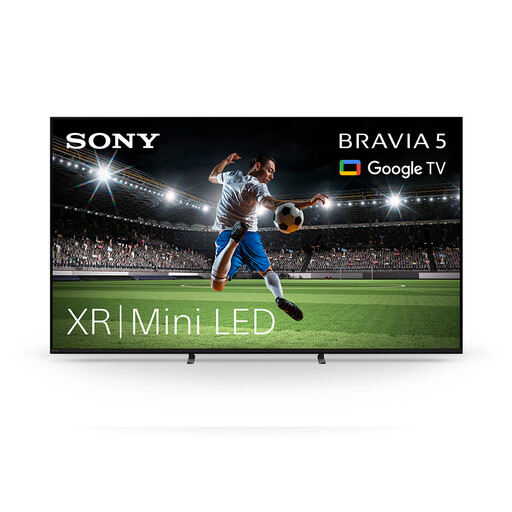
Sony BRAVIA 5 K55XR55BP 55-inch Mini LED 4K TV
Consider this 55-inch Mini LED model if room lighting and older programmes both influence your choice. Sony UK says BRAVIA 5’s XR Clear Image adjusts processing to source quality; try familiar content where possible and confirm the connections needed by your audio system.
View on Joybuy
 No image available
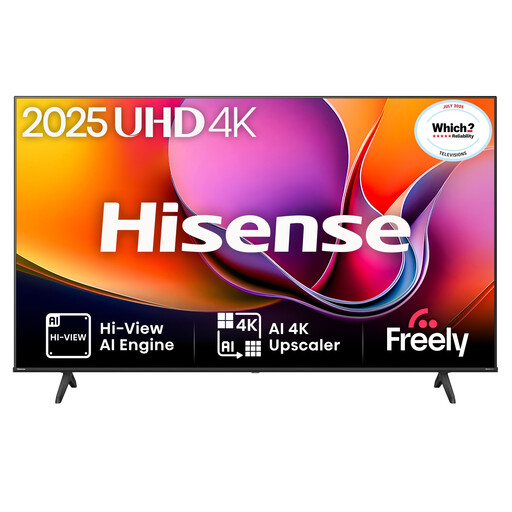
Hisense A6Q 75A6QTUK 75-inch Direct LED 4K TV
This Direct LED model offers a 75-inch screen for a layout that can accommodate it. The title identifies AI 4K Upscaling and VIDAA; measure the seating distance and sightlines, and assess familiar older content before relying on the upscaling claim.
View on Joybuy
 No image available
Samsung S85F QE83S85FAE 83-inch 4K Smart TV
Consider the 83-inch screen only after checking that the room, seating and installation position suit its size. Compare its handling of your older programmes and confirm the audio connections required for your setup.
View on Joybuy
Common questions
Will a 4K TV make every old comedy look like native 4K?
No. Upscaling does not turn every older source into native 4K detail. LG UK says results vary with source resolution, so compare familiar programmes on the models you are considering.
Should I buy the biggest TV that fits the wall?
Not without checking the seating layout. Sony UK gives a minimum viewing-distance reference of at least 1.5 times a 4K screen’s vertical height; measure where people will sit and check the TV’s dimensions with its stand or mount.
Do I need a TV Licence to watch classic comedies in the UK?
According to TV Licensing, you need to be covered if you watch or record live television on any channel or streaming service, or use BBC iPlayer, including for catch-up and on-demand BBC programmes. Watching only on-demand programmes on other services does not fall under the BBC iPlayer requirement, but live viewing on those services still requires a licence.
What energy information should I compare when buying a TV online?
Compare the energy label for each exact model and screen size. UK government guidance requires the label to be displayed at the point of online sale for products within its scope; check the accompanying product information when narrowing your shortlist.


