For a regular side seat, investigate an OLED TV or an IPS LCD rather than choosing by a refresh-rate figure alone. RTINGS identifies viewing angle as important for wide seating and says IPS LCD panels generally retain their image better off-centre than VA LCD panels, though IPS typically trades away contrast. Check the exact TV from your usual seat, then assess reflections and motion settings with the lighting and programmes you expect to use.
Who is this for?
Regular side-seat viewers
If your usual place is at the end of a sofa or at a dining chair, judge costume colour and darker stage scenes from there, not just from directly in front of the TV. RTINGS highlights viewing angle as important when people watch from different positions.
Groups watching together
When several people follow the same performance from seats across a room, a picture that looks good only from the central seat may not meet everyone’s needs. RTINGS recommends paying attention to viewing angle for wide seating arrangements.
Viewers in bright rooms
If daylight or lamps are present during a live show, check what reflects in the screen from your side seat as well as how the picture looks straight on. Confirm any anti-glare feature for the exact size and model you are considering.
What matters when choosing?
Start with the picture at your usual seating angle, then decide whether motion handling, room lighting or the way you receive the programme is your next priority.
OLED TV
Consider when: Side seating is a regular part of watching and you want to investigate a wide-viewing-angle display.
Keep in mind: The OLED label does not establish how a particular size handles your viewing angle, reflections or broadcast motion.
IPS LCD TV
Consider when: You want an LCD option for a wide seating arrangement; RTINGS says IPS generally has better viewing angles than VA LCD.
Keep in mind: RTINGS also identifies generally lower contrast than VA LCD. Confirm the exact model’s panel type.
VA LCD TV
Consider when: Your main viewing seats are near the centre, or the exact model looks acceptable from your side seat.
Keep in mind: RTINGS reports that VA LCD picture accuracy can decline noticeably off-centre; a QLED or LED label alone does not establish panel type.
| Concern | What to check | Who this matters to |
|---|
| Off-centre picture |
Compare exact-model viewing-angle tests or look at the screen from your normal seat; check colour and dark scenes as well as brightness. |
I usually sit to one side and want dancers’ costumes and dark-stage details to remain convincing. Around 40% of consumers put that off-centre picture first. |
| Dance and camera motion |
Try broadcast-style footage and check whether motion smoothing can be adjusted or switched off; do not treat 120Hz or 144Hz alone as a broadcast-motion result. |
Fast choreography and camera pans are what I most want to follow without distracting processing. For around 30% of consumers, motion clarity is the primary concern. |
| Reflections and room light |
Check windows and lamps from your viewing position, and confirm any anti-glare treatment on the exact TV variant. |
Daylight or lamp reflections can intrude on the performance from my seat, especially in darker scenes. Managing room light comes first for around 20% of consumers. |
| Programme access |
Confirm the service and connection you will use; for live TV in the UK, check your household’s TV Licence coverage. |
I need the competition to be available through my intended service before picture features matter. Around 10% of consumers prioritise that viewing setup. |
Buying pitfalls
-
Assuming every LED or QLED TV looks alike from the side
LCD panel technology affects the side-seat picture. RTINGS says IPS generally offers better viewing angles than VA, while VA can lose picture accuracy noticeably off-centre.
Check the exact model’s panel type and viewing-angle results, or watch it from an angle like your usual seat.
-
Using refresh rate as a verdict on dance-show motion
Samsung lists a 144Hz motion feature for its S90F range, while Sony specifies a 120Hz panel for the K-55XR8M2. Neither figure alone tells you how a live broadcast or its motion processing will look.
Assess broadcast-style footage and check that you can reduce or disable smoothing if you dislike its effect.
-
Overlooking the requirements for watching live TV
A new TV does not itself provide TV Licence coverage. TV Licensing states that watching live TV in the UK requires coverage.
Check how you intend to watch the competition and whether your household is already covered.
Brands to consider
LG
LG’s UK OLED evo AI C5 range is an OLED line to investigate for side-seat viewing.
- LG describes pixel-level black levels and colour-related features for the C5.
- Those manufacturer claims are not a measurement of the picture from your seat. Check the exact size and model suffix against independent viewing-angle results.
Samsung
Samsung’s S90F OLED range is relevant if you also want to examine declared motion features.
- Samsung’s UK S90F information lists Motion Xcelerator 144Hz; a Joybuy listing states anti-glare treatment for its 55-inch S90F variant.
- Confirm features on the particular UK size and SKU. Neither declaration establishes off-axis performance or how reflections will look in your room.
Sony
Sony’s BRAVIA 8 II is another OLED line to assess for an off-centre seat.
- Sony specifies an OLED display, a 120Hz panel and four HDMI inputs for the K-55XR8M2.
- Those specifications do not establish its viewing-angle result or apply automatically to other BRAVIA models and sizes.
OLED TVs on Joybuy
These OLED TV listings are options to investigate for a side-seat viewing setup. Compare each exact model from your usual angle and check that its screen size fits the room; the OLED label alone is not a side-seat performance result.
 No image available
Samsung S90F 55-inch OLED 4K Vision AI TV (2025)
Consider this 55-inch OLED if you want to investigate side-seat viewing alongside adjustable motion handling. Its listed anti-glare and 144Hz features warrant checking on this exact variant; they do not establish performance from your seat or with a live broadcast.
View on Joybuy
 No image available
Samsung S85F QE83S85FAE 83-inch 4K TV
Consider the stated 83-inch size if several people watch together and your room has space for it. Check viewing distance, installation requirements and the picture from your side seat; the listed motion feature does not establish live-broadcast results.
View on Joybuy
 No image available
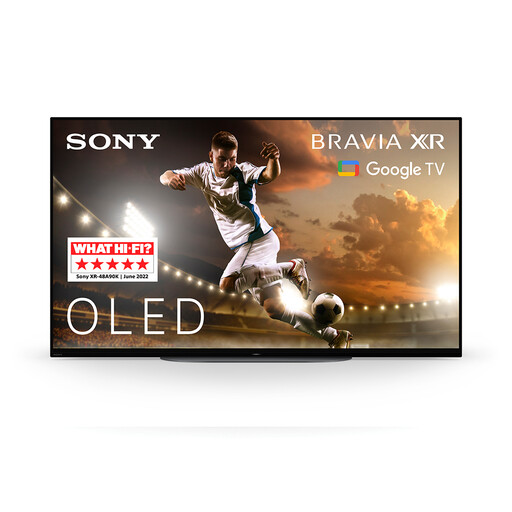
Sony BRAVIA A90 XR48A90K 48-inch OLED 4K TV
The 48-inch size is worth comparing if a larger screen would not fit your viewing space. Check this exact model’s picture from the side and its broadcast motion controls rather than using gaming features as a guide to dance-show motion.
View on Joybuy
 No image available
Sony BRAVIA 8 K65XR80BP 65-inch OLED 4K HDR TV
This 65-inch OLED is an option to assess for a shared viewing area if the screen size suits your seating distance. Confirm the K65XR80BP variant’s off-centre picture and motion controls before deciding; specifications for the separate BRAVIA 8 II model should not be applied to it.
View on Joybuy
Frequently asked questions
Is OLED or LCD the better starting point for a side seat?
Investigate OLED and IPS LCD when off-centre viewing is a regular need, but judge the exact TV rather than its display label. RTINGS says IPS LCD generally has better viewing angles than VA LCD, with a contrast trade-off; compare the picture from your own seating angle.
Will a 120Hz or 144Hz TV make dancers look clearer?
Not automatically: a panel or motion-feature specification is not a complete measure of live-broadcast motion. Check the model’s motion controls with similar footage and whether you can turn down smoothing you find distracting.
Do I need a TV Licence to watch a dance competition live in the UK?
Yes, if you watch or record live TV in the UK, TV Licensing says you need to be covered by a TV Licence, regardless of which TV you buy. Check your household’s existing coverage and the service you intend to use.
What should I check before wall-mounting a TV for side-seat viewing?
Check the exact model’s mounting pattern and weight against the mount and wall, then plan where the screen will face your usual seats. Leave access to the connections you will use; mounting details for one Sony model or screen size should not be assumed for another.


