Who is this TV choice for?

Daytime viewers dealing with reflections

If windows or lamps show up on the screen during a detective series, check reflection handling before concentrating on quoted brightness. A clearer view of dark scenes from your usual seat is the practical goal.

Viewers focused on dark-scene detail

If faces and clues in night-time scenes matter most, compare how specific TVs present dark areas. Being able to reduce the strongest room reflections gives you more freedom to prioritise black levels and contrast.

UK catch-up drama viewers

If your series are on BBC iPlayer, ITVX or other services, check that the exact TV offers the apps you use. TV Licensing also says BBC iPlayer viewing and live TV require TV Licence coverage.

What matters when choosing?

Mini LED/LCD with local dimming

Consider it when: Daylight viewing is frequent and keeping the picture visible takes priority.

Trade-off: Local dimming does not establish how a particular screen handles reflections, bright objects in dark scenes or side seating.

OLED

Consider it when: You place greater weight on black-level detail and can reduce the strongest reflections during viewing.

Trade-off: Daytime visibility and screen treatment differ by model, so the OLED label alone cannot settle the bright-lounge choice.

Concern What to check Who this matters to
Glare and daylight visibility Check screen-treatment details for the exact model and where windows or lamps will reflect from your usual seat. If daylight puts window reflections over faces and subtitles, I want to see the scene without closing the curtains. Around 40% of consumers put glare and daylight readability first.
Dark-scene contrast Compare exact-model shadow detail and, for Mini LED/LCD, local-dimming behaviour around bright objects. When a night-time scene holds the important clues, I care most about distinguishing its dark areas. Roughly 30% of consumers make dark-scene contrast their primary concern.
Catch-up and streaming Confirm the required apps on the exact TV and check TV Licence coverage for BBC iPlayer or live TV. If I rely on catch-up services for my series, direct access on the TV matters more to me than a display feature I may rarely use. About 20% of consumers put service access first.
Side-seat viewing Assess picture consistency from the seats people actually use, not just from directly in front. With viewers in armchairs to the side, I want everyone to follow the same dimly lit scene. Around 10% of consumers place off-centre viewing first.

Buying pitfalls to avoid

  • Choosing by HDR brightness alone

    A bright screen can still show a distracting reflection over a dark scene. A quoted brightness figure does not tell you where the lounge windows will appear on the panel.

    Check the exact model's screen treatment, then assess the planned TV position against windows and lights.

  • Assuming a panel type settles glare handling

    AVForums includes both OLED and Mini LED models in its bright-room selections. That does not mean every model of either type handles reflections in the same way.

    Choose a display route around your viewing priorities, then compare reflection handling and dark-scene behaviour for the particular model and size.

  • Relying on the brightest picture setting for every scene

    A brighter setting may help you see a daytime picture, but it does not remove a window reflection or establish how the scene will look in the evening.

    Compare settings under your usual daytime and evening light, and reduce direct reflections through the TV position or window coverings where practical.

  • Overlooking viewing requirements beyond the TV

    TV Licensing says a TV Licence is required for BBC iPlayer and for watching live TV, including through streaming services. Buying a TV does not itself provide that coverage.

    Check your household's licence coverage before using BBC iPlayer or watching live programmes.

    Where a licence is required, it is an ongoing cost separate from the TV.

Brands and model ranges to consider

Samsung

Relevant if you are comparing selected Neo QLED or OLED models for a lounge with noticeable reflections.

  • Samsung describes Neo QLED as using Mini LED backlighting with local dimming.
  • Samsung said its Glare-Free treatment appeared on selected models in its 2025 UK line-up; confirm whether the exact model and size you want has it.

Sony

Relevant if you are looking at a BRAVIA Mini LED model with local dimming.

  • Sony's UK specification for the K-55XR5 lists Mini LED backlighting, local dimming and support for HDR10, HLG and Dolby Vision.
  • That specification lists X-Anti Reflection as unavailable for the K-55XR5. Check glare features by model rather than by the BRAVIA name.

LG

Relevant if dark-scene black levels are a priority and you can manage the strongest lounge reflections.

  • According to LG's own description of the C5E OLED, its pixels produce individual black levels for dark-scene contrast.
  • Check reflection handling and daytime visibility for the exact OLED model and size; the C5E description does not establish one screen treatment for every LG OLED.

TCL

Relevant if you are considering a Mini LED model with stated local-dimming features.

  • TCL describes its Mini LED range as using controlled backlighting to adjust brightness and contrast.
  • Published features and brightness figures vary by model and size; neither the Mini LED name nor a brightness claim establishes reflection handling in your room.

Joybuy TVs for this viewing set-up

These choices include a TV advertised with a matte anti-glare screen, three QD-Mini LED models and a Samsung 4K smart TV. For each one, weigh the named features against reflections from your seats and the dark-scene performance you need.
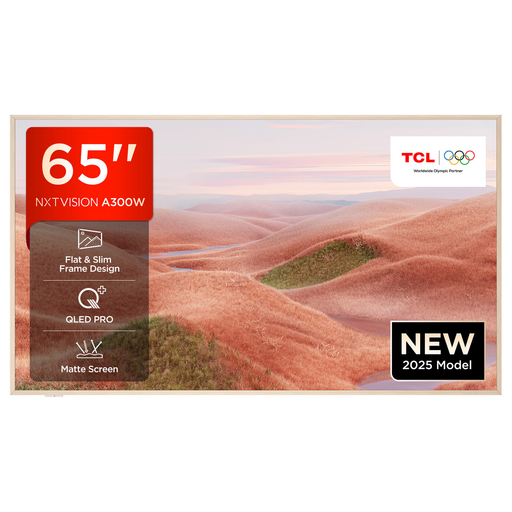
TCL 65A300W QLED TV

TCL 65A300W 65-inch QLED Google TV with matte anti-glare screen

Consider this model if reflections are your main obstacle: its product name specifies a matte anti-glare screen. It is a 4K HDR smart TV, but check how that screen treatment works from your seats and whether the apps you use are available.

View on Joybuy

TCL 75Q7C QD-Mini LED TV

TCL 75Q7C 75-inch QD-Mini LED Google TV

Consider this 4K HDR model if you want to assess a local-dimming route for dark scenes on a larger screen. Its product name states up to 2,048 local-dimming zones and a 144 Hz native refresh rate; the zone maximum does not establish how it handles reflections or shadow detail in your room. Check the apps you need as well.

View on Joybuy

TCL 50Q6C-UK QD-Mini LED TV

TCL 50Q6C-UK 50-inch QD-Mini LED Google TV

Consider this size if it fits your lounge seating and you want to compare local dimming for detective-series scenes. The 4K HDR product name states up to 512 dimming zones and a 144 Hz native refresh rate; assess reflections and picture behaviour on this exact variant, and confirm your required apps.

View on Joybuy

TCL 75Q6C QD-Mini LED TV

TCL 75Q6C 75-inch QD-Mini LED Google TV

Consider this larger Q6C variant if its screen size suits your seating arrangement. Its 4K HDR product name states up to 512 dimming zones and a 144 Hz native refresh rate; check this model's reflection handling, dark-scene performance and required apps before choosing it.

View on Joybuy

Samsung QE75QN80FAU smart TV

Samsung QE75QN80FAU 190.5 cm (75-inch) 4K smart TV

Consider this model if a 75-inch screen fits the lounge, but assess it from both central and side seats. Its product name specifies 4K Ultra HD, Wi-Fi and a grey finish; confirm the exact model's reflection handling, dark-scene performance and app access for your viewing needs.

View on Joybuy

Questions about viewing and set-up

Do I need a TV Licence for detective series on BBC iPlayer?

Yes. TV Licensing says you must be covered by a TV Licence to watch or download BBC iPlayer programmes, including on-demand series, on any device. That requirement is separate from buying the TV.

Does every streaming service require a TV Licence?

No, not solely for on-demand programmes outside BBC iPlayer. TV Licensing says a licence is required to watch live TV through any service and to use BBC iPlayer; check which type of viewing you plan to use.

Should I use the brightest picture setting in a sunny lounge?

Use a brighter setting if it helps you see the picture in daylight, but do not treat it as a fix for reflections. Compare the TV from your usual seat under daytime and evening light before deciding which settings work for dark scenes.

What should I check before wall-mounting the TV?

Check the exact TV's mounting pattern and weight, the suitability of the wall, cable access and whether the proposed position catches window or lamp reflections. Mount dimensions vary by model: Sony specifies a 300 × 300 mm VESA hole pattern for its K-55XR5, which should not be assumed for another TV.