Daytime viewers dealing with window glare
If you watch stages with the curtains open or light falling towards the screen, reflections and daylight visibility may matter more to you than dark-room contrast.


For daytime cycling coverage, choose a TV whose screen remains watchable with your lounge lights and windows in view; do not choose by display technology alone. Mini LED LCD is a useful starting point where daylight is strong, while an OLED with suitable reflection handling may better suit households that also watch from side seats or enjoy films in the evening. Check the exact model’s motion controls and measure your seating distance before settling on a size.
If you watch stages with the curtains open or light falling towards the screen, reflections and daylight visibility may matter more to you than dark-room contrast.
Fast-moving riders and sweeping camera shots make the TV’s panel refresh rate and adjustable motion processing worth checking with the coverage you normally watch.
If people watch from side seats and the TV also gets used for evening films, weigh viewing angles and dark-scene contrast alongside its daytime picture.
Settle the daylight and reflection question first, then compare motion handling and the size that fits your usual seats. Mini LED LCD and OLED can both be considered, but neither label establishes how a particular screen will look opposite your windows.
Consider it when: Strong daylight makes daytime picture visibility your main concern.
Bear in mind: Mini LED describes a backlight, not a fixed standard for reflection handling or local-dimming precision; RTINGS.com also notes that LCD local dimming can produce blooming around bright objects on dark backgrounds.
Consider it when: Side-seat viewing and evening-film contrast matter as well as cycling coverage.
Bear in mind: Pixel-level black control does not prevent a window reflection from distracting you; check the exact screen finish in lighting like yours.
| Concern | What to check | Who this matters to |
|---|---|---|
| Daylight and reflections | Look at the exact screen finish with a window or lamp reflected in it, as well as its brightness. Samsung UK distinguishes treatments that soften reflections from those that diffuse incoming light. | If daylight makes riders or race graphics hard to see, controlling reflections takes priority over dark-room contrast. Around 36% of consumers put this need first. |
| Fast-motion clarity | Confirm the native panel refresh rate rather than relying on a motion-mode name, and try the adjustable motion settings with sport where possible. | When rapid pans make the peloton difficult to follow, natural-looking motion matters more than a headline specification. For around 29% of consumers, it is the primary need. |
| Size and shared seating | Measure the viewing distance, available space and side-seat positions. Commonly quoted starting points are 1.9–3.3 m for a 55-inch TV and 2.1–3.8 m for a 65-inch TV, not rules. | If several people watch together, the screen needs to suit both the main sofa and seats off to the side. This is the first concern for around 21% of consumers. |
| Ownership checks | Compare the exact model code, its energy information and warranty terms; check that its stand or mounting arrangement fits your room. | If I expect to use the TV regularly, I want its energy information and support terms to make sense for the precise model I buy. Around 14% of consumers prioritise these ownership checks. |
RTINGS.com notes that Mini LED has no fixed definition, while the way a screen handles reflections depends on the particular TV.
Check the model’s screen finish and view it under lighting comparable to your lounge rather than deciding from the backlight label.
OLED’s pixel-level black control does not tell you whether a bright window will be distracting during an afternoon race.
Identify where daylight and lamps will appear in the screen, then assess the exact OLED model under those conditions.
A high panel refresh rate does not determine the quality of a broadcast or whether motion smoothing will look natural during camera pans.
Confirm the native panel rate and try the motion controls with live sport or a cycling clip if you can.
TV Licensing says watching live television requires TV Licence cover; using a smart TV or a streaming service does not, by itself, change what you need to check.
Confirm that your household is covered before watching a race as it is broadcast live.
These ranges illustrate different approaches to the same lounge-viewing decision. Compare the exact model and screen size rather than assuming a feature applies across a brand.
Sony’s UK BRAVIA 9 and BRAVIA 7 are Mini LED models to consider for a daylight-focused LCD shortlist.
Samsung’s UK OLED and Neo QLED ranges give buyers both OLED and Mini LED LCD models to assess.
LG’s OLED range is relevant if evening contrast and viewing from side seats are important alongside daytime sport.
TCL’s Mini LED range offers LCD models with sport-relevant specifications to compare against your room layout.
These Mini LED TVs fit the daylight-focused LCD route. Choose between their screen sizes using your lounge measurements, and assess each screen’s reflections before deciding whether it suits afternoon cycling.
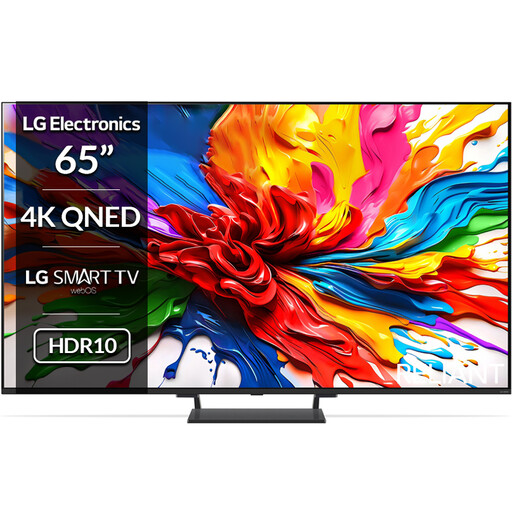 No image available
A MiniLED option if a 65-inch screen fits your daytime viewing space. The title specifies 4K; check how this exact screen handles reflections in your lounge.
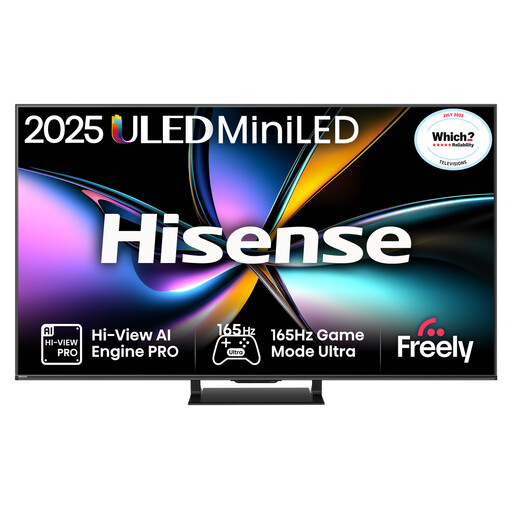 No image available
Consider its 65-inch size if your seating distance and installation space allow it. The title specifies 4K HDR and 165Hz Game Mode Ultra; confirm the native panel rate separately, as well as reflection handling under your room lighting.
 No image available
This 55-inch variant may be easier to accommodate where a 65-inch screen would crowd the lounge. Its title specifies 4K HDR and 165Hz Game Mode Ultra; confirm the native panel rate and assess reflections for this exact model.
 No image available
A 65-inch option for viewers weighing screen space against motion specifications. Its title lists 4K HDR, a native 144Hz refresh rate and up to 2048 local-dimming zones; the zone claim does not establish how it handles reflections.
 No image available
Consider the 75-inch variant only after measuring the usual viewing distance and available wall or furniture space. Its title lists 4K HDR, a native 144Hz refresh rate and up to 2048 local-dimming zones; check reflections on the exact screen before choosing it for daytime races.
Start with the light in your room: a Mini LED LCD is worth comparing when strong daylight is the main obstacle, while an OLED may suit side-seat viewing and evening films if that exact screen also handles your reflections well. Neither technology label guarantees the result.
Yes, native panel refresh rate is a useful check for fast sport, alongside motion processing you can adjust to your preference. A 120Hz specification does not mean every broadcast is delivered at 120Hz or that every smoothing setting will look natural.
Measure the usual seating distance and the space available for the complete TV, including its stand. Commonly quoted starting points are 1.9–3.3 m for 55 inches and 2.1–3.8 m for 65 inches; also consider what the picture looks like from side seats.
Compare the energy label and product information for the precise TV model and size rather than assuming that all OLED or Mini LED sets use energy in the same way. GOV.UK includes televisions among the electronic displays covered by its energy-information guidance.
You need to be covered by a TV Licence if you watch the race as it is shown live, according to TV Licensing. Check your household’s cover before watching through a television service or live stream.