Who is this for?

Hosts with wide seating

If guests sit beside as well as in front of the screen, picture consistency from off-centre seats matters. RTINGS identifies wide viewing angles as a strength of the Samsung S95H it tested, though that result does not apply to every TV.

Daytime match watchers

Windows or lamps facing the TV can make the court harder to see. RTINGS highlights brightness and reflection handling as considerations for sport in bright rooms.

Fans focused on fast rallies

If following the ball is your priority, assess motion on the exact model as well as how the screen fits your seating layout. LG UK includes motion blur and screen size among its considerations for watching live sport.

What matters when choosing?

OLED

Consider it when: Viewers spread across side seats and you can control direct glare. LG UK describes wide viewing angles as an OLED characteristic.

Check: Brightness and reflection handling on the particular model; the OLED label alone does not settle how it will look in your room.

Mini LED or Neo QLED

Consider it when: Daylight is difficult to control and a model offers suitable brightness and reflection handling. Sony UK specifies anti-reflection and wide-angle features for its BRAVIA 9 Mini LED.

Check: Side-seat picture quality on the exact model; those BRAVIA 9 features are not standard across Mini LED TVs.

Concern What to check Who this matters to
Side-seat picture Look for viewing-angle evidence for the exact model; view it from the side if possible. When guests sit away from the centre, I want them to see a consistent picture too. Around 33% of consumers would put side-seat consistency first.
Daylight and reflections Check the screen finish and reflection handling against your window and lamp positions. For afternoon matches, I need the court to remain visible despite room lighting. Keeping the picture clear in bright conditions would come first for around 27% of consumers.
Fast tennis action Assess exact-model motion handling with sport footage; try adjustable motion settings where available. I want to follow the ball through a rally without distracting blur. Motion clarity would be the primary concern for around 20% of consumers.
Size and placement Measure seating positions, full TV and stand dimensions, and the intended mounting space. My group needs a screen everyone can see, but it still has to fit the room. Around 20% of consumers would prioritise a practical screen size and installation fit.

Buying pitfalls

  • Choosing by diagonal size alone

    A larger screen is useful only if it fits the seating layout, furniture or wall, and delivery route; the nearest seats also need consideration.

    Measure the space and access route, then compare the exact TV’s dimensions with and without its stand as relevant.

    A different mount, suitable furniture or help with installation may also be needed.

  • Assuming a panel label guarantees good side views

    Viewing-angle performance varies by model, so an OLED, QLED or Mini LED label cannot tell every side-seat viewer what they will see.

    Check exact-model viewing-angle evidence and inspect the picture from off-centre positions where possible.

  • Using a refresh-rate figure as proof of clear tennis

    A maximum refresh-rate figure alone does not establish how live sport will look; motion settings can change the picture.

    Look for exact-model motion assessments and try a fast sports clip with the available settings.

  • Overlooking energy information

    A TV’s energy information can affect a comparison between screen sizes and models.

    For a new TV, compare its UK energy label and product information sheet alongside the screen size you intend to buy.

Brands to consider for this setup

Samsung

Samsung’s UK range includes large OLED and Neo QLED options relevant to comparing side-seat viewing with bright-room needs.

  • Samsung UK positions QLED for bright viewing and Neo QLED for finer light control. Separately, RTINGS found a very wide viewing angle and effective reflection handling on the Samsung S95H OLED it tested.
  • The RTINGS findings apply to the S95H, not to other Samsung models; compare the exact size and model you are considering.

Sony

The BRAVIA 9 is a Sony Mini LED model to examine if daylight and off-centre seating both matter.

  • Sony UK specifies X-Anti Reflection and X-Wide Angle features for BRAVIA 9.
  • Those are features of the cited model, not a promise about every Sony TV or how it will perform in your room.

LG

LG’s OLED range is relevant when a group’s seating spreads beyond the centre of the screen.

  • LG UK describes wide viewing angles for OLED and identifies screen size and motion blur as live-sport considerations.
  • Check brightness, reflection handling, motion and available size for the particular LG model rather than treating range-wide descriptions as exact-model results.

Joybuy TVs for group viewing

These 75-inch 4K TVs offer screen sizes relevant to shared tennis viewing. Their display types differ, but each still needs an exact-model check for the side seats, lighting and motion that matter in your room.

Samsung QE75QN80FAU 75-inch 4K TV

Samsung QE75QN80FAU 75-inch 4K TV

Consider this screen size if your group sits across a sizeable viewing area; check the picture from your side seats before choosing it.

The listed screen is 75 inches (190.5 cm) with 4K resolution. Check reflection handling and fast-sport motion on this exact model for your room.

View on Joybuy
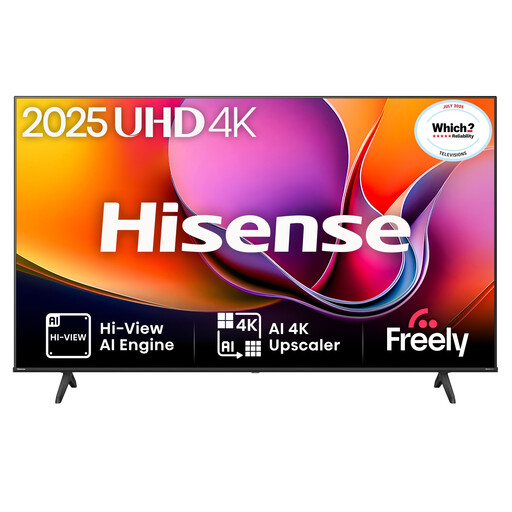
Hisense 75A6QTUK 75-inch A6Q Direct LED 4K TV

Hisense 75A6QTUK 75-inch A6Q Direct LED 4K TV

This is a large-screen option to assess if your viewers can see the picture comfortably from their seats.

The title specifies a 75-inch Direct LED 4K HDR TV. Check off-centre viewing, reflections and tennis motion on the exact model rather than assuming its display description settles those questions.

View on Joybuy

TCL 75Q6C 75-inch QD-Mini LED 4K TV

TCL 75Q6C 75-inch QD-Mini LED 4K TV

Consider this model if a 75-inch screen fits your group and you want to assess a QD-Mini LED option for the room’s lighting.

Its title specifies 4K HDR and a 144 Hz native refresh rate. That figure alone does not establish clear live-sport motion; also check reflections and the picture from side seats.

View on Joybuy

Common questions

Is OLED or Mini LED better for a group watching tennis?

Neither display type suits every room: consider OLED when side-seat consistency is your priority, or a Mini LED model when daylight is harder to control. Check viewing angles and reflection handling on the exact TV, since those results cannot be assumed from the display type alone.

What should I measure before ordering a large TV?

Measure the seating distance, available furniture or wall space, and delivery path, then compare them with the exact model’s dimensions. For wall mounting, check its weight, mount pattern and wall suitability rather than assuming an existing mount will fit.

How should I compare energy use between large TVs?

Compare the UK energy labels and product information sheets for the exact models and screen sizes on your shortlist. A change in screen size can matter to the comparison, so do not judge different sizes by an energy class alone.

Who pays for a repair or replacement if my installed TV is faulty?

When a consumer is entitled to repair or replacement under the Consumer Rights Act 2015, the selling trader bears the cost of that remedy, according to the explanatory notes to section 23 published on legislation.gov.uk. Contact the selling trader with your order details; this remedy for a fault is distinct from a change-of-mind return.