What matters when choosing?
For a group watching gardening shows, decide where people will sit and when they will watch before choosing a screen size. A display feature that helps with one concern does not necessarily resolve reflections, sound or installation.
OLED TV
Consider when: Viewers occupy side seats and the room is usually under controlled lighting; LG describes its OLED range as offering wide viewing angles, especially in dark scenes.
Bear in mind: That viewing-angle claim does not establish how a particular OLED screen will handle reflections from your windows.
Mini LED or QLED TV
Consider when: Daylight competes with the picture and an exact model states relevant brightness, screen-finish or glare-control features, as Samsung’s QN90F and TCL’s C6K do.
Bear in mind: Those manufacturer descriptions are model-specific, not a promise of reflection-free viewing from every seat.
Large-screen 4K LED smart TV
Consider when: A suitable screen size and straightforward access to programmes lead the decision; Sony offers BRAVIA 3 with Google TV in several sizes.
Bear in mind: A larger diagonal alone will not address reflections or the picture seen from side seats.
| Concern | What to check | Who this matters to |
|---|
| Picture from side seats |
Assess the exact screen from the seats at the ends of the group. Check daylight reflections separately from viewing angles. |
If I sit off-centre, I want foliage and shaded areas to remain easy to follow rather than judging the picture from the middle seat. Around 33% of consumers put side-seat picture consistency first. |
| Daylight and reflections |
Note windows and lamps facing the screen; compare the exact model’s screen finish and stated glare or brightness features. |
When we watch during the day, I need garden scenes to remain visible despite light entering the room. Daylight and reflection control is the main concern for around 25% of consumers. |
| Size and placement |
Measure furniture or wall space, the delivery route and seating positions; confirm the stand or mounting requirements for the chosen size. |
I need everyone to see the programme, but the television must also fit and be installed appropriately. Around 25% of consumers make screen size and placement their primary concern. |
| Dialogue and programme access |
Check the apps you use, the exact TV’s audio connections and whether its sound meets the group’s needs. |
With several people watching, I want to follow the presenter and find programmes without a complicated setup. Clear listening and simple access come first for around 17% of consumers. |
Brands to consider
These model ranges illustrate different features worth comparing; a feature described for one range should not be assumed to apply across a brand.
LG
An OLED range to consider when side-seat viewing in controlled light is central to the choice.
- LG describes its OLED screens as using self-lighting pixels and offering wide viewing angles, especially in dark scenes.
- Those claims do not establish how the exact model will handle daylight reflections in your room.
Samsung
Model-specific Mini LED options to examine when a group watches in a bright room.
- Samsung markets a glare-control feature on its QN90F range.
- Do not transfer the QN90F’s screen-treatment claim to another Samsung model without checking its specifications.
TCL
Large-screen QD-Mini LED models with stated features relevant to daylight viewing.
- TCL lists a matte HVA panel and high HDR brightness for its UK C6K range.
- Those manufacturer specifications are not a comparison test or a guarantee of the same result in every room.
Sony
A large-screen smart-TV range to examine when programme access and dialogue features matter.
- Sony lists Google TV and clear-sound features for BRAVIA 3, with 65-, 75- and 85-inch options in the range.
- Those features do not establish side-seat or bright-room picture performance for a particular installation.
Joybuy TVs for shared viewing
These TVs offer OLED, QD-Mini LED, Direct LED and QLED options for the group-viewing decision. Compare each exact model against your seating, daylight and available space rather than treating the list as a ranking of display types.
 No image available
TCL 75Q6C 75-inch QD-Mini LED 4K Google TV
Consider this larger screen if the group needs a view from several seats and daylight is part of the room setup. The product title states high HDR brightness and up to 512 dimming zones; neither establishes how reflections will look in your room.
Measure the space and confirm the exact TV’s stand or mounting requirements before choosing the 75-inch size.
View on Joybuy
 No image available
Samsung S85F QE83S85FAE 83-inch 4K OLED TV
Consider this OLED option if a large group occupies a wide seating area, then judge the exact screen from those seats and under your room’s lighting. Its stated 83-inch size makes furniture space, delivery access and safe placement particularly important.
Check dialogue clarity for the full group rather than assuming screen size will settle the sound choice.
View on Joybuy
 No image available
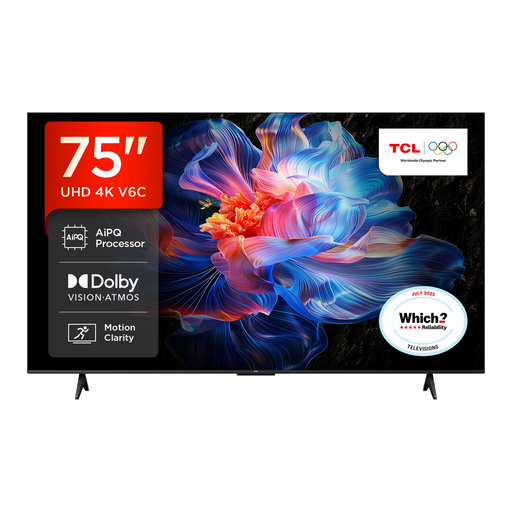
TCL 75V6C 75-inch Direct LED 4K Google TV
This is a large-screen smart-TV option when shared programme viewing and Google TV are priorities. Its product title also specifies Dolby Atmos, but that feature alone does not determine how clearly everyone will hear dialogue.
Assess side-seat viewing and reflections in the intended layout, and confirm the space and mounting requirements for the 75-inch set.
View on Joybuy
 No image available
TCL 75Q7C 75-inch QD-Mini LED 4K Google TV
For a daylit shared-viewing space, this model’s QD-Mini LED screen gives you a brightness-oriented option to assess in the room. The product title states up to 2048 local-dimming zones and audio by Bang & Olufsen; neither detail establishes glare handling or dialogue clarity from every seat.
Check reflections, placement and any mounting requirements for the exact 75-inch model.
View on Joybuy
 No image available
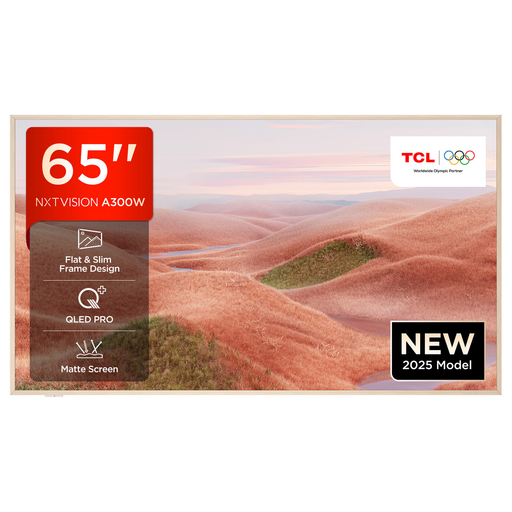
TCL 65A300W 65-inch QLED 4K Google TV
Consider this 65-inch option if you are concerned about windows facing the screen: its product title specifies a matte anti-glare screen. That wording does not promise reflection-free viewing, so assess the intended lighting and the picture from side seats.
Confirm that the size, sound and placement work for your group before ordering.
View on Joybuy
Frequently asked questions
Should a large group choose OLED or Mini LED for gardening shows?
Choose according to seating and room light, not the display name alone. LG describes OLED as offering wide viewing angles, especially in dark scenes, which makes it worth considering for side seats in controlled light. In a bright room, compare exact Mini LED or QLED models with stated brightness, matte-screen or glare-control features, and assess reflections in the intended seating layout.
Should I buy the largest television that fits the wall?
No: choose a size that works for the seating positions, furniture or wall space, delivery route and installation plan. A larger screen will not by itself fix reflections, side-seat picture changes or unclear dialogue. Sony’s BRAVIA 3 range, for example, offers several sizes, so settle the room measurements before selecting a variant.
What energy information should I check when buying a TV online?
Check the energy label for the exact television and screen size you intend to buy. GOV.UK guidance states that products within the energy-labelling rules must have an accurate label and display it at the point of sale, including on a website. Compare the relevant labels rather than applying one size’s information to another.
Is a wall mount suitable just because it is sold for TVs?
No: suitability depends on the exact television, bracket, wall and fixings. Follow the TV’s mounting instructions and confirm the bracket’s compatibility and load rating. A GOV.UK safety report concerning a particular motorised display mount identified the strength and suitability of wall fixings as part of a serious detachment risk; it was not a finding about every bracket.


