A 4K TV is worth considering if your history lectures regularly include slides, maps, dates or captions, but check the quality of the lecture recording too: LG UK says upscaled image quality varies with source resolution. Choose a connection method that works with your actual lecture service, whether that is a TV app, casting or a laptop, and check captions, audio connections and the energy label before buying.
Who needs what from a lecture TV?
Slide-and-map learners
If dates, maps, quotations and archival documents matter as much as the presenter, look for a screen and seating position that let you read the detail supplied by the lecture. A 4K panel cannot restore detail missing from the recording; LG UK notes that upscaled results vary with source resolution.
Laptop-led lecture viewers
If lectures run through a university portal, browser or video-call service, establish how that device will connect before choosing a TV. Sony UK lists HDMI and casting options for its K-75S3, but the inputs and supported methods need checking on the exact model you intend to buy.
Caption- and dialogue-dependent viewers
If you depend on captions, audio description or private listening, check the lecture service as well as the TV. Ofcom identifies subtitles and audio description as access services; their availability for a particular lecture cannot be established from the screen specification alone.
What matters most when choosing?
Start with how your lectures are delivered, then assess whether the recording, screen and seating position let you follow its visual detail. Check access services and audio connections against your own needs.
| Concern | What to check | Who this matters to |
|---|
| Readable slides and maps |
Confirm 3840 × 2160 resolution on the chosen model and assess a typical lecture recording from your viewing position. |
When dates or labels on maps are central to a lecture, I need to read them without assuming upscaling will repair a blurred upload. Around 42% of consumers put visual detail first. |
| Access to the lecture |
Check the exact TV for the app, HDMI input or casting method required by your lecture source. |
If my course uses a browser or university portal, getting that material onto the TV takes priority over its app catalogue. For around 33% of consumers, source connectivity is the main concern. |
| Captions and audio |
Check the lecture platform for captions or transcripts and the exact TV for your required audio connection. |
When I rely on captions or private listening, I need the lecture service and my audio setup to work together. Access and dialogue are the primary need for around 25% of consumers. |
Buying pitfalls to avoid
-
Expecting upscaling to repair an unreadable recording
A TV cannot reliably recreate detail absent from a compressed or low-resolution upload. LG UK says upscaled image quality varies with source resolution.
Check a representative lecture and consider its original quality, your seating position and screen size before relying on picture-processing features.
-
Choosing apps before checking how the course is delivered
A university portal or video-call service may require a computer even if the TV has streaming apps.
Identify whether you will use an app, HDMI or a supported casting method, then check the exact TV and source device.
A laptop connection may also require an HDMI cable or a compatible adapter.
-
Assuming a TV can add captions to every lecture
Caption and audio-description availability depends on the lecture or video provider, not the panel. Ofcom describes these as access services supplied with content.
Check the course platform for captions or transcripts, then confirm any audio-output connection you need on the TV.
-
Overlooking the energy label
UK government energy-information guidance requires an energy label at the point of sale for products within its scope, including on a website.
Compare the displayed labels and product information sheets of otherwise suitable new TVs.
Electricity use over time depends on the model and how often you watch.
Relevant brands to consider
Sony
Sony UK specifies 3840 × 2160 resolution, four HDMI inputs, Chromecast built-in and Apple AirPlay for the 75-inch BRAVIA 3 K-75S3. Those details make that model relevant when lectures come from a laptop or compatible casting device.
- Documented input and casting options for K-75S3.
- Check the exact model suffix and size; these specifications do not describe every Sony TV.
LG
LG UK lists 4K resolution, webOS and streaming services for the 55UA73006LA, making it a model to examine if your lecture service works through a TV app.
- Documented smart-TV and 4K features for 55UA73006LA.
- LG says upscaled image quality varies with source resolution; processing is not a fix for unreadable source material.
Samsung
Samsung UK lists 4K QLED TVs in several sizes. Its explanation of QLED describes a quantum-dot light-converting film, not a demonstrated advantage for reading lecture slides.
- Several listed screen sizes offer models to assess for your room.
- Check an individual model’s inputs, apps and accessibility options rather than judging it by display technology alone.
Joybuy TVs for lecture viewing
These 4K smart TVs offer screen options for slide-heavy history lectures. Choose among them by the space available and the way you will play your course material; confirm any required app, laptop connection or audio accessory for the exact model.
 No image available
TCL 50Q6C-UK QD-Mini LED 4K HDR Google TV
Consider this model for lectures with slides or maps if Google TV fits your playback plans.
The listed features include QD-Mini LED, 4K HDR and an ONKYO 2.1 sound system. Check your lecture service and any required laptop or headphone connection before ordering.
View on Joybuy
 No image available
TCL 98Q6C-UK QD-Mini LED 4K HDR Google TV
Consider this 98-inch model only after checking that its size suits your room and lecture-viewing position.
Its listed features include QD-Mini LED and 4K HDR. The larger screen cannot recover detail missing from a low-quality recording; check a typical lecture source.
View on Joybuy
 No image available
TCL 55P8K-UK QLED 4K HDR PRO Smart TV
Consider this model if you plan to play lectures through a compatible casting device as well as assess slides on a 4K screen.
The product name lists Miracast and Google Cast. Confirm that your particular lecture service allows playback through the method you intend to use; its gaming refresh-rate feature does not establish clearer lecture text.
View on Joybuy
 No image available
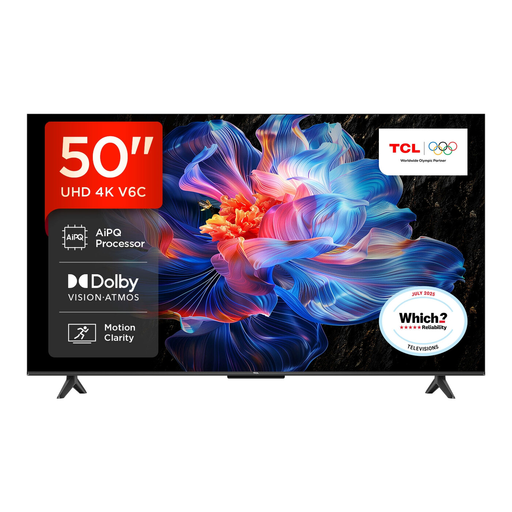
TCL 50V6C 50-inch Direct LED 4K HDR Google TV
Consider this 50-inch model when you want to assess a 4K smart TV for lectures in a space suited to that screen size.
Check that your course playback method and any required headphones work with the exact TV. Its listed Game Accelerator feature concerns gaming, not the readability of lecture slides.
View on Joybuy
 No image available
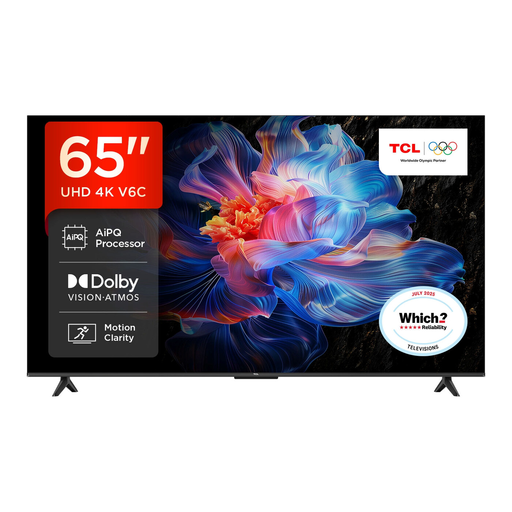
TCL 65V6C 65-inch Direct LED 4K HDR Google TV
Consider this 65-inch model if its screen size suits your room and viewing position for slide-based lectures.
Before deciding, check a representative recording, the connection needed for your course and any required audio output. A 4K panel alone cannot make blurred source material readable.
View on Joybuy
Frequently asked questions
Will a 4K TV make an old history lecture clear?
Not automatically: a 4K screen can display detail supplied by the lecture, but cannot reliably recreate detail missing from a poor recording. LG UK says upscaled image quality varies with source resolution, so check a typical course video before relying on upscaling.
Should I use a TV app or connect my laptop?
Use a TV app or casting if your lecture service supports it; use a laptop connection if your course depends on a browser, university portal or local files. For the laptop route, confirm the exact TV’s input and your computer’s compatible output or adapter.
Can a TV provide captions for any lecture?
No: check whether the particular lecture platform or recording provides captions or a transcript. Ofcom identifies subtitles and audio description as access services associated with content; separately check the TV’s audio connections if you need private listening.
What UK energy information should I check for a new TV?
Check the energy label and product information sheet when comparing suitable models. UK government guidance requires an accurate label for products within its scope and display of that label at the point of sale, including on a website; its stated requirements do not apply to second-hand products.


