Choose for the room as well as the picture: if daylight and reflections interrupt viewing, assess glare control first; if you mainly watch in controlled evening light, compare OLED screens for the colour and dark-scene detail you value. Measure the distance from your seats and the available wall or furniture space before settling on a size. Keep the TV on a stable, ventilated support away from kitchen heat and moisture, as Electrical Safety First advises.
Who is this for?
Daytime viewers dealing with reflections
If you watch during breakfast, lunch or daytime cooking, note where windows and ceiling lights appear on the screen from your usual seat. A glare-reducing display is worth assessing alongside the TV’s position.
Viewers focused on colour and detail
If paintings, gallery scenes and darker footage are the reason you watch, compare picture modes, colour and contrast under the lighting you normally use, particularly for evening viewing.
Viewers fitting a TV into a shared space
If the dining wall or seating area is compact, check the TV’s full dimensions and the view from each seat. Electrical Safety First also advises a stable position away from heat and moisture.
What matters when choosing?
The main choice is whether reflections during daytime viewing or picture detail in controlled light matters more; whichever screen you prefer must still fit a safe position in the room.
Glare-reducing QLED or lifestyle TV
Choose when: Windows or overhead lights regularly reflect towards your seat. Samsung UK describes The Frame Pro’s Matte Display as glare-reducing; assess that claim on the exact model you are considering.
Trade-off: A matte treatment does not establish how every scene will look in your room, so compare the picture from your usual seats as well as its reflection handling.
OLED for controlled-light viewing
Choose when: Evening viewing, colour and dark-scene detail take priority. LG UK describes the C5E’s individually controlled OLED pixels and colour-fidelity features as reasons to consider this route.
Trade-off: OLED branding alone does not settle how well the exact screen will handle your daytime reflections; check it under the light in which you will watch.
| Concern |
What to check |
Who this matters to |
| Daylight and reflections |
Compare the screen under your usual lighting and check the view from seats facing windows or ceiling lights. |
If I watch while the kitchen diner is bright, reflections can get in the way of artwork and subtitles. Roughly 42% of consumers put daytime visibility first. |
| Colour and dark-scene detail |
Compare picture modes and the exact TV’s colour, contrast and view from your usual seats; treat model-specific manufacturer claims as a starting point. |
When I watch art films in the evening, I want subtle colours and darker gallery scenes to remain clear. Colour and picture detail come first for around 33% of consumers. |
| Fit and safe placement |
Measure viewing distance and full TV dimensions; allow for stable support, ventilation and cables away from kitchen work areas. |
If the dining wall is tight, a screen has to fit the seating layout without ending up near heat or moisture. About 25% of consumers prioritise fit and placement. |
Buying pitfalls
-
Choosing by screen diagonal alone
A TV can fit the viewing distance yet still crowd the wall or furniture; a smaller screen may make artwork and subtitles harder to follow from the table.
Measure the viewing distance and the TV’s full physical dimensions. Samsung UK’s 4K viewing-distance guidance is a starting point, not a substitute for checking your layout.
-
Assuming a matte screen removes every reflection
Windows, ceiling lights and seat positions change what appears on a screen. Samsung UK describes The Frame Pro’s Matte Display as glare-reducing, not as a guarantee for every room.
Check the exact model under lighting similar to your kitchen diner and look at it from your normal viewing positions.
-
Putting the TV too close to kitchen hazards
Moisture, heat, trailing cables and blocked ventilation can create safety risks. A TV should not be positioned as though it were a kitchen appliance.
Follow the manufacturer’s installation instructions and Electrical Safety First’s advice to use a flat, stable position away from heat and moisture.
A suitable position may also require mounting hardware or a different cable route.
-
Judging dialogue clarity without kitchen noise
An extractor fan, appliances or conversation may make documentary narration harder to hear. Panasonic’s description of redesigned speakers applies to its Z95B line, not every TV.
Listen to speech at a realistic volume with your usual background noise before deciding whether built-in sound meets your needs.
If dialogue remains difficult to follow, separate audio equipment may be needed.
Brands and TV lines to consider
LG
LG’s UK range offers OLED and LCD-based lines for comparing picture approaches. Its OLED C5E is a model-specific reference for viewers considering colour and dark-scene contrast.
- LG UK describes the C5E’s individually controlled pixels and lists 100% Colour Fidelity for that model.
- Those manufacturer claims do not determine how the C5E will handle reflections or fit every kitchen diner; check the exact size and viewing position.
Samsung
The Frame Pro is a Samsung line to consider when reflection control and an art-display design matter on a shared dining wall.
- Samsung UK describes The Frame Pro’s Matte Display, Mini LED picture technology and Art Mode.
- These features are model-specific. Check the model number and size, then assess its picture under your usual lighting.
Panasonic
Panasonic’s Z95B OLED line is relevant if calibration-oriented picture settings and integrated sound are priorities for documentary viewing.
- Panasonic UK & Ireland lists Prime Video Calibrated Mode, Calman calibration and ISFccc support for the Z95B, alongside redesigned speakers.
- Panasonic announced 55-, 65- and 77-inch Z95B sizes; check whether one fits the room and whether its built-in sound remains clear amid kitchen noise.
TVs to consider on Joybuy
These TVs offer QLED options for assessing art-display features and reflections, plus a smaller OLED option for controlled-light viewing. Compare the exact model’s screen treatment and dimensions before choosing for your kitchen diner.
 No image available
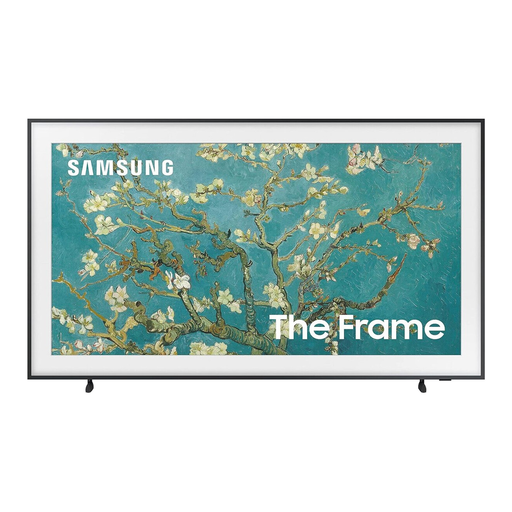
Samsung QE65LS03FAU 65-inch 4K Smart TV
Consider this size if the dining wall and viewing distance can accommodate a 65-inch screen.
The product information identifies QLED, an anti-glare screen and Art Mode. Check reflections from your usual seats rather than assuming the screen treatment will suit every light source.
View on Joybuy
 No image available
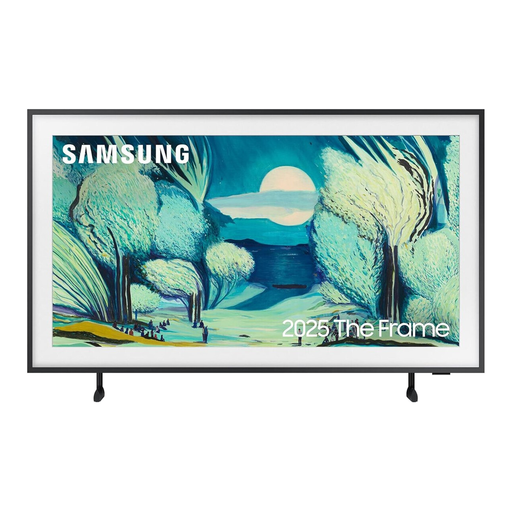
Samsung The Frame QE43LS03FAU 43-inch 4K Smart TV
The 43-inch screen is worth measuring for a smaller dining wall or closer seating position.
The product information identifies QLED, an anti-glare screen and Art Mode. If people watch from the side, check the picture from those seats.
View on Joybuy
 No image available
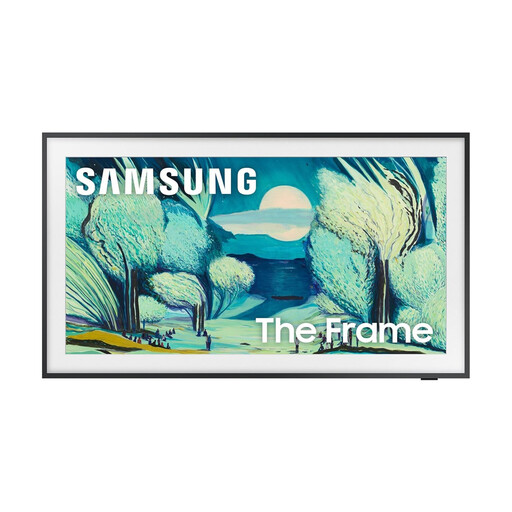
Samsung The Frame QE55LS03F 55-inch 4K QLED TV
Consider the 55-inch size if it fits the wall and remains comfortable to watch from the table.
The product information identifies a Matte Display and Art Mode. Check reflections under your usual lighting and assess the picture from off-axis seats if needed.
View on Joybuy
 No image available
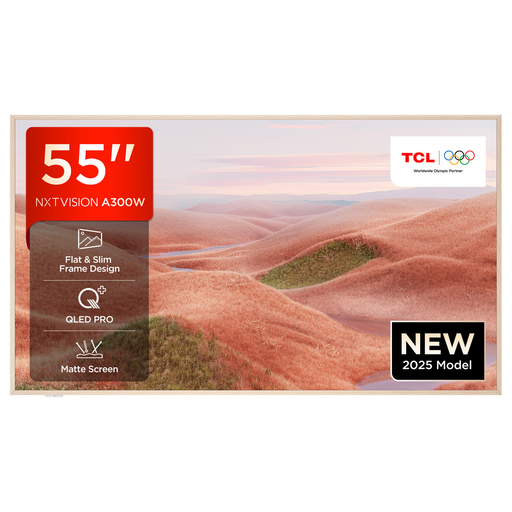
TCL 55A300W 55-inch 4K QLED Google TV
This 55-inch art-inspired TV is an option to assess for the dining wall if its dimensions suit your space.
Confirm the exact screen configuration before relying on matte or anti-glare treatment: the available product information describes that treatment inconsistently. Check the view from your usual seats too.
View on Joybuy
 No image available
Sony BRAVIA A90 XR42A90K 42-inch 4K OLED TV
Consider this smaller OLED option if controlled-light viewing matters more to you than an art-display design.
Its product information identifies a 42-inch 4K OLED screen and Google TV. Confirm its full physical dimensions, then check reflections and the view from your usual seats.
View on Joybuy
Frequently asked questions
What size TV makes sense for a kitchen diner?
Start with the measured viewing distance and the space available for the TV, rather than the room’s name. Samsung UK suggests a broad 4K viewing distance of roughly 1 to 2.5 times the screen size; use that as a starting point, then check the TV’s full dimensions and every usual seat.
Should I choose OLED or a glare-reducing TV for daytime viewing?
Assess glare reduction first if windows or ceiling lights reflect towards your usual seat. Samsung UK describes The Frame Pro’s Matte Display as glare-reducing; if you mainly watch after dark and prioritise colour and dark-scene contrast, compare OLED options such as the LG C5E. Check the exact screen under your normal lighting where possible.
Can a TV go near kitchen worktops or appliances?
Choose a position away from moisture, heat and trailing cables rather than placing the TV beside a hazard. Electrical Safety First advises a flat, stable surface away from heat and moisture; also keep ventilation clear and follow the TV manufacturer’s installation instructions.
Will built-in TV speakers be enough for documentary narration?
Built-in speakers may meet your needs, but judge dialogue with your usual extractor fan, appliances and conversation in the background. Panasonic UK & Ireland describes redesigned speakers on its Z95B line; that model-specific feature does not replace listening in conditions similar to your own.


