Choose for the room's light and seating positions before choosing a display label. If windows or kitchen lights reflect in the screen, compare the exact model's reflection treatment and brightness; if lighting is controllable and people watch from several off-centre seats, OLED is worth considering for contrast and viewing angles. Whichever route you take, check the TV's dimensions, mounting requirements and distance from heat and water.
Who is this for?
Daylight kitchen-diner viewers
If you watch with blinds open or lights on, start with the positions of windows and lamps. As Samsung UK explains, anti-reflection and anti-glare treatments handle incoming light differently; neither label alone tells you how a particular TV will look in your room.
Shared-table viewers
If people watch from dining chairs, island stools and the cooking area, assess the picture from those positions rather than only straight ahead. LG UK describes wide viewing angles as a characteristic of its OLED technology, but the exact screen and room lighting still matter.
Compact-space film watchers
If cupboards, worktops or appliances limit where a second TV can go, measure the intended position before settling on a screen size. Samsung UK's mounting guidance also calls for attention to ventilation and separation from heat and water.
What matters when choosing?
Start with the light falling on the proposed screen, then check the view from each seat and whether the TV can be placed safely. Screen coating is a separate choice from OLED or Mini LED: confirm the combination on the exact model.
| Concern |
What to check |
Who this matters to |
| Reflections and brightness |
Note where windows and lamps will appear in the screen. Check the exact model's coating and compare brightness specifications on a like-for-like basis. |
If daylight or pendant lights compete with the film, I need the picture to remain easy to follow. Around 42% of consumers put reflection handling and usable brightness first. |
| Colour, contrast and side views |
Assess the picture from the seats you will use, including off-centre positions; compare contrast and viewing-angle information for the exact models. |
When we watch from the table and island, I want the picture to hold up away from the central seat. For around 33% of consumers, that shared-viewing need comes first. |
| Safe placement |
Measure the available space and check stand dimensions or mount compatibility, the model manual's clearance requirements, and proximity to heat and water. |
If the only possible position is near cupboards or kitchen fittings, I need to establish that the TV will fit and have suitable clearance. Placement is the primary concern for around 25% of consumers. |
What should you avoid?
-
Treating anti-glare and anti-reflection as the same feature
Samsung UK distinguishes anti-reflection, which softens visible reflections, from anti-glare, which diffuses incoming light. A feature label alone cannot show how distracting your windows or lamps will be.
Map the proposed screen position against those light sources, confirm the exact model's treatment and, if possible, assess it under similar lighting.
-
Putting a TV into a kitchen recess without checking the surroundings
Heat, water, humidity and inadequate ventilation can make a proposed position unsuitable even when the screen fits. Samsung UK's mounting guidance advises keeping its TVs away from heat and water and allowing at least 10 cm of clearance at the top, bottom and sides.
Follow the manual for the exact TV, check the wall and mount, and choose a position away from sinks and heat sources.
The intended position may also require a compatible wall mount or professional installation.
-
Choosing solely by an OLED or Mini LED label
Display technologies offer different approaches, but the brightness, reflection treatment and side-view picture that matter in a kitchen diner depend on the particular model. A technology label does not settle those trade-offs.
For a bright room, examine the screen treatment and model-specific brightness information. For shared seating, assess the picture from the actual viewing angles.
-
Overlooking how the second TV will be used and disposed of
GOV.UK says a TV Licence is required to watch or record live television or use BBC iPlayer. Replacing an old set also raises the practical question of electrical-waste take-back.
Check whether the household's intended viewing is covered, and ask the retailer about its take-back arrangements before ordering. GOV.UK states that retailers must offer a route for taking back qualifying waste equipment of the same type; home collection may involve a transport charge.
Brands to consider
LG
A reference point for OLED if lighting can be controlled and people watch from several seats; LG UK lists a 42-inch OLED evo AI C6.
- LG UK says its self-emitting OLED pixels enable deep blacks, contrast and wide viewing angles.
- Those technology claims do not establish how an individual screen handles direct-sun reflections; check its coating, brightness and dimensions.
Samsung
Its UK range offers OLED, Neo QLED and glare-reducing display options relevant to different kitchen-diner lighting conditions.
- Samsung UK describes Neo QLED's Quantum Mini LEDs as allowing finer light control and explains the distinction between anti-reflection and anti-glare.
- Panel and coating features vary by model. Check the exact TV's specifications and installation instructions.
TCL
Worth examining if a larger Mini LED/QLED-style screen fits the available space; TCL UK's C7L line starts at 55 inches.
- TCL UK lists up to 2,700 nits HDR brightness and 800 dimming zones for the C7L range. These are manufacturer specifications, not independently measured results.
- The C7L figures do not describe every TCL TV or establish that a 55-inch screen suits a particular room.
Sony
Offers OLED and Mini LED routes to examine once the intended screen position and mounting space are known.
- Sony UK's specifications for the 65-inch BRAVIA 7 K-65XR70 identify a Mini LED LCD and a 300 × 300 mm VESA mounting pattern.
- Those mounting details apply to that model only. Check the dimensions and stand or mount requirements of any smaller TV separately.
TVs to consider on Joybuy
These TVs cover matte-screen, Mini LED and OLED options for the kitchen-diner decision. Match each screen's size and stated features to your lighting and seating, then check the exact installation details before ordering.
 No image available
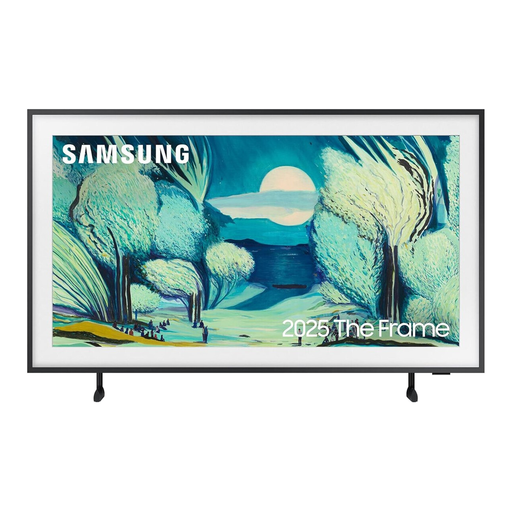
Samsung The Frame QE43LS03FAU 43-inch 4K TV
Consider this 43-inch option if the available screen area is relatively compact. Check its reflection handling and the view from off-centre seats against your room before choosing it.
View on Joybuy
 No image available
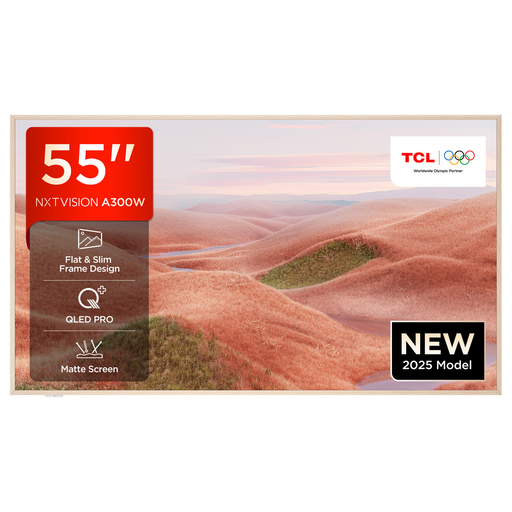
TCL 55A300W 55-inch QLED 4K Google TV
Consider its stated matte anti-glare screen if reflections are a priority and a 55-inch TV fits the room. Confirm the stand or mounting dimensions, and assess brightness in lighting similar to your kitchen diner.
View on Joybuy
 No image available
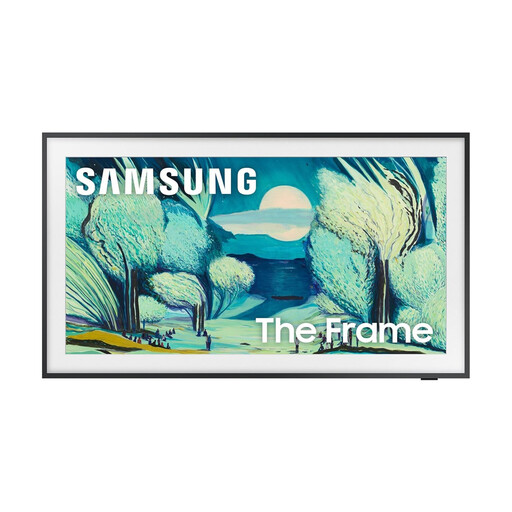
Samsung The Frame QE55LS03F 55-inch QLED 4K TV
Consider this 55-inch model if the larger screen suits your seating and installation space. Confirm the exact screen treatment, stand or mounting configuration, and picture under your usual lighting.
View on Joybuy
 No image available
Hisense U7Q Pro 55U7QTUK Pro 55-inch Mini LED 4K TV
Consider this Mini LED route if you want to compare 55-inch TVs for a bright room. Its title identifies HDR and VIDAA OS; check model-specific brightness and reflection handling rather than assuming the display type will overcome window glare.
View on Joybuy
 No image available
Sony BRAVIA A90 XR42A90K 42-inch OLED 4K TV
Consider this 42-inch OLED option if lighting can be controlled and a smaller screen suits the available space. Its title identifies Google TV; check the stand dimensions, mounting requirements and reflection handling for your intended position.
View on Joybuy
Common questions
Can I mount a TV close to a kitchen sink or hob?
Do not choose a position exposed to water, heat or high humidity without checking the exact TV's installation instructions. Samsung UK advises keeping its TVs away from heat sources and water and allowing at least 10 cm of ventilation clearance at the top, bottom and sides; check your model's manual and the suitability of the wall and mount.
Do I need a TV Licence for a kitchen-diner TV?
The intended viewing determines whether a TV Licence is required, rather than the TV's position in the home. GOV.UK says you need one to watch or record live television or use BBC iPlayer; it is not required solely for other on-demand programmes or DVDs. Check the household's coverage for its intended use.
Can a retailer take away my old TV when I buy another?
Ask the retailer about its electrical-waste take-back arrangements before ordering. GOV.UK says retailers must offer a take-back route for qualifying waste equipment of the same type and function, including with online purchases; home collection may involve a transport charge or a different approved arrangement.
Is a 55-inch Mini LED TV automatically suitable for a kitchen diner?
No: the display type does not establish whether a 55-inch TV fits or handles your particular reflections. Measure the available space, check stand or mount requirements and ventilation, and compare the exact model's screen treatment under lighting similar to the room's usual conditions.


