Consider OLED if evening documentaries, dark-scene contrast and viewing from different sofa seats matter most. If the shared lounge is bright or reflective, consider Mini LED instead. Neither label settles the choice on its own: check the exact TV against the room’s lighting, furniture, mounting options and quiet-viewing needs.
Who is this for?
Evening wildlife viewers
If forests, underwater footage and night scenes are your main draw, contrast and dark-scene detail deserve attention. LG describes its OLED pixels as independently controlled, an approach relevant to watching in a darker room.
Daytime communal-room viewers
If flatmates watch with daylight or lamps in the room, consider brightness and reflections alongside the picture from each seat. Samsung and TCL describe their Mini LED ranges in terms of brightness and controlled backlighting, but the result depends on the model.
Quiet-viewing flatmates
If the volume needs to stay low, make subtitle controls and the TV’s headphone or audio connections part of the purchase decision. Sony notes that subtitle availability can depend on the broadcaster, app and programme.
What matters when choosing?
OLED
Consider it when: Evening wildlife programmes and viewing from several seats take priority; LG describes its OLED design as offering independently controlled blacks and wide viewing angles.
Check: Daylight performance and installation on the exact model. For example, the Joybuy listing for the LG OLED55G45LW describes it as primarily wall-mounted and without a stand.
Mini LED
Consider it when: Daylight or room lighting is the bigger obstacle; Samsung describes its Mini LED backlighting as allowing finer light control and higher brightness.
Check: Reflections and the picture from side seats on the exact model rather than assuming the technology name answers either question.
A conventional QLED or LED TV remains an option, but do not assume its name tells you how it handles dark scenes or reflections. Whatever display route you choose, settle the room and viewing requirements before comparing individual specifications.
| Concern |
What to check |
Who this matters to |
| Wildlife picture detail |
Compare the exact model’s contrast and HDR formats; HDR viewing also depends on the programme and service. |
When I watch woodland shadows or night footage, I want detail without losing the brighter parts of the scene. Around 38% of consumers put wildlife picture detail first. |
| Light and shared seating |
Check window and lamp reflections, then assess the picture from the seats people will use. |
With daylight in the lounge and flatmates spread across the sofa, I need a picture that works from our usual seats. Light and shared seating are the primary concern for around 31% of consumers. |
| Quiet viewing and fit |
Confirm subtitle and audio controls, the TV’s full dimensions and whether the intended stand or mount is suitable. |
If others are studying or sleeping, I need to follow the programme at low volume and fit the TV into our available space. Around 31% of consumers prioritise those shared-flat practicalities. |
Buying pitfalls
-
Choosing by diagonal size alone
A screen’s advertised diagonal does not tell you whether the whole TV and its stand will fit the cabinet. The listing advises measuring the full width, including the bezel.
Check the exact model’s width, height, depth and stand footprint against the furniture, leaving room for its cables.
-
Assuming an OLED includes a table stand
OLED describes the display technology, not what comes in the box. Joybuy describes the LG OLED55G45LW as primarily designed for wall mounting and without a stand.
For any model you intend to place on furniture, confirm its supplied stand or compatible alternative. If you plan to wall-mount it, check the mounting requirements and whether the flat permits it.
-
Letting the display label make the whole decision
OLED, QLED and Mini LED names do not establish how a particular screen handles reflections, subtitles or sound connections.
Use the technology to narrow your choices, then check the exact TV’s specifications and controls against the room and the services you watch.
Brands to consider
These brands offer relevant display approaches, but a brand name cannot stand in for checking the particular TV and screen size.
LG
Relevant when considering OLED for evening documentaries and seating spread across a shared room.
- LG describes its OLED pixels as independently controlled, supporting true blacks, high contrast and wide viewing angles.
- Check daylight suitability and installation by model; the LG OLED55G45LW listing describes that particular TV as wall-mounted without a stand.
Samsung
Relevant when weighing OLED against Neo QLED models for different room-lighting conditions.
- Samsung describes its smaller Mini LEDs as allowing finer light control and higher brightness.
- Compare reflection handling, seating angles and connections on the specific model; Samsung’s technology description does not establish the result for every TV.
TCL
Relevant when considering a QD-Mini LED display route.
- TCL lists QD-Mini LED, Google TV and several HDR formats for its Q9BK model.
- Those Q9BK specifications should not be assumed for other TCL models or screen sizes; check the precise variant under consideration.
Joybuy TV choices
These TVs include options to consider for Mini LED and OLED viewing in a shared flat. Compare each one with your room size, lighting and low-volume viewing requirements rather than choosing on display technology alone.
 No image available
Hisense 55U7QTUK Pro 55-inch Mini LED 4K TV
Consider this 55-inch option if a Mini LED screen suits your shared lounge. Its product name specifies 4K HDR and VIDAA OS; check reflections and the subtitle controls for the services you use.
View on Joybuy
 No image available
Samsung QE75QN80FAU 75-inch 4K Smart TV
If you are considering a larger communal screen, measure the furniture and viewing space before choosing this 75-inch TV. Its product name specifies 4K Ultra HD and Wi-Fi; check the exact model’s display features and reflection handling.
View on Joybuy
 No image available
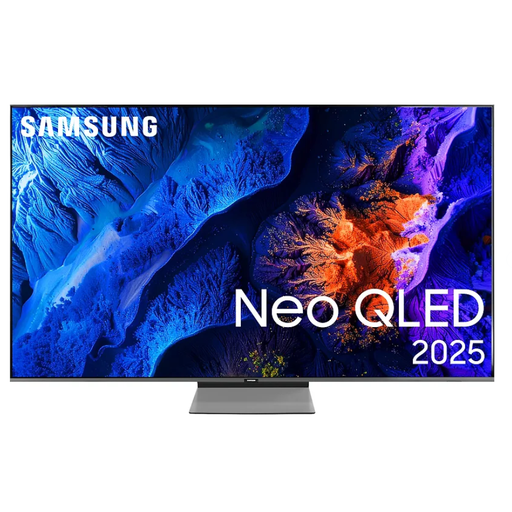
Samsung Neo QE55QN85FAUXXH 55-inch 4K Smart TV
This 55-inch option is worth considering if a larger screen would strain the available space. Its product name specifies 4K Ultra HD and Wi-Fi; assess reflections from your usual seats and check any headphone and subtitle requirements.
View on Joybuy
 No image available
Samsung S85F QE83S85FAE 83-inch 4K OLED TV
Consider this OLED option for evening viewing only if an 83-inch screen suits the shared room. The product name specifies 4K Ultra HD; check the stand arrangement, full dimensions and how the screen looks in your daytime lighting.
View on Joybuy
 No image available
TCL 75Q6C 75-inch QD-Mini LED 4K HDR TV
Consider this 75-inch QD-Mini LED option if the lounge can accommodate it. Its product name specifies 4K HDR and Google TV; check the exact variant’s HDR formats, stand arrangement, reflections and quiet-viewing controls before ordering.
View on Joybuy
Frequently asked questions
Should we choose OLED or Mini LED for nature documentaries?
Consider OLED when evening viewing, dark scenes and seating at different angles are the priorities; consider Mini LED when daylight and room lighting are harder to manage. LG and Samsung describe those respective technology characteristics, but compare the exact TVs in conditions resembling your shared lounge.
How can we follow narration without turning up the volume?
Use subtitles where the programme and service provide them, and check the TV’s audio connections if you plan to use headphones. Sony notes that subtitle availability depends on the broadcaster, app and content, so confirm the controls for what you actually watch.
What should we measure before ordering a TV?
Measure the TV’s full width, height and stand footprint against the intended space, not just its diagonal screen size. the listing advises including the bezel when checking width; for wall mounting, also confirm the model’s mounting requirements and permission to use the wall.
How should we compare a TV’s energy information?
Use the energy label and product information sheet for the precise TV you are considering. UK government energy-information guidance identifies these as product-specific documents for displays within scope; a display-technology name alone is not a substitute for checking them.


