What matters when choosing?
Start with the light and seating in your lounge, then compare motion performance for fast play. A panel label or refresh-rate figure cannot settle all three questions.
| Concern |
What to check |
Who this matters to |
| Daytime visibility |
Compare independent bright-room assessments of brightness and reflections; check the exact screen treatment and where windows or lamps will sit relative to the TV. |
If daylight washes out a match or a window appears on the screen, I need the picture to remain visible without rearranging the room. Around 42% of consumers put glare control and daytime visibility first. |
| Fast-action clarity |
Look for independent motion testing of the exact model. Check its native refresh rate, rather than treating a supported or processing-assisted rate as the panel rate. |
During quick passes and camera pans, I want to follow play without distracting blur. For around 33% of consumers, motion clarity is the primary concern. |
| Side seats and mixed viewing |
Assess viewing-angle performance from your usual seats; consider how the screen will also be used for evening viewing. |
If friends sit off-centre and we also use the TV after the match, I care about a consistent picture across those uses. That combined need comes first for around 25% of consumers. |
Joybuy TV choices
These OLED and Mini LED TVs offer different screen sizes and stated display features for a lounge setup. For bright-room rugby, compare glare handling, motion results and fit for your seating layout for the exact model and size; the products below are not substitutes for the separately discussed S95H or BRAVIA 9 II.
 No image available
Hisense 55U7QTUK Pro 55-inch Mini LED TV
Consider this 55-inch model if it fits your lounge and you want to compare Mini LED options for rugby. Its listing names 4K HDR, VIDAA and a 165Hz Game Mode Ultra; check the exact variant’s reflection and motion performance rather than treating the mode name as a native panel rate.
View on Joybuy
 No image available
TCL 75Q7C 75-inch QD-Mini LED TV
Consider the 75-inch size if its placement and your seating arrangement allow for a large screen. The listing specifies 4K HDR, Google TV, up to 2048 local dimming zones and a native 144Hz refresh rate; check reflections and tested motion for this size before choosing it for daytime matches.
View on Joybuy
 No image available
Samsung S85F QE83S85FAE 83-inch OLED TV
This 83-inch OLED is an option to assess if a large screen suits your lounge and you also watch other programmes. Its listing identifies a 4K smart TV; check daytime brightness, reflection handling and motion for the QE83S85FAE rather than applying findings for the different Samsung S95H.
View on Joybuy
 No image available
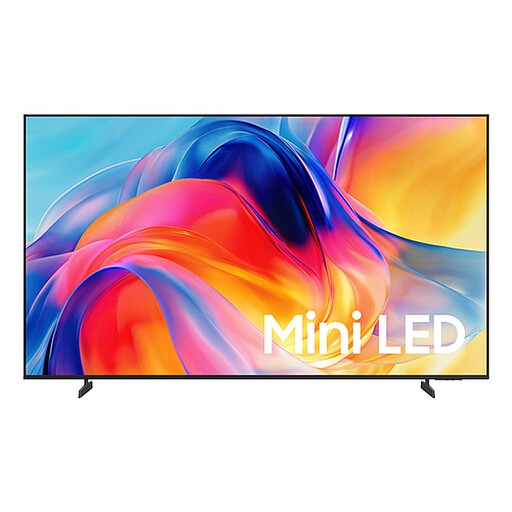
Samsung TU65M70H 65-inch Mini LED TV
This 65-inch 4K Mini LED smart TV may fit a lounge where that screen size works for the seating. Before selecting it for rugby, check reflection handling and off-centre viewing for the TU65M70H, and distinguish its stated 50Hz native refresh rate from DLG operation up to 120Hz.
View on Joybuy
 No image available
TCL 65Q7C 65-inch QD-Mini LED TV
Consider this size if you want to assess a 65-inch QD-Mini LED TV for your lounge. The listing names 4K HDR, Google TV, up to 2048 local dimming zones and a native 144Hz refresh rate; confirm bright-room and motion performance for this size rather than transferring results from the 75Q7C.
View on Joybuy
Frequently asked questions
Is 120Hz necessary for watching rugby?
It is a useful specification to check, not a guarantee of clear rugby action. Samsung recommends at least 120Hz for sport, while RTINGS also considers motion performance; compare independent results for the exact TV.
Will a bright TV solve reflections from windows?
Brightness alone may not deal with a direct reflection. RTINGS identifies reflection handling as a separate bright-room consideration, so check the screen treatment and avoid positioning the TV opposite a window or lamp where practical.
What should I check before wall-mounting a large TV?
Check the chosen size’s weight and mounting pattern against the mount, wall and installer’s requirements. Specifications for one size or model should not be assumed to apply to another.
Should a new UK TV listing show an energy label?
An in-scope TV should display an energy label at the point of sale, including on a website, under UK government energy-labelling guidance. Compare the information for the exact model and screen size you intend to buy.
Should I check broadband before streaming rugby?
Yes, check availability for your property before relying on a streaming service. Ofcom notes that actual service availability and speeds at an address can differ from predicted figures.


